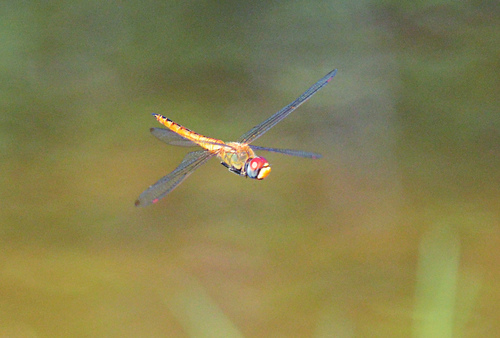
Eastern Pondhawk

Eastern Pondhawk

Erythemis simplicicollis

Daily sighting probability ~20% · Possible
at Houston

In 3 days ~50% in a week ~80%

1,051 Verified sightings at Houston
986 In all 12 parks From 2019 to 2026
August Best month
☀️ Diurnal When it's spotted

About the Eastern Pondhawk

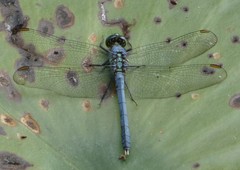
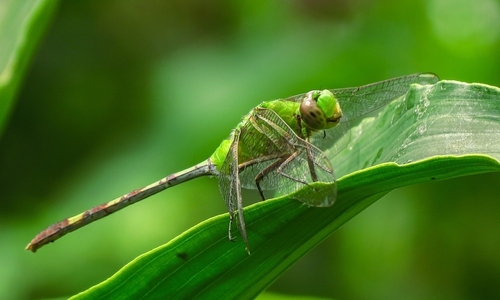
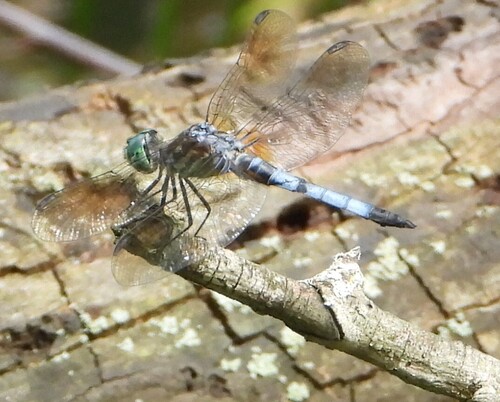
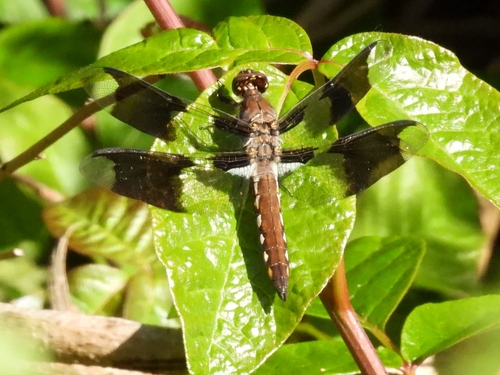
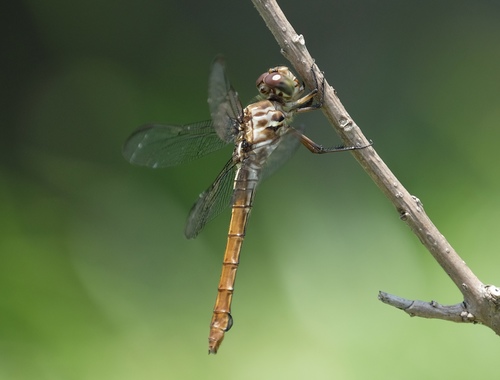
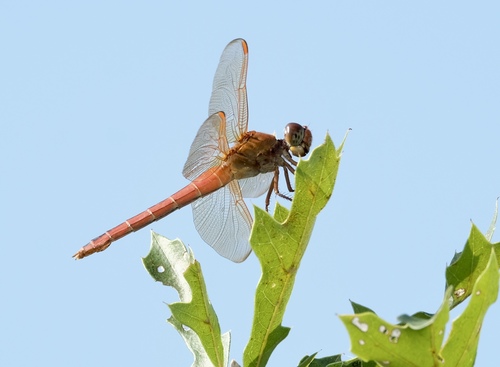
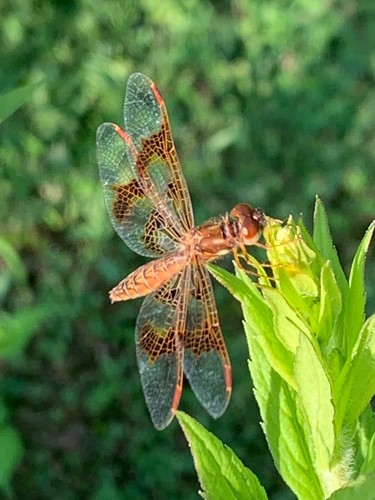
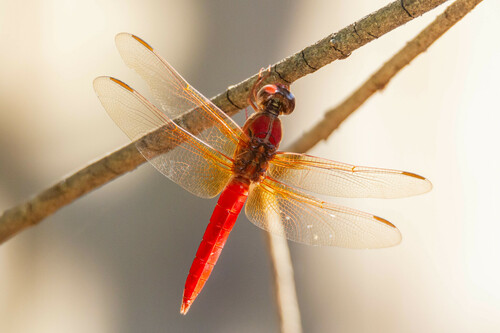
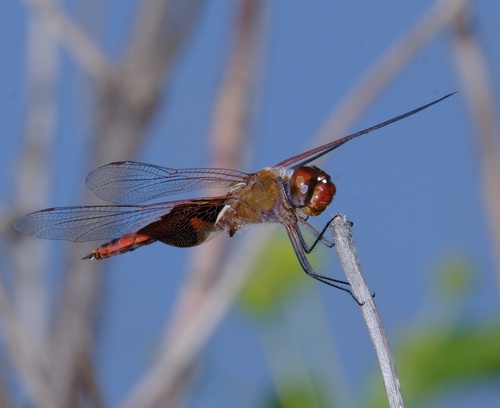
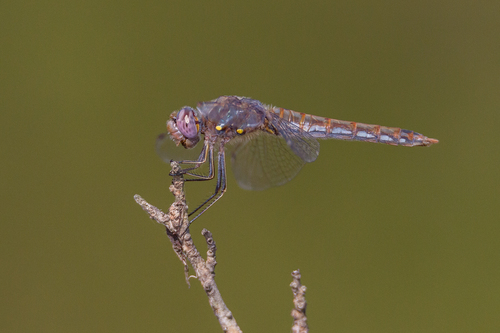
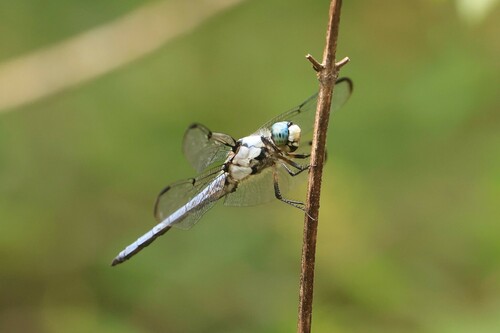
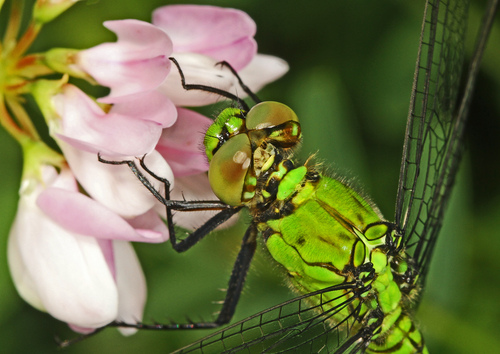
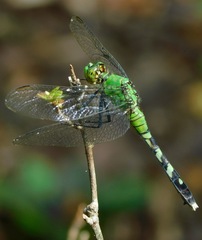
Erythemis simplicicollis, the eastern pondhawk, also known as the common pondhawk, is a dragonfly of the family Libellulidae, native to the eastern two-thirds of the United States and southern Ontario and Quebec, Canada. It is a dragonfly of ponds and still waters. The species is distinguished in that the female is bright green with a banded abdomen and the mature male has a blue abdomen with a green face and green and blue thorax.

Nymphs of the eastern pondhawk are identifiable by their green eyes. When they leave the water and moult for the final time, the emerging immature adult is dull olive green but over the course of a few hours, the abdomen becomes bright green, there is dark brown banding and the heads take on a metallic green sheen. Over the course of their adult lives the green of the male is gradually transformed into a duller shade of blue and finally a powdery bluish-grey. The wings are distinctively veined and have dark margins near the apices. The length of this dragonfly is 36 to 48 mm (1.4 to 1.9 in).

The eastern pondhawk is native to parts of North America and Central America. Its range includes the provinces of Ontario and Quebec... Wikipedia →
Global Distribution

Parks Where Found

# Park Country Daily sighting probability
1 Everglades National Park 🇺🇸 United States
~40%
2 Big Cypress National Preserve 🇺🇸 United States
~30%
3 Point Pelee National Park 🇨🇦 Canada
~30%
4 Biotopo Cerro Cahuí 🇬🇹 Guatemala
~20%
5 Merritt Island National Wildlife Refuge 🇺🇸 United States
~20%
6 Congaree National Park 🇺🇸 United States
~20%
7 Padre Island National Seashore 🇺🇸 United States
~10%
8 Lago de Yojoa 🇭🇳 Honduras
~10%
9 Big Bend National Park 🇺🇸 United States
~10%
10 Acadia National Park 🇺🇸 United States
~10%
11 Shenandoah National Park 🇺🇸 United States
~10%
12 Great Smoky Mountains National Park 🇺🇸 United States
<5%

Cities Where Found

# City Country Daily sighting probability
1 Austin 🇺🇸 United States
~20%
2 Houston 🇺🇸 United States
~20%
3 Dallas 🇺🇸 United States
~10%
4 Orlando 🇺🇸 United States
~10%
5 Miami 🇺🇸 United States
~10%
6 Washington 🇺🇸 United States
~10%
7 Boston 🇺🇸 United States
~10%
8 Baltimore 🇺🇸 United States
~10%
9 Toronto 🇨🇦 Canada
~10%
10 Minneapolis [Saint Paul] 🇺🇸 United States
~10%

Before you go

What are the chances of seeing an Eastern Pondhawk in Houston?

Possible

About 20% of wildlife watchers report an Eastern Pondhawk sighting in Houston on a given day, based on 1,051 verified sightings from GBIF citizen-science data. It is the 8th most-seen of the 1057 insects we can rate there. Over three days the chance rises to about 50%, and over a week to about 80%, if each day is a fresh chance.

When is the best time to see an Eastern Pondhawk in Houston?

July and August

In those months about 30% of wildlife watchers report an Eastern Pondhawk in Houston on a given day, against under 5% in November to February, the lowest months.

What time of day is best to see an Eastern Pondhawk?

Between 10 am and 1 pm

Across all the parks we cover, that three-hour window holds the most Eastern Pondhawk sightings with a recorded time, and about 9 in 10 of them come between 6 am and 6 pm: it is a daytime animal.

Is Houston the best place to see an Eastern Pondhawk?

Among the best

Of the 18 cities where we can rate Eastern Pondhawk sightings, Houston ranks 2nd at about 20%, level with the leaders once rounded. The best odds are in Austin (United States, about 20%).

Where does the Eastern Pondhawk sighting chance come from?

GBIF citizen-science records

It is estimated from how often the Eastern Pondhawk is recorded against all the insects logged in Houston (1,051 verified sightings), calibrated against known sighting rates. Figures are rounded to the nearest 10% because citizen-science data supports honest approximations, not decimals, and months with records from fewer than five people show "—". How it works.

← Back to Houston