Indian Hare

Indian Hare

Lepus nigricollis

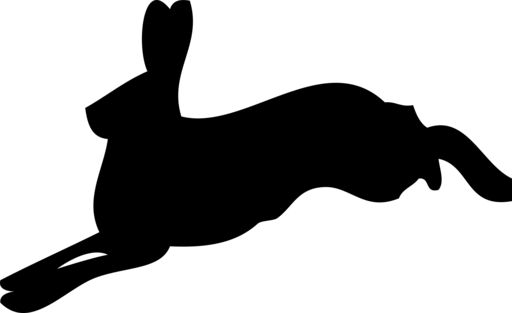
Silhouette: Jan A. Venter, Herbert H. T. Prins, David A. Balfour & Rob Slotow (vectorized by T. Michael Keesey) · PhyloPic

LCLeast ConcernNTVUENCR
Daily sighting probability ~10% · With luck
at Hyderabad

In 3 days ~20% in a week ~40%

8 Verified sightings at Hyderabad
195 In all 5 parks From 2019 to 2026
August Best month
🌅 Crepuscular When it's spotted

About the Indian Hare

The Indian hare (Lepus nigricollis), also known as the black-naped hare, is a common species of hare native to the Indian subcontinent, and Java. Its habitat in Java is in rocky highlands. The Indian hare is of medium size compared to other hares. Towards the southern parts of its range, individuals are notably larger. Its fur color is a mix of black and rufous, with the rufous color being especially present on the legs and breast of the hare. The hare's underside, including that of its tail, is white. The tail is brown on top. It has a head and body length of 33 to 53 cm (13 to 21 in), 8 to 12 cm (3.1 to 4.7 in)-long ears, large, well-furred hind feet that measure from 8.5 to 11.5 cm (3.3 to 4.5 in), and a rather long tail of about 6.4 cm (2.5 in). Adults can weigh 1.8–3.6 kg (4.0–7.9 lb).

The subspecies of Indian hare may display some distinguishing features. The nominate subspecies, L. n. nigricollis, has a black rather than brown tail, and the back of its neck has a distinctive black patch of fur. Wikipedia →

Global Distribution

Parks Where Found

# Park Country Daily sighting probability
1 Yala National Park 🇱🇰 Sri Lanka
~80%
2 Wilpattu National Park 🇱🇰 Sri Lanka
~60%
3 Udawalawe National Park 🇱🇰 Sri Lanka
~40%
4 Ranthambore National Park 🇮🇳 India
~30%
5 Mudumalai National Park 🇮🇳 India
~30%

Cities Where Found

# City Country Daily sighting probability
1 Jaipur 🇮🇳 India
~20%
2 Hyderabad 🇮🇳 India
~10%
3 Pune 🇮🇳 India
~10%
4 New Delhi 🇮🇳 India
~10%

Before you go

What are the chances of seeing an Indian Hare in Hyderabad?

With luck

About 10% of wildlife watchers report an Indian Hare sighting in Hyderabad on a given day, based on 8 verified sightings from GBIF citizen-science data. It is the 9th most-seen of the 11 mammals we can rate there. Over three days the chance rises to about 20%, and over a week to about 40%, if each day is a fresh chance.

When is the best time to see an Indian Hare in Hyderabad?

April to August

In those months about 10% of wildlife watchers report an Indian Hare in Hyderabad on a given day, against under 5% in September to March, the lowest months. Those are among Hyderabad's wettest months, with about 100 mm of rain a month against almost none in December.

What time of day is best to see an Indian Hare?

Between 3 and 6 am

Across all the parks we cover, that three-hour window holds the most Indian Hare sightings with a recorded time, and about 6 in 10 of them come between 6 am and 6 pm: it is most active around dawn and dusk.

Is Hyderabad the best place to see an Indian Hare?

2nd of 4

Of the 4 cities where we can rate Indian Hare sightings, Hyderabad ranks 2nd at about 10%. The best odds are in Jaipur (India, about 20%).

Where does the Indian Hare sighting chance come from?

GBIF citizen-science records

It is estimated from how often the Indian Hare is recorded against all the mammals logged in Hyderabad (8 verified sightings), calibrated against known sighting rates. Figures are rounded to the nearest 10% because citizen-science data supports honest approximations, not decimals, and months with records from fewer than five people show "—". How it works.

← Back to Hyderabad