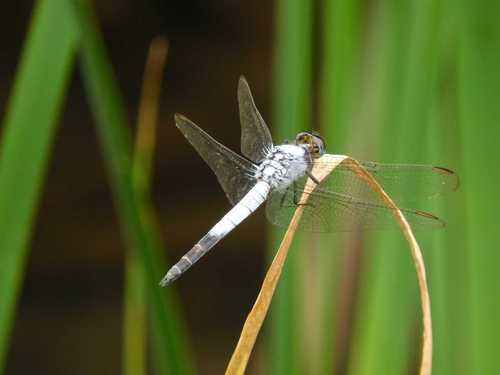
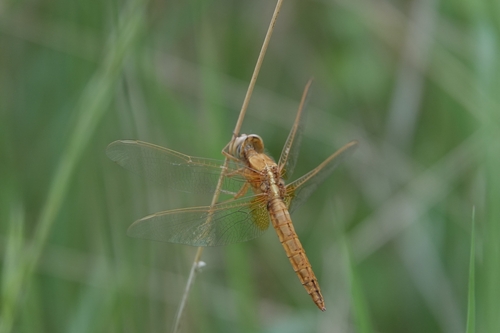
Southern Banded Groundling

Southern Banded Groundling

Brachythemis leucosticta

Daily sighting probability ~30% · Possible
at Kampala

In 3 days ~70% in a week ~90%

33 Verified sightings at Kampala
931 In all 19 parks From 2019 to 2026
October Best month
☀️ Diurnal When it's spotted

About the Southern Banded Groundling

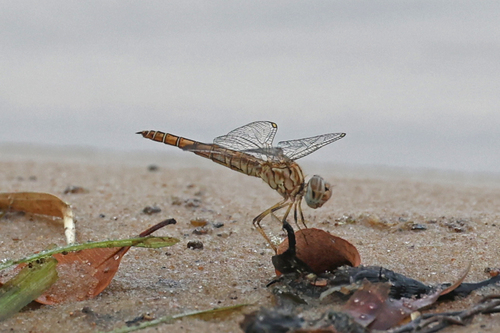
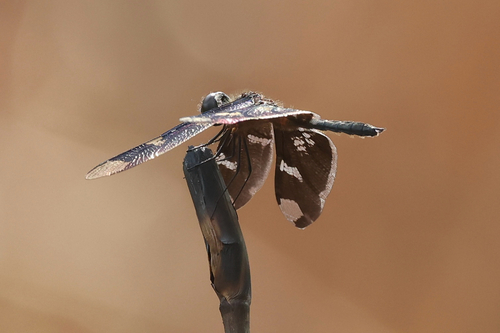
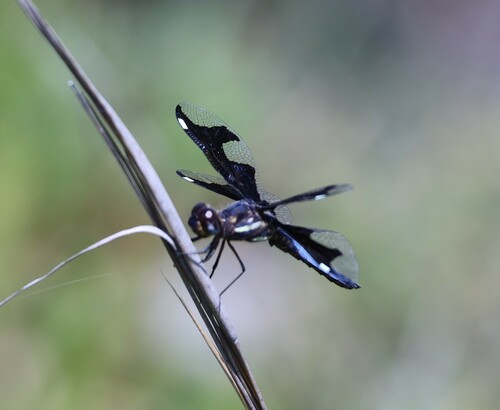
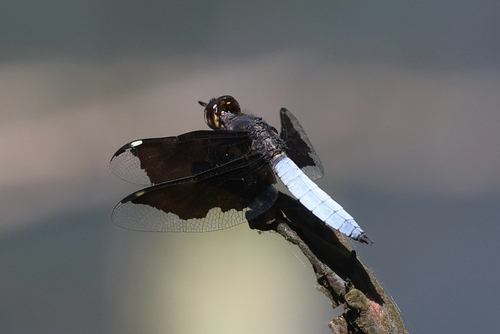
Brachythemis leucosticta, the banded groundling or Southern banded groundling, is a species of dragonfly belonging to the family Libellulidae. It is found in Sub-Saharan Africa. Brachythemis leucosticta was first formally described as Libellula leucosticta in 1839 by the German entomologist Hermann Burmeister with its type locality designated as Port Natal. It was long considered that there was a single species, the banded groundling, but in 2009 they were split into two species; the Southern banded groundling (B. leucosticta) and the Northern Banded Groundling (B. impartita) with a wide area of overlap in central Africa.

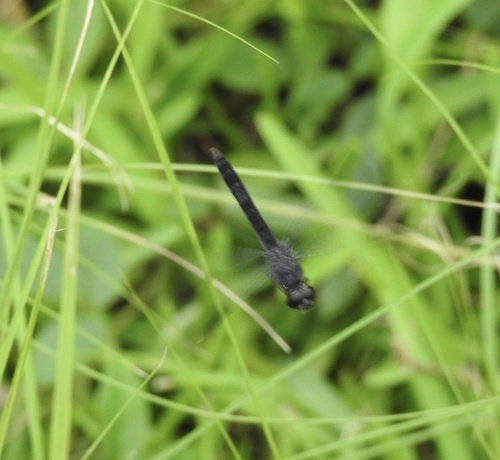
Brachythemis leucosticta is a small species of dragonfly with a length of up to 33 mm (1.3 in) and a wingspan of up to 57 mm (2.2 in). The males have a completely black abdomen and thorax, pterostigmata which are bicoloured including yellow, a very dark brown or blackish band near the tip of each wing and a black face and eyes. The females have a yellow and black thorax and abdomen the colour becoming less bright in older individuals and they have brown banded eyes.

Brachythemis leucosticta is found in... Wikipedia →
Global Distribution

Parks Where Found

# Park Country Daily sighting probability
1 uMkhuze Game Reserve 🇿🇦 South Africa
~50%
2 Ankarafantsika National Park 🇲🇬 Madagascar
~50%
3 Lower Zambezi National Park 🇿🇲 Zambia
~50%
4 Arusha National Park 🇹🇿 Tanzania
~50%
5 Mana Pools National Park 🇿🇼 Zimbabwe
~40%
6 Liwonde National Park 🇲🇼 Malawi
~40%
7 Moremi Game Reserve 🇧🇼 Botswana
~40%
8 South Luangwa National Park 🇿🇲 Zambia
~40%
9 Pilanesberg National Park 🇿🇦 South Africa
~30%
10 Lake Manyara National Park 🇹🇿 Tanzania
~30%
11 Gorongosa National Park 🇲🇿 Mozambique
~30%
12 Murchison Falls National Park 🇺🇬 Uganda
~30%
13 iSimangaliso Wetland Park 🇿🇦 South Africa
~30%
14 Kafue National Park 🇿🇲 Zambia
~20%
15 Akagera National Park 🇷🇼 Rwanda
~20%
16 Kruger National Park 🇿🇦 South Africa
~20%
17 Queen Elizabeth National Park 🇺🇬 Uganda
~20%
18 Chobe National Park 🇧🇼 Botswana
~20%
19 Hluhluwe-Imfolozi Park 🇿🇦 South Africa
~20%

Cities Where Found

# City Country Daily sighting probability
1 Antananarivo 🇲🇬 Madagascar
~50%
2 Kampala 🇺🇬 Uganda
~30%
3 Harare 🇿🇼 Zimbabwe
~10%
4 Durban 🇿🇦 South Africa
~10%
5 Nairobi 🇰🇪 Kenya
~10%
6 Johannesburg 🇿🇦 South Africa
<5%

Before you go

What are the chances of seeing a Southern Banded Groundling in Kampala?

Possible

About 30% of wildlife watchers report a Southern Banded Groundling sighting in Kampala on a given day, based on 33 verified sightings from GBIF citizen-science data. It is the 5th most-seen of the 42 insects we can rate there. Over three days the chance rises to about 70%, and over a week to about 90%, if each day is a fresh chance.

When is the best time to see a Southern Banded Groundling in Kampala?

October

In that month about 50% of wildlife watchers report a Southern Banded Groundling in Kampala on a given day, against under 5% in March and November, the lowest months.

What time of day is best to see a Southern Banded Groundling?

Between 9 am and noon

Across all the parks we cover, that three-hour window holds the most Southern Banded Groundling sightings with a recorded time, and about 9 in 10 of them come between 6 am and 6 pm: it is a daytime animal.

Is Kampala the best place to see a Southern Banded Groundling?

2nd of 6

Of the 6 cities where we can rate Southern Banded Groundling sightings, Kampala ranks 2nd at about 30%. The best odds are in Antananarivo (Madagascar, about 50%).

Where does the Southern Banded Groundling sighting chance come from?

GBIF citizen-science records

It is estimated from how often the Southern Banded Groundling is recorded against all the insects logged in Kampala (33 verified sightings), calibrated against known sighting rates. Figures are rounded to the nearest 10% because citizen-science data supports honest approximations, not decimals, and months with records from fewer than five people show "—". How it works.

← Back to Kampala