Lang's Short-Tailed Blue

Lang's Short-Tailed Blue

Leptotes pirithous

Daily sighting probability ~10% · With luck
at Lisbon

In 3 days ~10% in a week ~30%

30 Verified sightings at Lisbon
263 In all 7 parks From 2019 to 2026
September Best month
☀️ Diurnal When it's spotted

About the Lang's Short-Tailed Blue

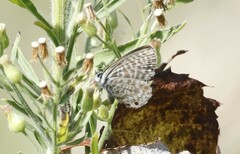
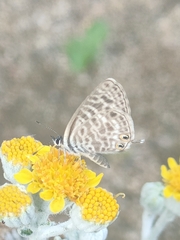
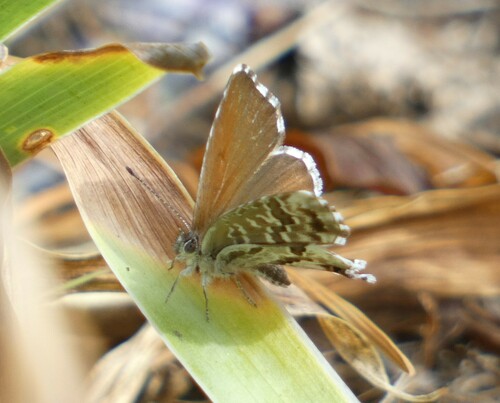
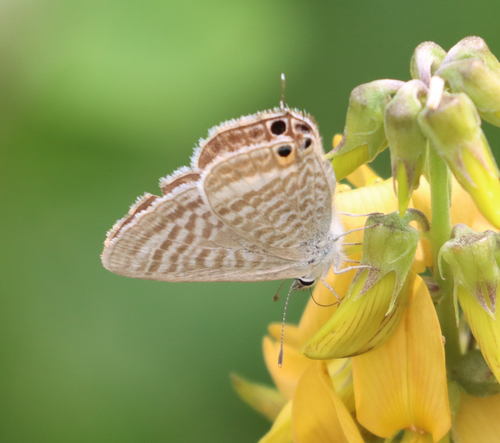
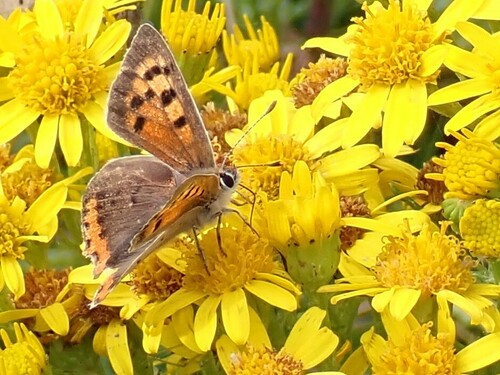
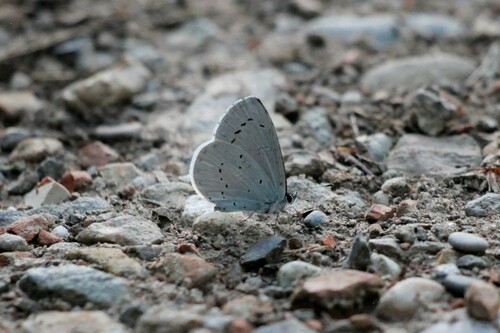
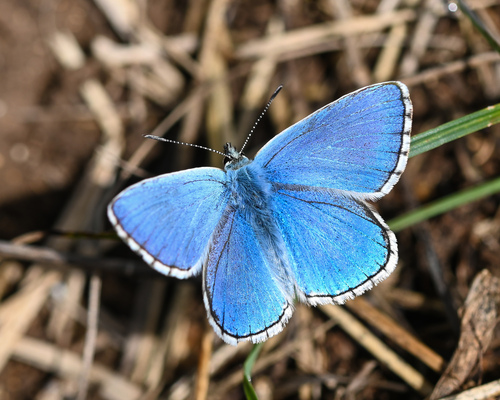
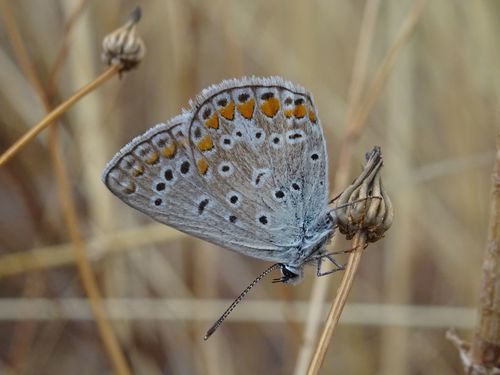
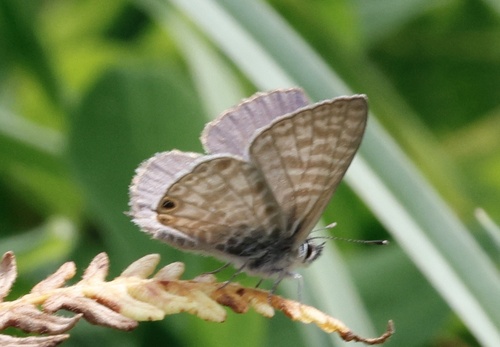
Leptotes pirithous, commonly known as Lang's short-tailed blue or common zebra blue, is a butterfly of the family Lycaenidae. Leptotes pirithous is a small butterfly with a wingspan of 21–29 mm (0.83–1.14 in) in males and 24–30 mm (0.94–1.18 in) in females. The uppersides of the wings are purple bluish in males, bluish brown in female. The undersides are dark beige striped with white lines. The hindwings show marginal orange and black spots and two small tails. For the design of the undersides of the wings they can be confused with Lampides boeticus and Cacyreus marshalli.

T. telicanus Lang (? = pirithous L., baeticus Esp.) (77 h; the figure marked male represents a small female). (male violet-blue, female smoky grey with the disc of the forewing bluish white, the intricate markings of the underside

appear also above. The underside has on a smoky grey ground a confusion of white lines and rings and around the anal spots of the hindwing very thin blue rings which glitter intensely. South Europe and North Africa, as well as Asia Minor. The form bellieri Ragusa, from Sicily has the underside more unicolorous, washed out. — Larva dark red,... Wikipedia →
Global Distribution

Parks Where Found

# Park Country Daily sighting probability
1 Picos de Europa National Park 🇪🇸 Spain
~30%
2 Sierra Nevada National Park 🇪🇸 Spain
~20%
3 Doñana National Park 🇪🇸 Spain
~10%
4 Sierra de Guadarrama National Park 🇪🇸 Spain
~10%
5 Monfragüe National Park 🇪🇸 Spain
~10%
6 Pyrénées National Park 🇫🇷 France
~10%
7 Cévennes National Park 🇫🇷 France
~10%

Cities Where Found

# City Country Daily sighting probability
1 Tel Aviv 🇮🇱 Israel
~30%
2 Casablanca 🇲🇦 Morocco
~30%
3 Jerusalem 🇮🇱 Israel
~20%
4 Barcelona 🇪🇸 Spain
~20%
5 Porto 🇵🇹 Portugal
~20%
6 Naples 🇮🇹 Italy
~10%
7 Marrakesh 🇲🇦 Morocco
~10%
8 Algiers 🇩🇿 Algeria
~10%
9 Athens 🇬🇷 Greece
~10%
10 Rome 🇮🇹 Italy
~10%

Before you go

What are the chances of seeing a Lang's Short-Tailed Blue in Lisbon?

With luck

About 10% of wildlife watchers report a Lang's Short-Tailed Blue sighting in Lisbon on a given day, based on 30 verified sightings from GBIF citizen-science data. It is the 119th most-seen of the 441 insects we can rate there. Over three days the chance rises to about 10%, and over a week to about 30%, if each day is a fresh chance.

When is the best time to see a Lang's Short-Tailed Blue in Lisbon?

May and July–November

In those months about 10% of wildlife watchers report a Lang's Short-Tailed Blue in Lisbon on a given day, against under 5% in June and December–April, the lowest months.

What time of day is best to see a Lang's Short-Tailed Blue?

Between 11 am and 2 pm

Across all the parks we cover, that three-hour window holds the most Lang's Short-Tailed Blue sightings with a recorded time, and about 9 in 10 of them come between 6 am and 6 pm: it is a daytime animal.

Is Lisbon the best place to see a Lang's Short-Tailed Blue?

15th of 16

Of the 16 cities where we can rate Lang's Short-Tailed Blue sightings, Lisbon ranks 15th at about 10%. The best odds are in Tel Aviv (Israel, about 30%), Casablanca (Morocco, about 30%) and Jerusalem (Israel, about 20%).

Which relatives of the Lang's Short-Tailed Blue live in Lisbon?

Same family: Lycaenidae

The closest relatives of the Lang's Short-Tailed Blue that you can see in Lisbon (family Lycaenidae, Gossamer-winged Butterflies) are Geranium Bronze (about 10%), Pea Blue (about 10%) and Small Copper (about 10%), with each one's daily chance of a sighting.

Where does the Lang's Short-Tailed Blue sighting chance come from?

GBIF citizen-science records

It is estimated from how often the Lang's Short-Tailed Blue is recorded against all the insects logged in Lisbon (30 verified sightings), calibrated against known sighting rates. Figures are rounded to the nearest 10% because citizen-science data supports honest approximations, not decimals, and months with records from fewer than five people show "—". How it works.

← Back to Lisbon