Black-Punctured Leaf Beetle

Black-Punctured Leaf Beetle

Galeruca tanaceti

Daily sighting probability <5% · Rare
at London

In 3 days ~10% in a week ~30%

41 Verified sightings at London
70 In all 6 parks From 2019 to 2026
November Best month
☀️ Diurnal When it's spotted

About the Black-Punctured Leaf Beetle

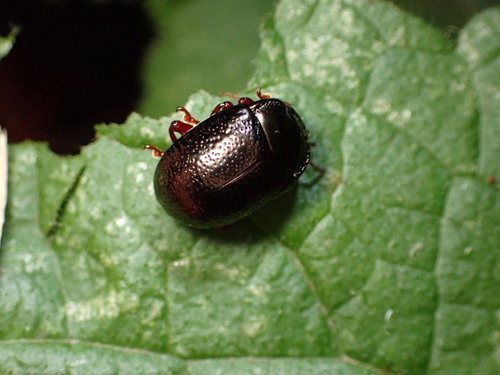
Galeruca tanaceti is a species of leaf beetle found in the Palearctic realm, and is the type species of the genus Galeruca. It feeds on various plants in both its adult and larval stages. The species was first described by Carl Linnaeus in his 1758 10th edition of Systema Naturae.

This species is present in the Palearctic realm from Portugal to Japan. It is also present in the Near East and North Africa. It has been introduced to northern America. These beetles inhabit dry and sunny areas, meadows and grassy places.

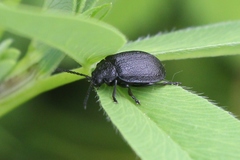
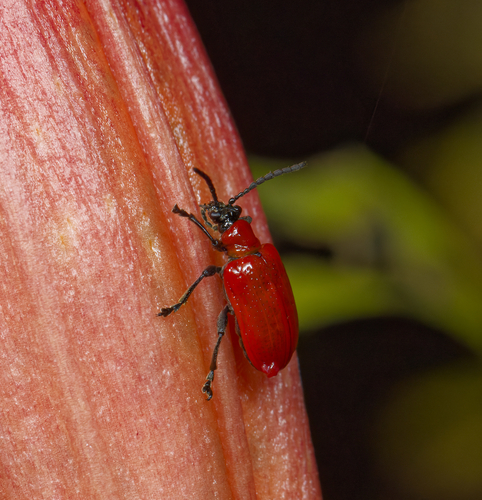
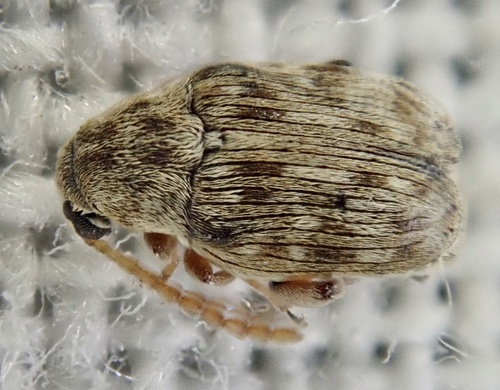
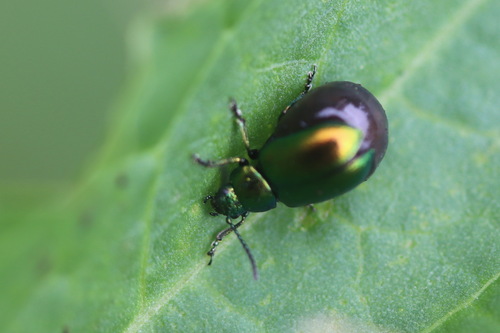
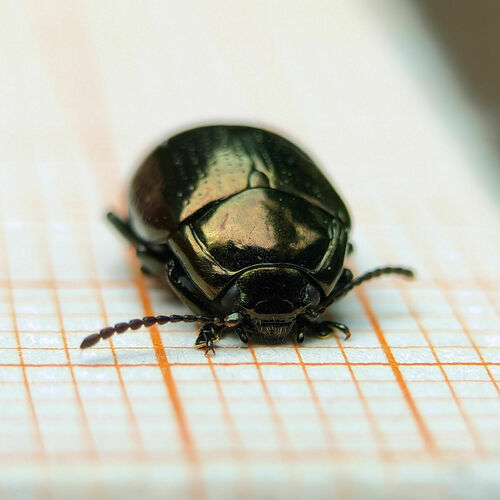
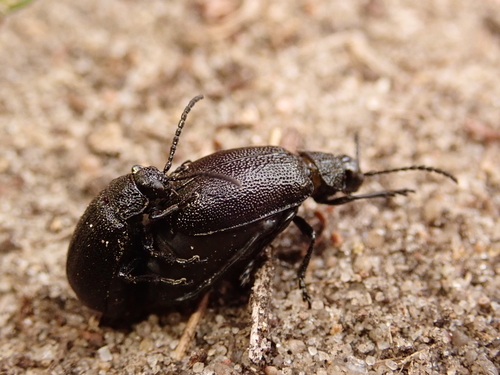
Galeruca tanaceti can reach a length of 6–11 millimetres (0.24–0.43 in). These leaf beetles have a broadly ovate, convex and glabrous body. The head, pronotum and elytra are matt black and densely punctured. The lateral margins of the elytra are explanate. The legs are entirely black, relatively long and slender.

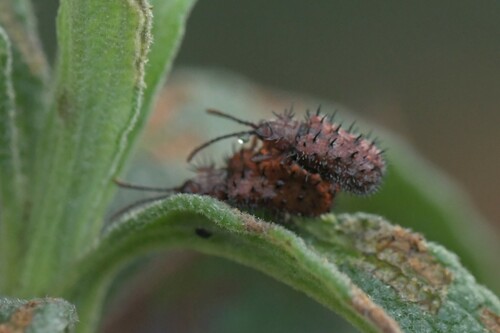
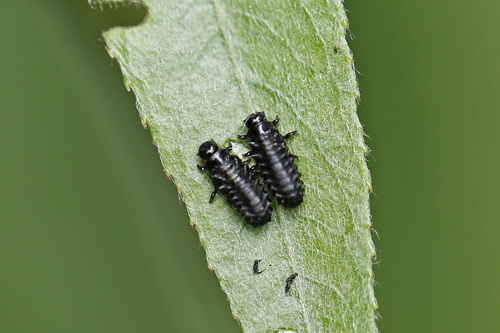
The females are longer than the males. At the time of oviposition the abdomen is greatly enlarged and filled with eggs so much that the elytra cover just one half of the length of the belly. The larvae are dark and covered with bristles on fleshy outgrowths.

Adults can be found between June and August... Wikipedia →
Global Distribution

Parks Where Found

# Park Country Daily sighting probability
1 Mercantour National Park 🇫🇷 France
~20%
2 Białowieża National Park 🇵🇱 Poland
~20%
3 Tatra National Park 🇸🇰 Slovakia
~10%
4 Bavarian Forest National Park 🇩🇪 Germany
~10%
5 Pyrénées National Park 🇫🇷 France
~10%
6 Cévennes National Park 🇫🇷 France
<5%

Cities Where Found

# City Country Daily sighting probability
1 Kyiv 🇺🇦 Ukraine
~10%
2 Kharkiv 🇺🇦 Ukraine
~10%
3 Prague 🇨🇿 Czechia
~10%
4 Vienna 🇦🇹 Austria
~10%
5 Berlin 🇩🇪 Germany
~10%
6 Bucharest 🇷🇴 Romania
~10%
7 London 🇬🇧 United Kingdom
<5%
8 Helsinki 🇫🇮 Finland
<5%
9 Nizhny Novgorod 🇷🇺 Russia
<5%
10 Warsaw 🇵🇱 Poland
<5%

Before you go

What are the chances of seeing a Black-Punctured Leaf Beetle in London?

Rare

Under 5% of wildlife watchers report a Black-Punctured Leaf Beetle sighting in London on a given day, based on 41 verified sightings from GBIF citizen-science data. It is the 522nd most-seen of the 1504 insects we can rate there. Over three days the chance rises to about 10%, and over a week to about 30%, if each day is a fresh chance.

When is the best time to see a Black-Punctured Leaf Beetle in London?

June and September–November

In those months about 10% of wildlife watchers report a Black-Punctured Leaf Beetle in London on a given day, against under 5% in July–August and December–May, the lowest months.

What time of day is best to see a Black-Punctured Leaf Beetle?

Between noon and 3 pm

Across all the parks we cover, that three-hour window holds the most Black-Punctured Leaf Beetle sightings with a recorded time, and nearly all of them come between 6 am and 6 pm: it is a daytime animal.

Is London the best place to see a Black-Punctured Leaf Beetle?

7th of 13

Of the 13 cities where we can rate Black-Punctured Leaf Beetle sightings, London ranks 7th at under 5%. The best odds are in Kyiv (Ukraine, about 10%), Kharkiv (Ukraine, about 10%) and Prague (Czechia, about 10%).

Which relatives of the Black-Punctured Leaf Beetle live in London?

Same family: Chrysomelidae

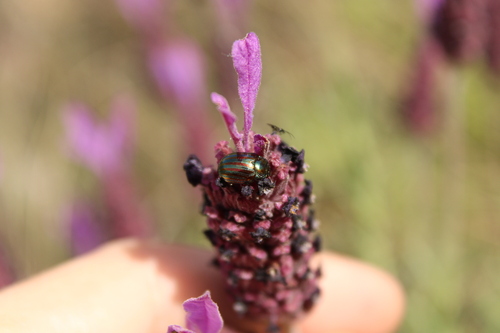
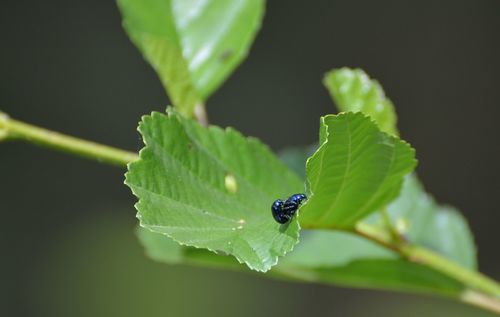
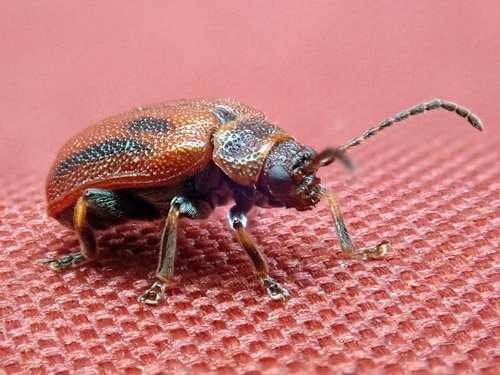
The closest relatives of the Black-Punctured Leaf Beetle that you can see in London (family Chrysomelidae, Leaf Beetles) are Rosemary Beetle (about 20%), Alder Leaf Beetle (about 10%) and Hawthorn Leaf Beetle (about 10%), with each one's daily chance of a sighting.

Where does the Black-Punctured Leaf Beetle sighting chance come from?

GBIF citizen-science records

It is estimated from how often the Black-Punctured Leaf Beetle is recorded against all the insects logged in London (41 verified sightings), calibrated against known sighting rates. Figures are rounded to the nearest 10% because citizen-science data supports honest approximations, not decimals, and months with records from fewer than five people show "—". How it works.

← Back to London