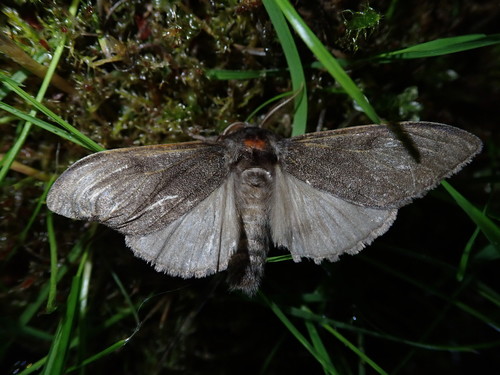
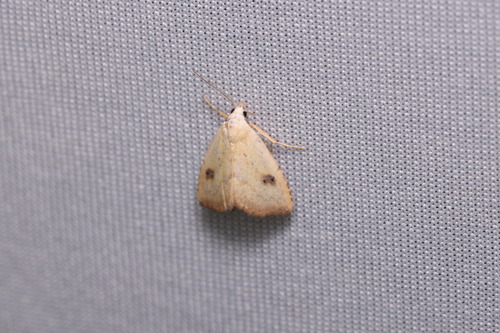
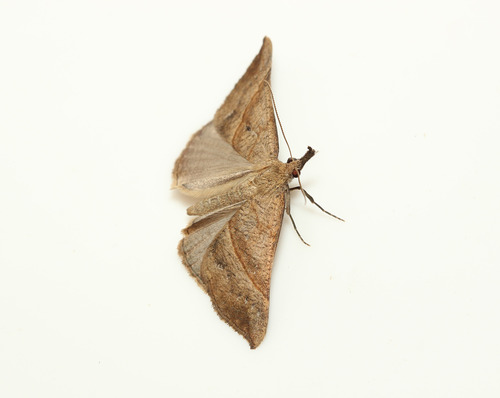
Garden Tiger
Daily sighting probability <5% · Rare
at London

In 3 days ~10% in a week ~30%

37 Verified sightings at London
319 In all 21 parks From 2019 to 2026
August Best month
☀️ Diurnal When it's spotted

About the Garden Tiger

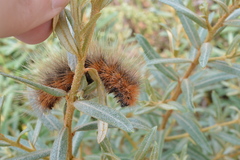
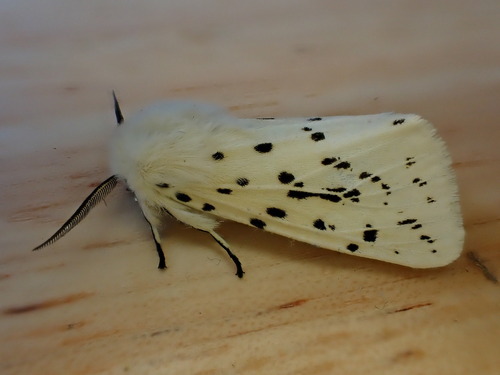
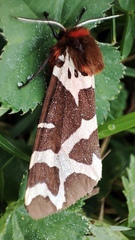
Arctia caja, the garden tiger moth or great tiger moth is a moth of the family Erebidae. Arctia caja is a northern species found in the US, Canada, and Europe. The moth prefers cold climates with temperate seasonality, as the larvae overwinter, and preferentially chooses host plants that produce pyrrolizidine alkaloids. However, garden tiger moths are generalists, and will pick many different plants to use as larval host plants.

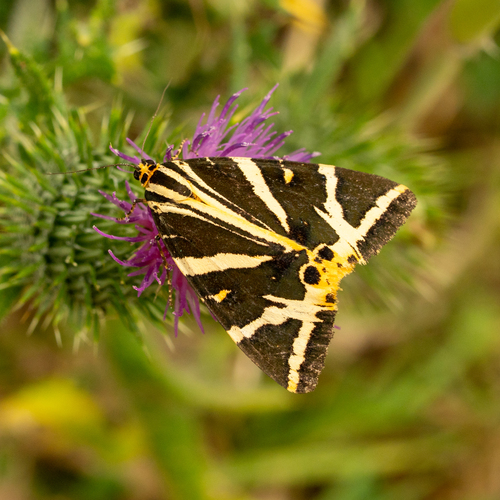
The conspicuous patterns on its wings serve as a warning to predators because the moth's body fluids are poisonous. Their effects are not yet fully known, but these toxins contain quantities of neurotoxic choline esters which act by interfering with the acetylcholine receptor. The colours are also ideal for frightening predators such as small birds—the moth normally hides its hindwings under the cryptic forewings when resting. Between stored toxins, conspicuous warning coloration, and sound cues that are generated mostly as a response to bats, A. caja clearly presents itself as an inedible target for predators.

The garden tiger moth has a wingspan of 45 to 65 millimeters (1.8 to 2.6 in). The design of the wings vary; the front wings are brown... Wikipedia →
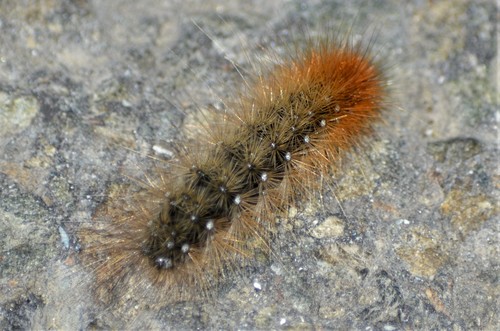
Global Distribution

Parks Where Found

# Park Country Daily sighting probability
1 Biebrza National Park 🇵🇱 Poland
~20%
2 Białowieża National Park 🇵🇱 Poland
~20%
3 Vanoise National Park 🇫🇷 France
~20%
4 Aigüestortes National Park 🇪🇸 Spain
~10%
5 Snowdonia National Park 🇬🇧 United Kingdom
~10%
6 Ecrins National Park 🇫🇷 France
~10%
7 Elk Island National Park 🇨🇦 Canada
~10%
8 Cairngorms National Park 🇬🇧 United Kingdom
~10%
9 Riding Mountain National Park 🇨🇦 Canada
~10%
10 Tatra National Park 🇸🇰 Slovakia
~10%
11 Picos de Europa National Park 🇪🇸 Spain
~10%
12 Hohe Tauern National Park 🇦🇹 Austria
~10%
13 Wadden Sea National Park 🇩🇪 Germany
~10%
14 Pyrénées National Park 🇫🇷 France
~10%
15 Mercantour National Park 🇫🇷 France
~10%
16 Grand Teton National Park 🇺🇸 United States
~10%
17 Rocky Mountain National Park 🇺🇸 United States
~10%
18 Bavarian Forest National Park 🇩🇪 Germany
~10%
19 Fertő-Hanság National Park 🇭🇺 Hungary
~10%
20 Yellowstone National Park 🇺🇸 United States
~10%
21 Glacier National Park 🇺🇸 United States
~10%

Cities Where Found

# City Country Daily sighting probability
1 Sapporo 🇯🇵 Japan
~10%
2 Novosibirsk 🇷🇺 Russia
~10%
3 London 🇬🇧 United Kingdom
<5%
4 Copenhagen 🇩🇰 Denmark
<5%

Before you go

What are the chances of seeing a Garden Tiger in London?

Rare

Under 5% of wildlife watchers report a Garden Tiger sighting in London on a given day, based on 37 verified sightings from GBIF citizen-science data. It is the 536th most-seen of the 1504 insects we can rate there. Over three days the chance rises to about 10%, and over a week to about 30%, if each day is a fresh chance.

When is the best time to see a Garden Tiger in London?

June and August

In those months about 10% of wildlife watchers report a Garden Tiger in London on a given day, against under 5% in July and September–May, the lowest months.

What time of day is best to see a Garden Tiger?

Between 11 am and 2 pm

Across all the parks we cover, that three-hour window holds the most Garden Tiger sightings with a recorded time, and about 8 in 10 of them come between 6 am and 6 pm: it is a daytime animal.

Is London the best place to see a Garden Tiger?

3rd of 4

Of the 4 cities where we can rate Garden Tiger sightings, London ranks 3rd at under 5%. The best odds are in Sapporo (Japan, about 10%) and Novosibirsk (Russia, about 10%).

Which relatives of the Garden Tiger live in London?

Same family: Erebidae

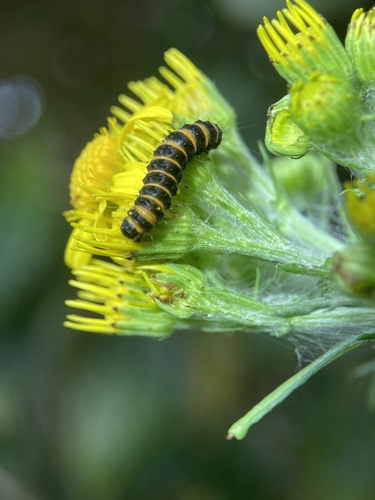
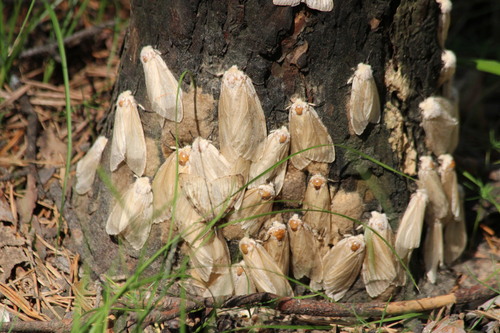
The closest relatives of the Garden Tiger that you can see in London (family Erebidae, Underwing, Tiger, Tussock, and Allied Moths) are Jersey Tiger (about 40%), Cinnabar Moth (about 30%) and Spongy Moth (about 20%), with each one's daily chance of a sighting.

Where does the Garden Tiger sighting chance come from?

GBIF citizen-science records

It is estimated from how often the Garden Tiger is recorded against all the insects logged in London (37 verified sightings), calibrated against known sighting rates. Figures are rounded to the nearest 10% because citizen-science data supports honest approximations, not decimals, and months with records from fewer than five people show "—". How it works.

← Back to London