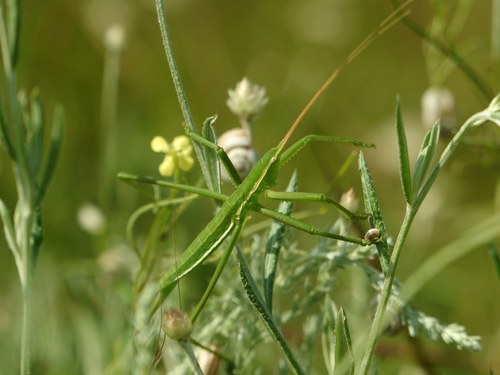
Egyptian Bird Grasshopper

Egyptian Bird Grasshopper

Anacridium aegyptium

Daily sighting probability ~20% · Possible
at Madrid

In 3 days ~40% in a week ~70%

130 Verified sightings at Madrid
346 In all 7 parks From 2019 to 2026
February Best month
☀️ Diurnal When it's spotted

About the Egyptian Bird Grasshopper

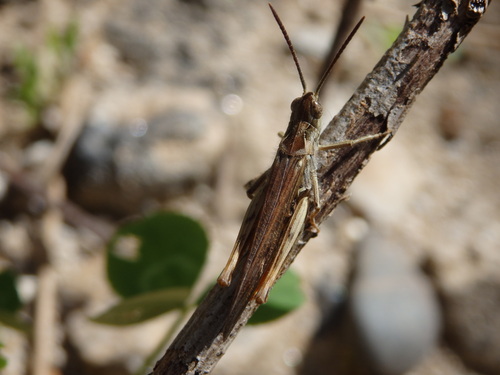
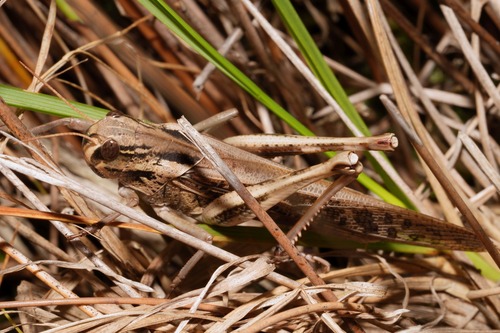
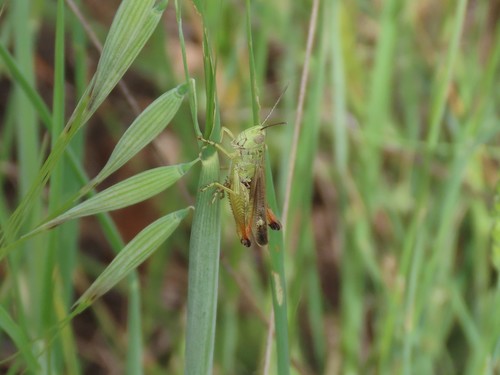
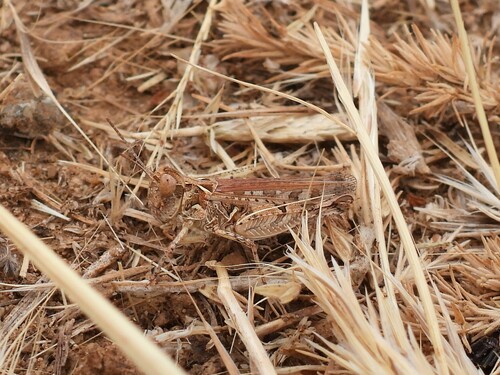
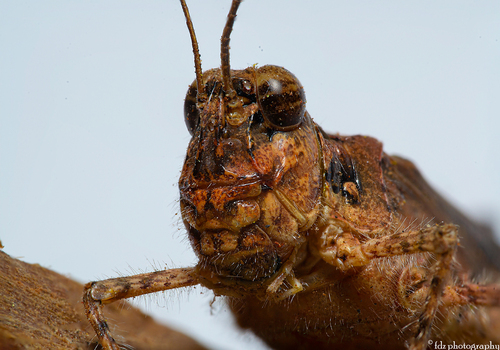
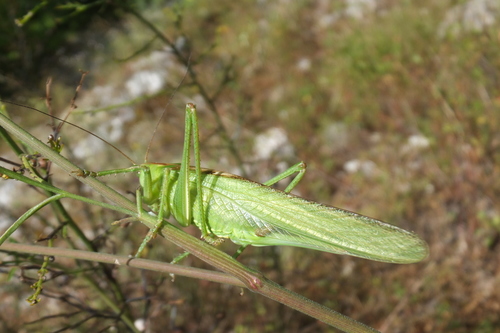
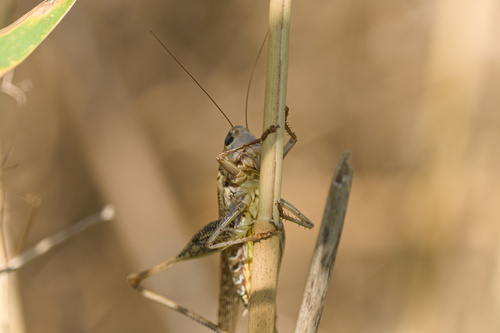
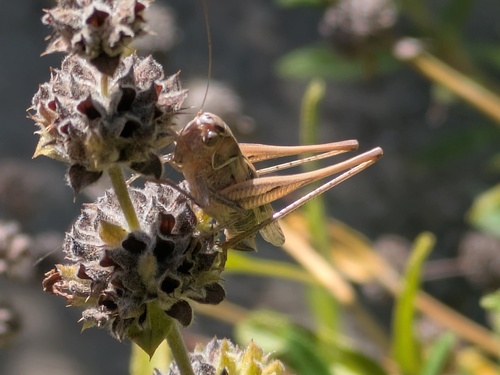
Anacridium aegyptium, the Egyptian grasshopper or Egyptian locust, is a species of insect belonging to the subfamily Cyrtacanthacridinae. A fairly common species, the Egyptian grasshopper is present in most of Europe, the Afrotropical realm, eastern Palearctic realm, the Near East, and North Africa, and has recently been observed in Cape Town, South Africa.

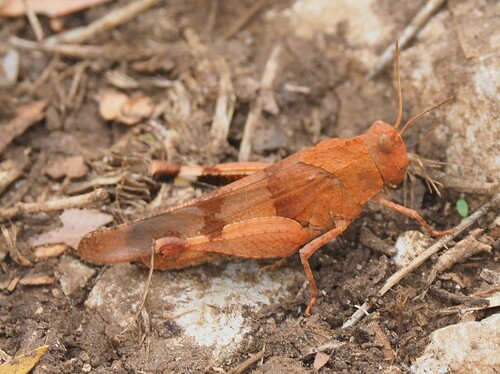
These grasshoppers inhabit trees and shrubs, scrub land, maquis, and orchards in warm and bright environments, at an elevation from sea level to 1,500 m. Anacridium aegyptium is one of the largest European grasshoppers. Adult males grow up to 30–56 mm (1.2–2.2 in) long, while females reach 46–70 mm (1.8–2.8 in) in length. Their bodies are usually gray, brown, or olive-coloured, and their antennae are relatively short and robust. The tibiae of the hind legs are blue, while the femora are orange. The hind femora have characteristic dark marks. They are also easily identified by their characteristic eyes, which have vertical black and white stripes. Their pronota show a... Wikipedia →

Global Distribution

Parks Where Found

# Park Country Daily sighting probability
1 Sierra Nevada National Park 🇪🇸 Spain
~30%
2 Camargue 🇫🇷 France
~30%
3 Cévennes National Park 🇫🇷 France
~30%
4 Doñana National Park 🇪🇸 Spain
~20%
5 Monfragüe National Park 🇪🇸 Spain
~20%
6 Pyrénées National Park 🇫🇷 France
~10%
7 Sierra de Guadarrama National Park 🇪🇸 Spain
~10%

Cities Where Found

# City Country Daily sighting probability
1 Turin 🇮🇹 Italy
~30%
2 Athens 🇬🇷 Greece
~30%
3 Valencia 🇪🇸 Spain
~30%
4 Algiers 🇩🇿 Algeria
~30%
5 Yerevan 🇦🇲 Armenia
~30%
6 Izmir 🇹🇷 Turkey
~30%
7 Antalya 🇹🇷 Turkey
~20%
8 Milan 🇮🇹 Italy
~20%
9 Naples 🇮🇹 Italy
~20%
10 Barcelona 🇪🇸 Spain
~20%

Before you go

What are the chances of seeing an Egyptian Bird Grasshopper in Madrid?

Possible

About 20% of wildlife watchers report an Egyptian Bird Grasshopper sighting in Madrid on a given day, based on 130 verified sightings from GBIF citizen-science data. It is the 18th most-seen of the 457 insects we can rate there. Over three days the chance rises to about 40%, and over a week to about 70%, if each day is a fresh chance.

When is the best time to see an Egyptian Bird Grasshopper in Madrid?

February, April–May, August–October and December

In those months about 20% of wildlife watchers report an Egyptian Bird Grasshopper in Madrid on a given day, against about 10% in January, March, June–July and November, the lowest months.

What time of day is best to see an Egyptian Bird Grasshopper?

Between 3 and 6 pm

Across all the parks we cover, that three-hour window holds the most Egyptian Bird Grasshopper sightings with a recorded time, and about 8 in 10 of them come between 6 am and 6 pm: it is a daytime animal.

Is Madrid the best place to see an Egyptian Bird Grasshopper?

12th of 20

Of the 20 cities where we can rate Egyptian Bird Grasshopper sightings, Madrid ranks 12th at about 20%. The best odds are in Turin (Italy, about 30%), Athens (Greece, about 30%) and Valencia (Spain, about 30%).

Which relatives of the Egyptian Bird Grasshopper live in Madrid?

Same family: Acrididae

The closest relatives of the Egyptian Bird Grasshopper that you can see in Madrid (family Acrididae, Short-horned Grasshoppers) are Blue-Winged Grasshopper (about 10%), Iberian Field Grasshopper (about 10%) and Migratory Locust (about 10%), with each one's daily chance of a sighting.

Where does the Egyptian Bird Grasshopper sighting chance come from?

GBIF citizen-science records

It is estimated from how often the Egyptian Bird Grasshopper is recorded against all the insects logged in Madrid (130 verified sightings), calibrated against known sighting rates. Figures are rounded to the nearest 10% because citizen-science data supports honest approximations, not decimals, and months with records from fewer than five people show "—". How it works.

← Back to Madrid