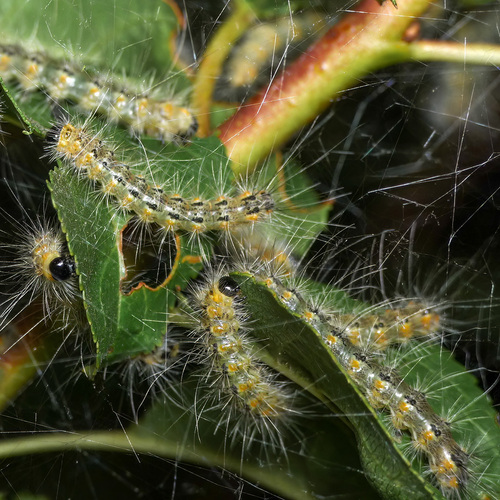
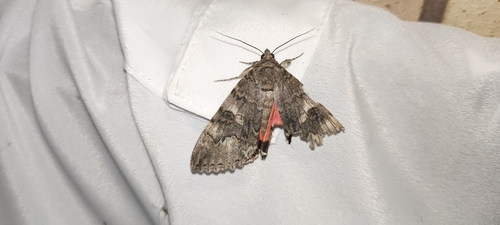
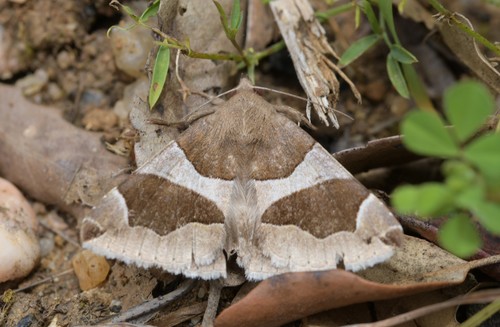
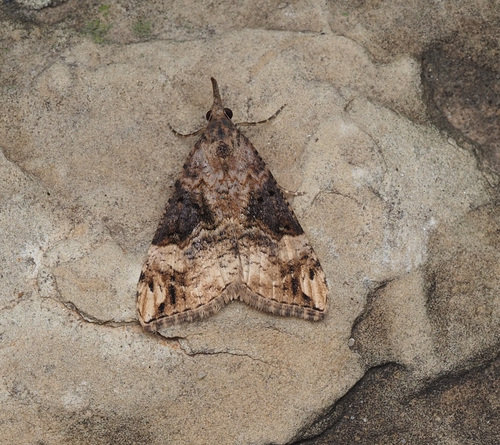
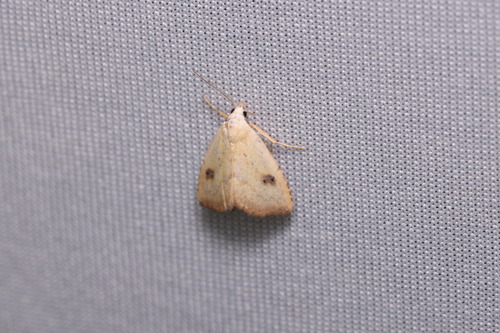
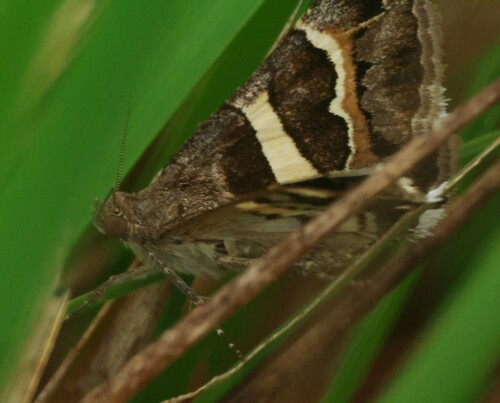
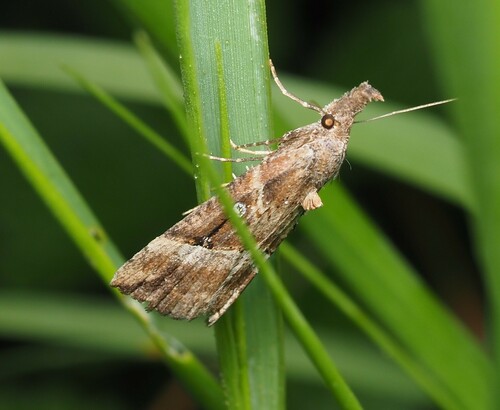
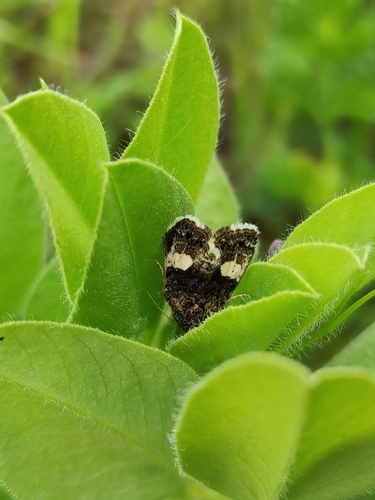
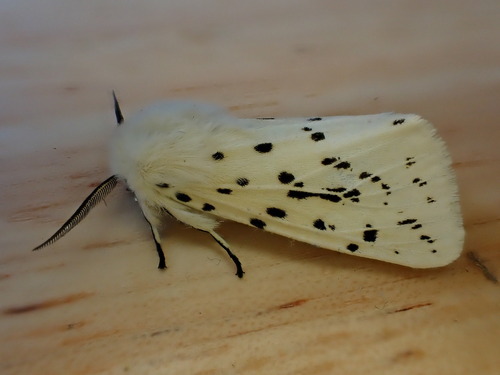
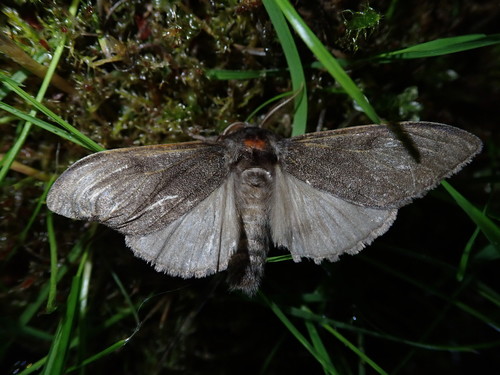
Nine-Spotted Moth
Daily sighting probability <5% · Rare
at Milan

In 3 days ~10% in a week ~30%

10 Verified sightings at Milan
173 In all 6 parks From 2019 to 2026
July Best month
☀️ Diurnal When it's spotted

About the Nine-Spotted Moth

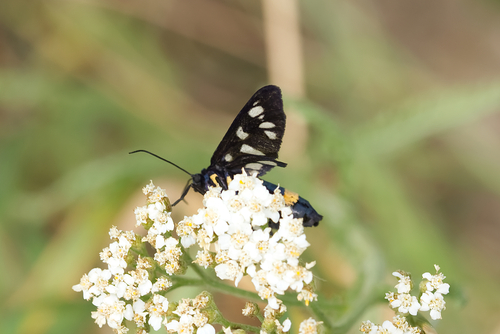
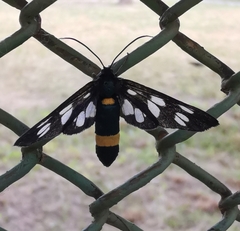
The nine-spotted moth or yellow belted burnet (Amata phegea, formerly Syntomis phegea) is a moth in the family Erebidae ("tiger moths"). The species was first described by Carl Linnaeus in his 1758 10th edition of Systema Naturae.

The nine-spotted moth is chiefly found in southern Europe but also seen up to northern Germany, and in the east to Anatolia and the Caucasus, and there are some populations in the south-eastern Dutch nature reserves of Leudal and Meinweg. It does not breed in the United Kingdom, but it is a very rare immigrant. It is also found In India these days. The species prefers drier areas, open ranges with shrubs and trees as well as open forests and warm, sunny slopes.

Amata phegea reaches a wingspan of 35–40 millimetres (1.4–1.6 in). Males are smaller than females and have thicker antennae. Wings are blueish black or greenish black with white spots and metallic sheen. The number and the size of spots are quite variable. Usually there are six white spots on the forewings and two or three spots on the hindwings. The body is quite long, with a yellow spot on the second segment of the abdomen. A further feature is the... Wikipedia →

Global Distribution

Parks Where Found

# Park Country Daily sighting probability
1 Plitvice Lakes National Park 🇭🇷 Croatia
~40%
2 Triglav National Park 🇸🇮 Slovenia
~40%
3 Kiskunság National Park 🇭🇺 Hungary
~30%
4 Fertő-Hanság National Park 🇭🇺 Hungary
~20%
5 Mercantour National Park 🇫🇷 France
~10%
6 Hohe Tauern National Park 🇦🇹 Austria
~10%

Cities Where Found

# City Country Daily sighting probability
1 Kharkiv 🇺🇦 Ukraine
~20%
2 Vienna 🇦🇹 Austria
~10%
3 Budapest 🇭🇺 Hungary
~10%
4 Kyiv 🇺🇦 Ukraine
~10%
5 Bucharest 🇷🇴 Romania
~10%
6 Rome 🇮🇹 Italy
~10%
7 Belgrade 🇷🇸 Serbia
~10%
8 Milan 🇮🇹 Italy
<5%
9 Prague 🇨🇿 Czechia
<5%

Before you go

What are the chances of seeing a Nine-Spotted Moth in Milan?

Rare

Under 5% of wildlife watchers report a Nine-Spotted Moth sighting in Milan on a given day, based on 10 verified sightings from GBIF citizen-science data. It is the 207th most-seen of the 351 insects we can rate there. Over three days the chance rises to about 10%, and over a week to about 30%, if each day is a fresh chance.

When is the best time to see a Nine-Spotted Moth in Milan?

June and July

In those months about 10% of wildlife watchers report a Nine-Spotted Moth in Milan on a given day, against under 5% in August to May, the lowest months.

What time of day is best to see a Nine-Spotted Moth?

Between 11 am and 2 pm

Across all the parks we cover, that three-hour window holds the most Nine-Spotted Moth sightings with a recorded time, and about 9 in 10 of them come between 6 am and 6 pm: it is a daytime animal.

Is Milan the best place to see a Nine-Spotted Moth?

8th of 9

Of the 9 cities where we can rate Nine-Spotted Moth sightings, Milan ranks 8th at under 5%. The best odds are in Kharkiv (Ukraine, about 20%), Vienna (Austria, about 10%) and Budapest (Hungary, about 10%).

Which relatives of the Nine-Spotted Moth live in Milan?

Same family: Erebidae

The closest relatives of the Nine-Spotted Moth that you can see in Milan (family Erebidae, Underwing, Tiger, Tussock, and Allied Moths) are Fall Webworm Moth (about 20%), Spongy Moth (about 10%) and Red Underwing (about 10%), with each one's daily chance of a sighting.

Where does the Nine-Spotted Moth sighting chance come from?

GBIF citizen-science records

It is estimated from how often the Nine-Spotted Moth is recorded against all the insects logged in Milan (10 verified sightings), calibrated against known sighting rates. Figures are rounded to the nearest 10% because citizen-science data supports honest approximations, not decimals, and months with records from fewer than five people show "—". How it works.
← Back to Milan