


Poplar Leaf Beetle

Poplar Leaf Beetle

Chrysomela populi

Daily sighting probability ~10% · With luck
at Milan

In 3 days ~20% in a week ~40%

22 Verified sightings at Milan
112 In all 8 parks From 2019 to 2026
October Best month
☀️ Diurnal When it's spotted

About the Poplar Leaf Beetle

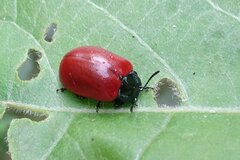
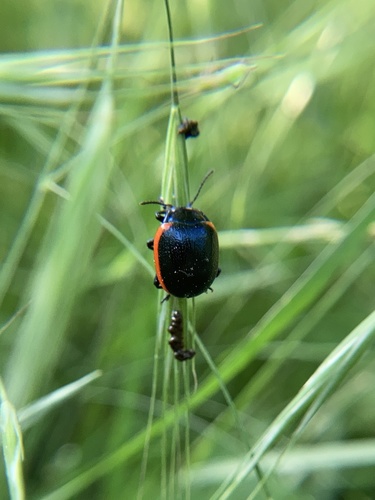
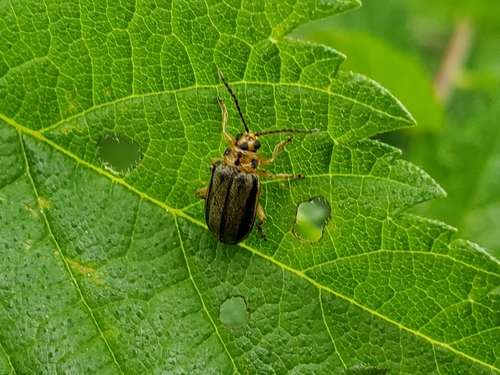
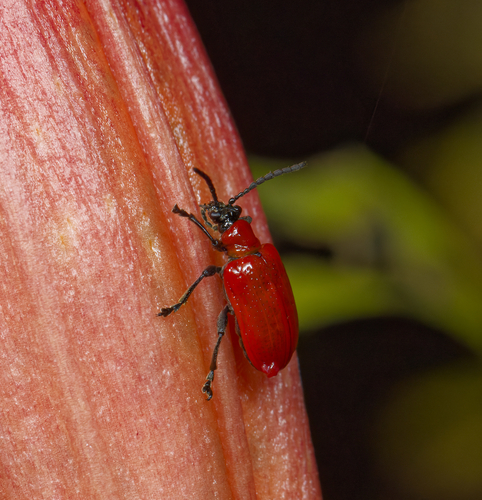
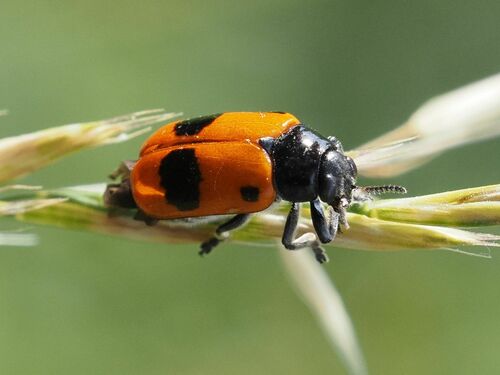
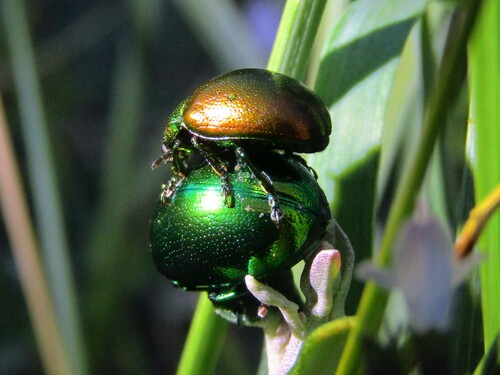
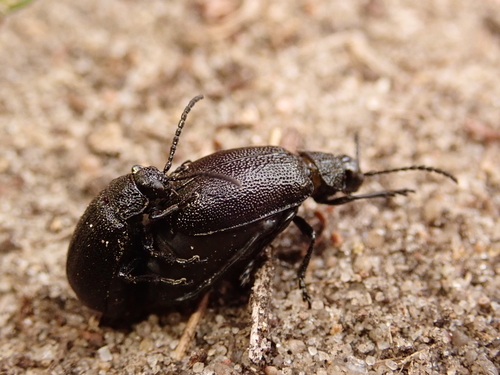
Chrysomela populi, commonly known as the poplar leaf beetle, is a species of broad-shouldered leaf beetle belonging to the family Chrysomelidae, subfamily Chrysomelinae. There are more than 25 thousand species of Chrysomelidae in the world. Many of its species carry the reputation of being agricultural and forest pests and Chrysomela populi is one of the most important and populous species of this group. C. populi is a broad-shouldered leaf beetle belonging to the family Chrysomelidae and subfamily Chrysomelinae. The species inhabits plant species of the family Salicacae and its activity favors moderate winters and dry, warm springs. Increased food quality and favorable living conditions has led to an increase in the population density of Chrysomelidae, including C. populi. C. populi have been commonly spotted in Eastern Europe and can be found throughout Asia. Specifically, they can be found living on species of Salix, like S. triandra, S. fragilis and S. viminali, and Populus, such as P. tremula, P. alba, and P. nigra.

C. populi selects hosts based on nutrient content and proportion, and it generally has high requirements for food quality. C. populi leaves behind... Wikipedia →

Global Distribution

Parks Where Found

# Park Country Daily sighting probability
1 Biebrza National Park 🇵🇱 Poland
~20%
2 Białowieża National Park 🇵🇱 Poland
~10%
3 Bavarian Forest National Park 🇩🇪 Germany
~10%
4 Snowdonia National Park 🇬🇧 United Kingdom
~10%
5 Cévennes National Park 🇫🇷 France
~10%
6 Fertő-Hanság National Park 🇭🇺 Hungary
~10%
7 Wadden Sea National Park 🇩🇪 Germany
~10%
8 Pyrénées National Park 🇫🇷 France
<5%

Cities Where Found

# City Country Daily sighting probability
1 Novosibirsk 🇷🇺 Russia
~10%
2 Turin 🇮🇹 Italy
~10%
3 Sofia 🇧🇬 Bulgaria
~10%
4 Berlin 🇩🇪 Germany
~10%
5 Milan 🇮🇹 Italy
~10%
6 Kyiv 🇺🇦 Ukraine
~10%
7 Helsinki 🇫🇮 Finland
~10%
8 Warsaw 🇵🇱 Poland
~10%
9 Vienna 🇦🇹 Austria
~10%
10 Lyon 🇫🇷 France
~10%

Before you go

What are the chances of seeing a Poplar Leaf Beetle in Milan?

With luck

About 10% of wildlife watchers report a Poplar Leaf Beetle sighting in Milan on a given day, based on 22 verified sightings from GBIF citizen-science data. It is the 123rd most-seen of the 351 insects we can rate there. Over three days the chance rises to about 20%, and over a week to about 40%, if each day is a fresh chance.

When is the best time to see a Poplar Leaf Beetle in Milan?

March–April, June and August–October

In those months about 10% of wildlife watchers report a Poplar Leaf Beetle in Milan on a given day, against under 5% in May, July and November–February, the lowest months.

What time of day is best to see a Poplar Leaf Beetle?

Between 11 am and 2 pm

Across all the parks we cover, that three-hour window holds the most Poplar Leaf Beetle sightings with a recorded time, and about 9 in 10 of them come between 6 am and 6 pm: it is a daytime animal.

Is Milan the best place to see a Poplar Leaf Beetle?

Among the best

Of the 23 cities where we can rate Poplar Leaf Beetle sightings, Milan ranks 5th at about 10%, level with the leaders once rounded. The best odds are in Novosibirsk (Russia, about 10%), Turin (Italy, about 10%) and Sofia (Bulgaria, about 10%).

Which relatives of the Poplar Leaf Beetle live in Milan?

Same family: Chrysomelidae

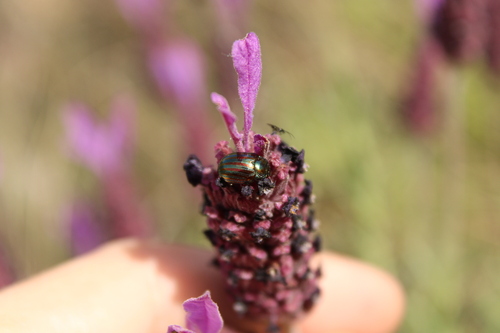
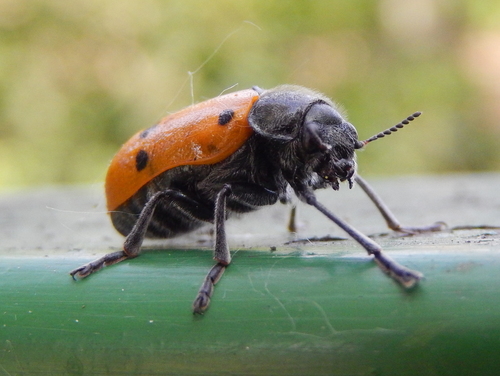
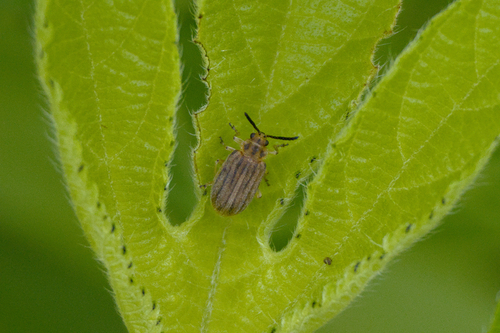
The closest relatives of the Poplar Leaf Beetle that you can see in Milan (family Chrysomelidae, Leaf Beetles) are Rosemary Beetle (about 10%), Lachnaia italica (about 10%) and Ragweed Leaf Beetle (about 10%), with each one's daily chance of a sighting.

Where does the Poplar Leaf Beetle sighting chance come from?

GBIF citizen-science records

It is estimated from how often the Poplar Leaf Beetle is recorded against all the insects logged in Milan (22 verified sightings), calibrated against known sighting rates. Figures are rounded to the nearest 10% because citizen-science data supports honest approximations, not decimals, and months with records from fewer than five people show "—". How it works.

← Back to Milan