
Differential Grasshopper

Differential Grasshopper

Melanoplus differentialis

Daily sighting probability <5% · Rare
at Monterrey

In 3 days ~10% in a week ~20%

7 Verified sightings at Monterrey
82 In all 6 parks From 2019 to 2026
September Best month
☀️ Diurnal When it's spotted

About the Differential Grasshopper

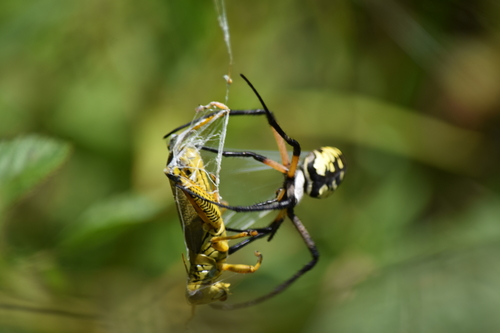
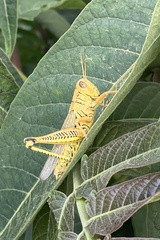
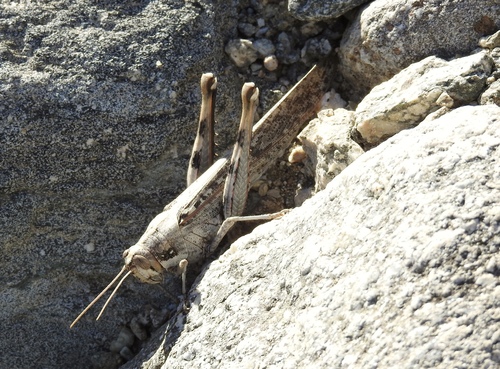
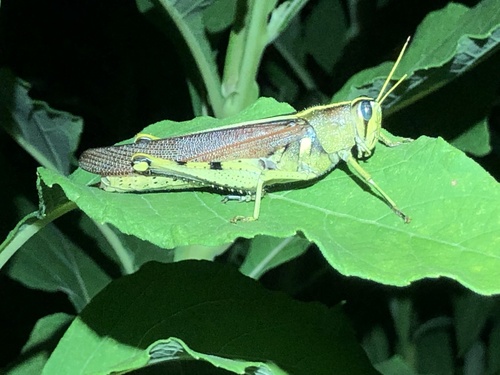
The differential grasshopper (Melanoplus differentialis) is a species of grasshopper belonging to the genus Melanoplus. It is found throughout northern Mexico, the central United States and southern Ontario, Canada. It is considered a pest over most of its range.

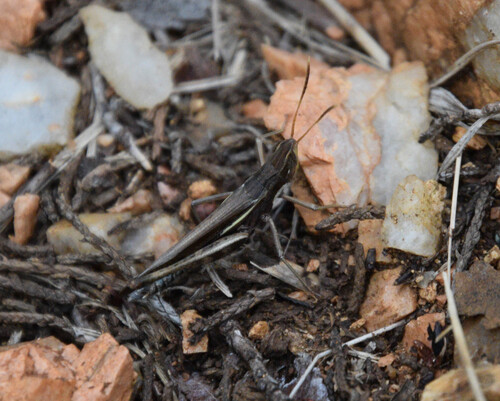
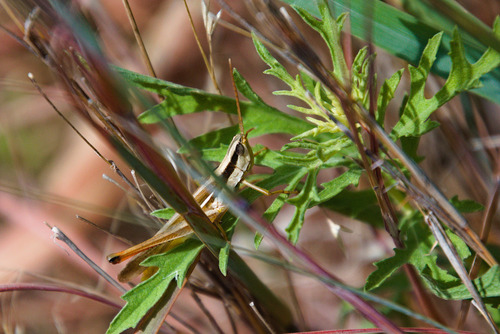
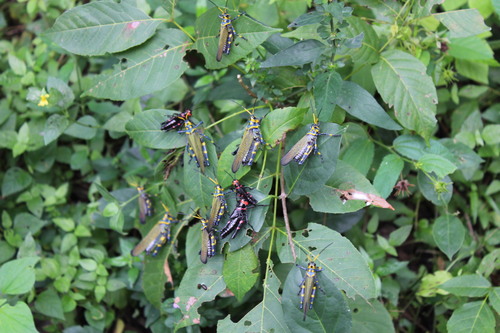
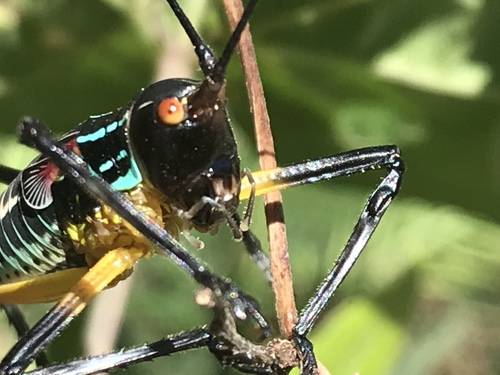
Adult males grow to 28–37 mm, and females grow to 34–50 mm. They are brownish or greenish, and as they age the color will darken. Some nymphs can be bright yellow. There are black grooves on the pronotum. The male has bootlike appendages at the end of its abdominal tip. There are inverted chevrons along the hind femur, and the hind part of the tibia is yellowish with black spikes. All adults have yellow tarsi and antennae, or in some cases reddish-yellow antennae.

The differential grasshopper is found throughout most of the United States, except for the northwest. Within its range, it is most often found in heavily weeded areas and grasslands, and even in vacant lots and other urban areas. This species is not migratory, but can travel a few miles to search for food. In the northern part of its range, M. differentialis is about as numerous as the two-striped grasshopper (Melanoplus... Wikipedia →

Global Distribution

Parks Where Found

# Park Country Daily sighting probability
1 Shenandoah National Park 🇺🇸 United States
~10%
2 Badlands National Park 🇺🇸 United States
~10%
3 Point Pelee National Park 🇨🇦 Canada
~10%
4 Big Bend National Park 🇺🇸 United States
~10%
5 Cumbres de Monterrey National Park 🇲🇽 Mexico
~10%
6 Great Smoky Mountains National Park 🇺🇸 United States
<5%

Cities Where Found

# City Country Daily sighting probability
1 Salt Lake City 🇺🇸 United States
~30%
2 León 🇲🇽 México
~20%
3 San Luis Potosí 🇲🇽 México
~20%
4 Minneapolis [Saint Paul] 🇺🇸 United States
~20%
5 Mexico City 🇲🇽 México
~20%
6 Detroit 🇺🇸 United States
~20%
7 Baltimore 🇺🇸 United States
~20%
8 Chicago 🇺🇸 United States
~10%
9 Austin 🇺🇸 United States
~10%
10 Philadelphia 🇺🇸 United States
~10%

Before you go

What are the chances of seeing a Differential Grasshopper in Monterrey?

Rare

Under 5% of wildlife watchers report a Differential Grasshopper sighting in Monterrey on a given day, based on 7 verified sightings from GBIF citizen-science data. It is the 305th most-seen of the 413 insects we can rate there. Over three days the chance rises to about 10%, and over a week to about 20%, if each day is a fresh chance.

When is the best time to see a Differential Grasshopper in Monterrey?

September and October

In those months about 10% of wildlife watchers report a Differential Grasshopper in Monterrey on a given day, against under 5% in November to August, the lowest months. Those are among Monterrey's wettest months, with about 130 mm of rain a month against 20 mm in February.

What time of day is best to see a Differential Grasshopper?

Between 1 and 4 pm

Across all the parks we cover, that three-hour window holds the most Differential Grasshopper sightings with a recorded time, and about 9 in 10 of them come between 6 am and 6 pm: it is a daytime animal.

Is Monterrey the best place to see a Differential Grasshopper?

20th of 24

Of the 24 cities where we can rate Differential Grasshopper sightings, Monterrey ranks 20th at under 5%. The best odds are in Salt Lake City (United States, about 30%), León (México, about 20%) and San Luis Potosí (México, about 20%).

Which relatives of the Differential Grasshopper live in Monterrey?

Same family: Acrididae

The closest relatives of the Differential Grasshopper that you can see in Monterrey (family Acrididae, Short-horned Grasshoppers) are Gray Bird Grasshopper (about 20%) and Obscure Bird Grasshopper (about 10%), with each one's daily chance of a sighting.

Where does the Differential Grasshopper sighting chance come from?

GBIF citizen-science records

It is estimated from how often the Differential Grasshopper is recorded against all the insects logged in Monterrey (7 verified sightings), calibrated against known sighting rates. Figures are rounded to the nearest 10% because citizen-science data supports honest approximations, not decimals, and months with records from fewer than five people show "—". How it works.

← Back to Monterrey