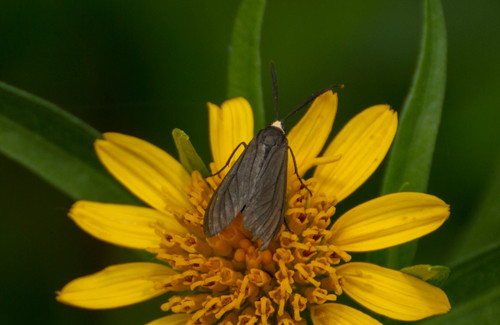
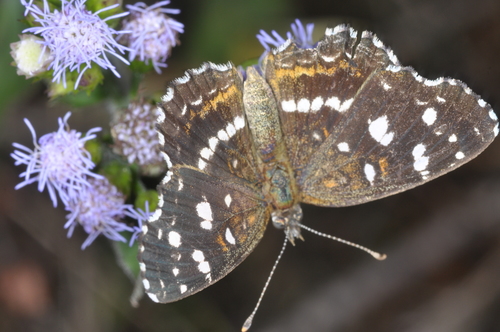
Fiery Skipper

Fiery Skipper

Hylephila phyleus

Daily sighting probability ~20% · Possible
at Montevideo

In 3 days ~40% in a week ~70%

17 Verified sightings at Montevideo
512 In all 14 parks From 2019 to 2026
February Best month
☀️ Diurnal When it's spotted

About the Fiery Skipper

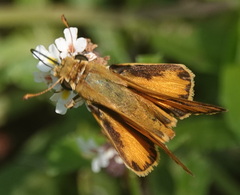
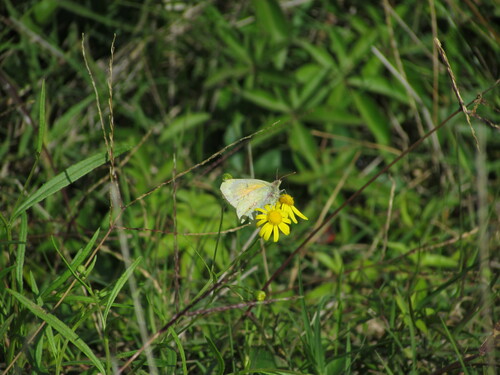
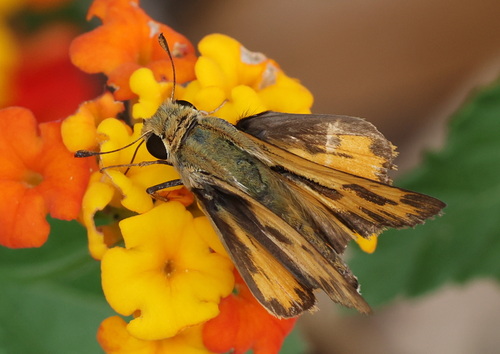
The fiery skipper (Hylephila phyleus) is a species of butterfly in the family Hesperiidae. Reaching approximately 1 inch (2.5 cm) in length, male fiery skippers are orange or yellow while the females are dark brown. Small brown spots may be observed on both the hindwing and forewing of both sexes although to a varying degree. Females may be darker brown overall with pale checkered markings on the hindwing. Fiery skipper larvae, or caterpillars, are greenish pink-grey with a black head and constricted neck. These larvae are often considered pests and can feed on Bermudagrass, creeping bentgrass, and St. Augustine grass.

Phylogenetic and genetic analysis of the fiery skipper revealed three haplotypes (HphH1, HphH26, and HphH31) to be shared in roughly 64.1% of all sampled individuals. Due to this high percentage, these haplotypes likely serve as central haplotypes from which different variations via mutations occurred. Haplotypes HphH22 and HphH23 were found in addition to HphH1, HphH26, and HphH31 to occur in species across all continents with certain haplotypes being prominent in different regions. More variation in haplotype may be observed in South America, suggesting populations may be larger and contain more diversity when compared to those of North America. Wikipedia →

Global Distribution

Parks Where Found

# Park Country Daily sighting probability
1 Congaree National Park 🇺🇸 United States
~20%
2 Bahía de Loreto National Park 🇲🇽 Mexico
~20%
3 Point Pelee National Park 🇨🇦 Canada
~20%
4 El Palmar National Park 🇦🇷 Argentina
~20%
5 Ría Lagartos Biosphere Reserve 🇲🇽 Mexico
~10%
6 Merritt Island National Wildlife Refuge 🇺🇸 United States
~10%
7 Channel Islands National Park 🇺🇸 United States
~10%
8 Great Smoky Mountains National Park 🇺🇸 United States
~10%
9 Everglades National Park 🇺🇸 United States
~10%
10 Death Valley National Park 🇺🇸 United States
~10%
11 Saguaro National Park 🇺🇸 United States
~10%
12 Big Cypress National Preserve 🇺🇸 United States
~10%
13 Joshua Tree National Park 🇺🇸 United States
~10%
14 Cumbres de Monterrey National Park 🇲🇽 Mexico
~10%

Cities Where Found

# City Country Daily sighting probability
1 Mesa 🇺🇸 United States
~30%
2 Tijuana 🇲🇽 México
~20%
3 Austin 🇺🇸 United States
~20%
4 San Antonio 🇺🇸 United States
~20%
5 Dallas 🇺🇸 United States
~20%
6 Buenos Aires 🇦🇷 Argentina
~20%
7 Los Angeles 🇺🇸 United States
~20%
8 San Diego 🇺🇸 United States
~20%
9 Rosario 🇦🇷 Argentina
~20%
10 Sacramento 🇺🇸 United States
~20%

Before you go

What are the chances of seeing a Fiery Skipper in Montevideo?

Possible

About 20% of wildlife watchers report a Fiery Skipper sighting in Montevideo on a given day, based on 17 verified sightings from GBIF citizen-science data. It is the 21st most-seen of the 100 insects we can rate there. Over three days the chance rises to about 40%, and over a week to about 70%, if each day is a fresh chance.

When is the best time to see a Fiery Skipper in Montevideo?

February and December

In those months about 30% of wildlife watchers report a Fiery Skipper in Montevideo on a given day, against under 5% in May to October, the lowest months.

What time of day is best to see a Fiery Skipper?

Between noon and 3 pm

Across all the parks we cover, that three-hour window holds the most Fiery Skipper sightings with a recorded time, and nearly all of them come between 6 am and 6 pm: it is a daytime animal.

Is Montevideo the best place to see a Fiery Skipper?

15th of 45

Of the 45 cities where we can rate Fiery Skipper sightings, Montevideo ranks 15th at about 20%. The best odds are in Mesa (United States, about 30%), Tijuana (México, about 20%) and Austin (United States, about 20%).

Which relatives of the Fiery Skipper live in Montevideo?

Same family: Hesperiidae

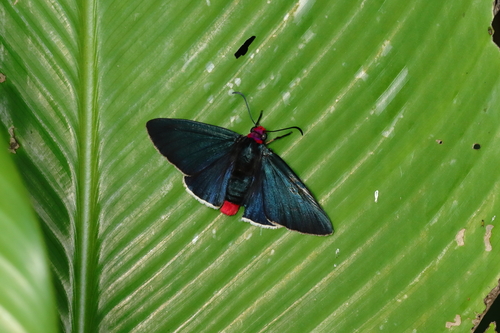
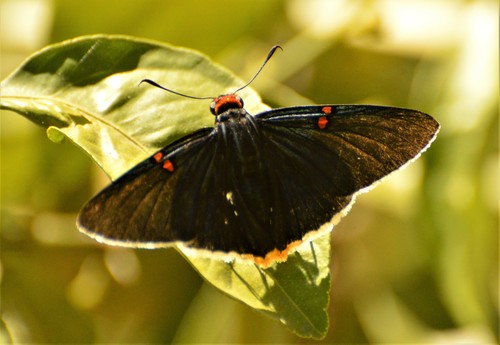
The closest relatives of the Fiery Skipper that you can see in Montevideo (family Hesperiidae, Skippers) are Charybdis Firetip (about 40%) and Southern Guava Skipper (about 10%), with each one's daily chance of a sighting.

Where does the Fiery Skipper sighting chance come from?

GBIF citizen-science records

It is estimated from how often the Fiery Skipper is recorded against all the insects logged in Montevideo (17 verified sightings), calibrated against known sighting rates. Figures are rounded to the nearest 10% because citizen-science data supports honest approximations, not decimals, and months with records from fewer than five people show "—". How it works.
← Back to Montevideo