Eurasian Smoothwing

Eurasian Smoothwing

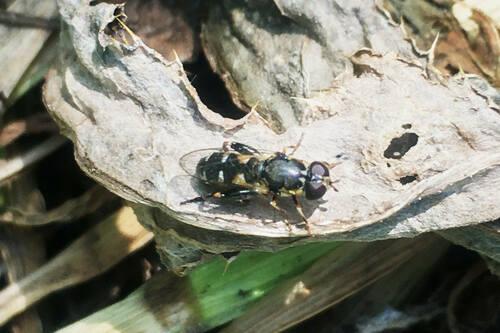
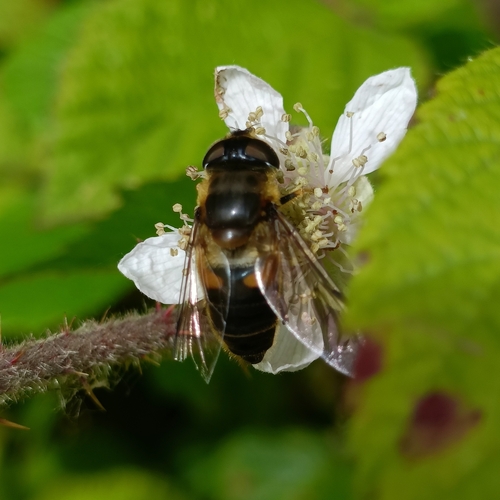
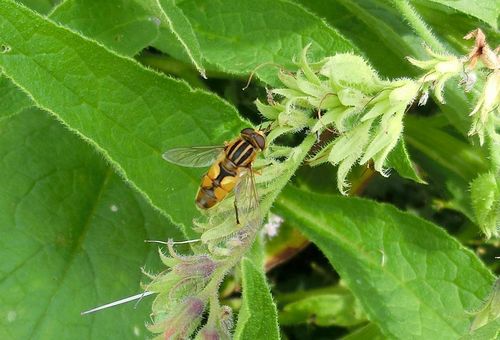
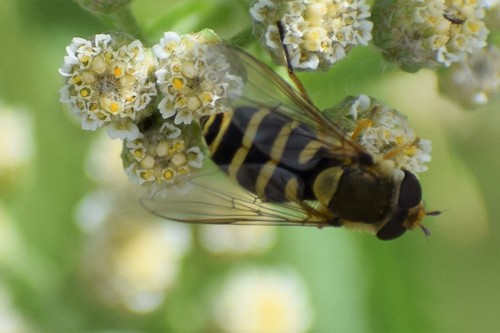
Scaeva pyrastri

Daily sighting probability <5% · Rare
at Moscow

In 3 days ~10%

12 Verified sightings at Moscow
137 In all 11 parks From 2019 to 2026
August Best month
☀️ Diurnal When it's spotted

About the Eurasian Smoothwing

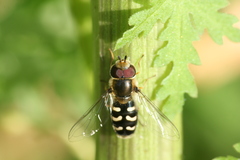
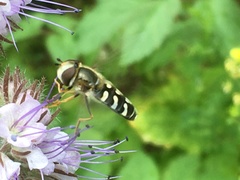
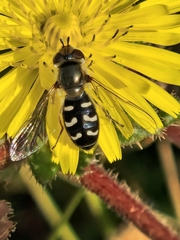
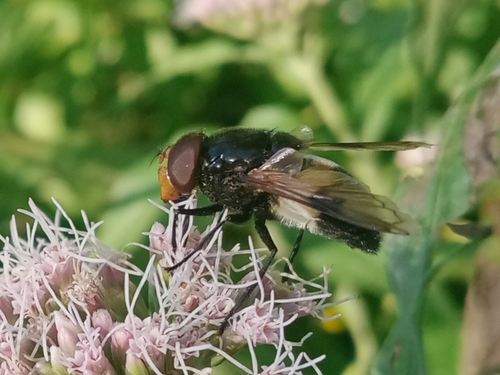
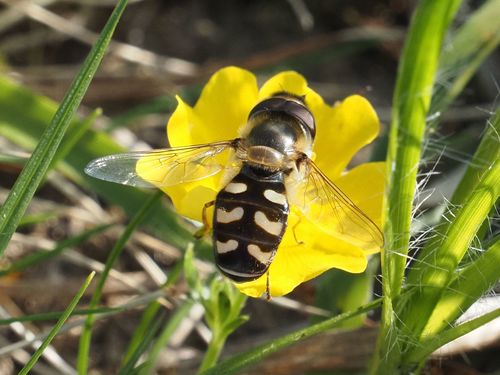
Scaeva pyrastri, common name the pied hoverfly, is a species of hoverfly. These hoverflies are present in most of Europe, the Near East, the East Palearctic realm, the Nearctic realm, North Africa, and the Indomalayan realm. In the UK S. pyrastri is a migrant which arrives in some years in high numbers and in others is almost absent.

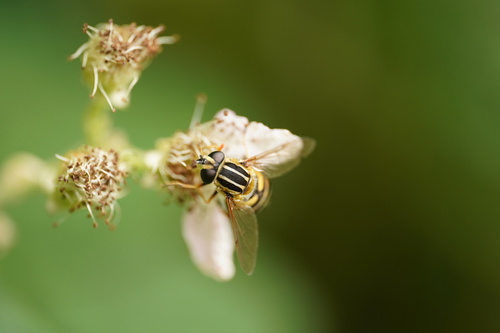
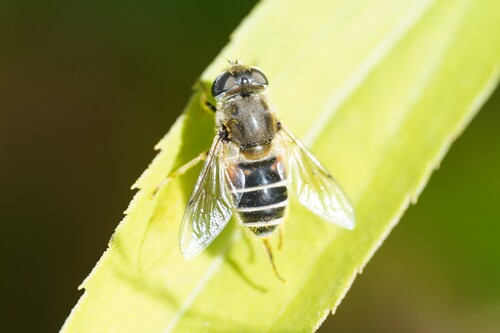
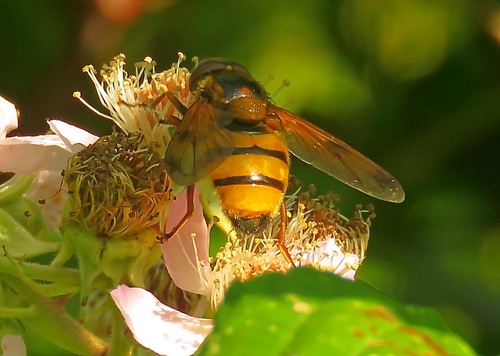
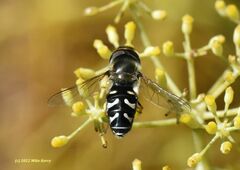
Scaeva pyrastri can reach a length of 11–15 millimetres (0.43–0.59 in). This large distinctive fly has three pairs of white comma markings (lunules) on the abdomen, these are yellow on Scaeva selenitica. The face is yellow, with reddish brown antennae. The eyes are covered with hair. Scutellum is brown yellow. The legs are red with a black base of the femur. The male's eyes do touch in the centre of the frons, while in the females they are separated.

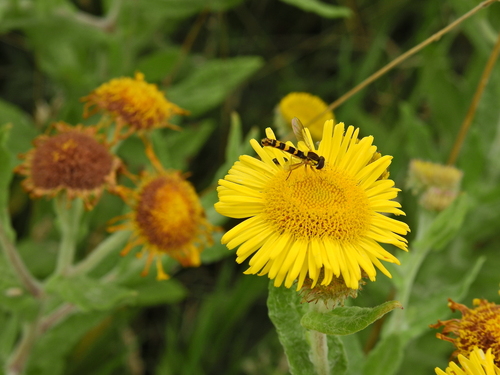
The larvae are light green or sometimes pink, with a white dorsal longitudinal stripe. This species can be found in gardens, meadows and wasteland. Adults are common visitors to flowers of Apiaceae (Umbelliferae), but also of rape, honeysuckle and daisies. They fly from April to September, with the peak in July and August. The larvae feed on different... Wikipedia →
Global Distribution

Parks Where Found

# Park Country Daily sighting probability
1 Aigüestortes National Park 🇪🇸 Spain
~10%
2 Mercantour National Park 🇫🇷 France
~10%
3 Hohe Tauern National Park 🇦🇹 Austria
~10%
4 Vanoise National Park 🇫🇷 France
~10%
5 Triglav National Park 🇸🇮 Slovenia
~10%
6 Wadden Sea National Park 🇩🇪 Germany
~10%
7 Ecrins National Park 🇫🇷 France
~10%
8 Snowdonia National Park 🇬🇧 United Kingdom
~10%
9 Pyrénées National Park 🇫🇷 France
~10%
10 Bavarian Forest National Park 🇩🇪 Germany
~10%
11 Cévennes National Park 🇫🇷 France
<5%

Cities Where Found

# City Country Daily sighting probability
1 Birmingham 🇬🇧 United Kingdom
~10%
2 Copenhagen 🇩🇰 Denmark
~10%
3 Liverpool 🇬🇧 United Kingdom
~10%
4 Warsaw 🇵🇱 Poland
~10%
5 Helsinki 🇫🇮 Finland
~10%
6 London 🇬🇧 United Kingdom
~10%
7 Manchester 🇬🇧 United Kingdom
~10%
8 Berlin 🇩🇪 Germany
~10%
9 Athens 🇬🇷 Greece
~10%
10 Cologne 🇩🇪 Germany
~10%

Before you go

What are the chances of seeing a Eurasian Smoothwing in Moscow?

Rare

Under 5% of wildlife watchers report a Eurasian Smoothwing sighting in Moscow on a given day, based on 12 verified sightings from GBIF citizen-science data. It is the 774th most-seen of the 1111 insects we can rate there. Over three days the chance rises to about 10%, if each day is a fresh chance.

When is the best time to see a Eurasian Smoothwing in Moscow?

Any time of year

In every month with enough records, under 5% of wildlife watchers report a Eurasian Smoothwing in Moscow on a given day, so our monthly data shows no clear season.

What time of day is best to see a Eurasian Smoothwing?

Between 9 am and noon

Across all the parks we cover, that three-hour window holds the most Eurasian Smoothwing sightings with a recorded time, and about 9 in 10 of them come between 6 am and 6 pm: it is a daytime animal.

Is Moscow the best place to see a Eurasian Smoothwing?

27th of 27

Of the 27 cities where we can rate Eurasian Smoothwing sightings, Moscow ranks 27th at under 5%. The best odds are in Birmingham (United Kingdom, about 10%), Copenhagen (Denmark, about 10%) and Liverpool (United Kingdom, about 10%).

Which relatives of the Eurasian Smoothwing live in Moscow?

Same family: Syrphidae

The closest relatives of the Eurasian Smoothwing that you can see in Moscow (family Syrphidae, Hover Flies) are Common Drone Fly (about 10%), Marmalade Hover Fly (about 10%) and Pellucid Hover Fly (about 10%), with each one's daily chance of a sighting.

Where does the Eurasian Smoothwing sighting chance come from?

GBIF citizen-science records

It is estimated from how often the Eurasian Smoothwing is recorded against all the insects logged in Moscow (12 verified sightings), calibrated against known sighting rates. Figures are rounded to the nearest 10% because citizen-science data supports honest approximations, not decimals, and months with records from fewer than five people show "—". How it works.

← Back to Moscow