About the 22-Spot Ladybird
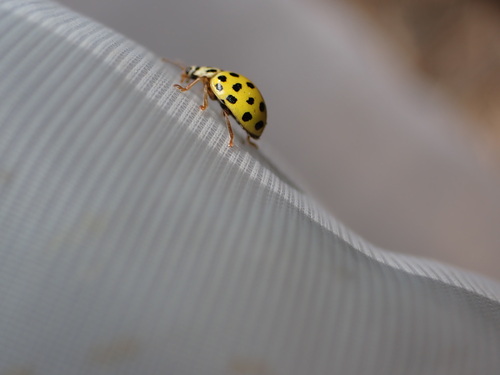
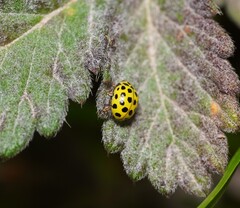
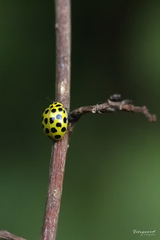
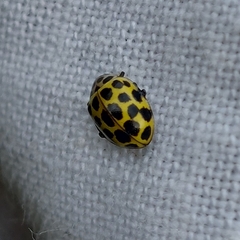
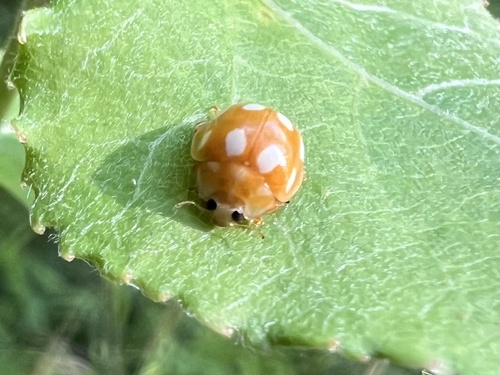
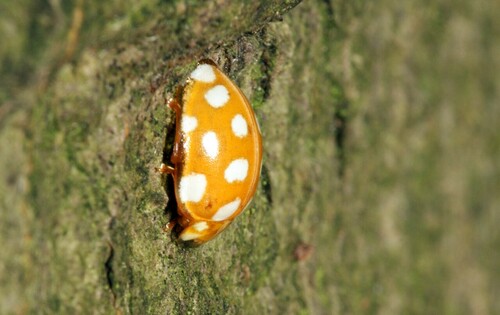
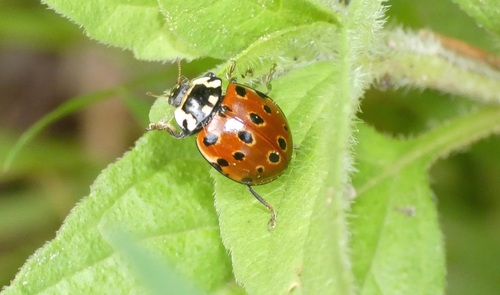
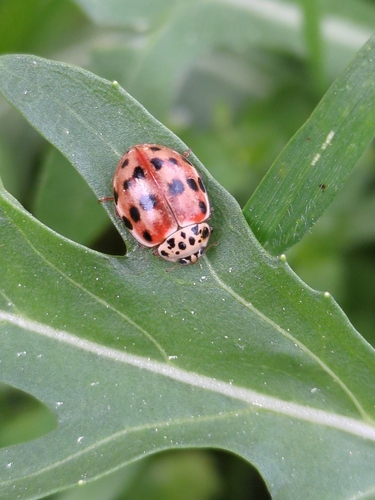
Psyllobora vigintiduopunctata (often abbreviated to Psyllobora 22-punctata), the 22-spot ladybird, (earlier known as Thea vigintiduopunctata) is a common, 3–5 mm long ladybird native to Europe. This species was originally discovered in Germany in 1874 on the leaves of Astragalus, consuming the hyphae of Erysiphe holosericea. The elytra are yellow in colour with 22 black spots. The pronotum is yellow or white with 5 black spots.
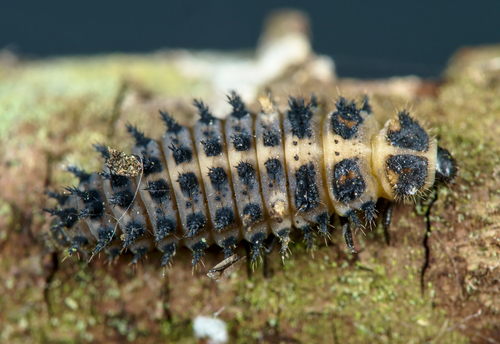
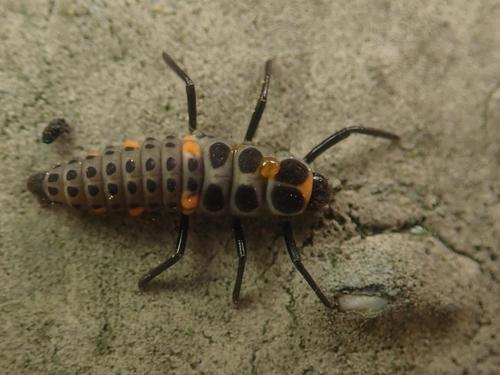
This is the only ladybird species in Britain and Ireland where the three life stages have very similar coloring and pattern; the pupa and larva look similar to the adult form, making them conspicuous and easier to identify. Unlike most other ladybirds which feed on aphids, P. 22-punctata eats mildew — especially from umbellifers and low-growing shrubs.
The 22-spot ladybird is best looked for amongst low vegetation. It has occasionally been found in woodlands, on lower branches of young trees and in some coastal areas. In a survey conducted between 1960 and 1965 by G.I. Savoiskaya in South-Eastern Kazakhstan, up to 500 individuals were found overwintering together in the leaf litter at the bases of birches, hawthorns and wild apple trees. These instances were noted as being found between 1000 meters and 2000 meters above sea level.
The Royal Botanic Gardens, Kew officially recorded their first 22-spot lady bird in 1969, publishing this finding along with many other additions to their wild flora and fauna records. The hemolymph of the 22-spot ladybird beetle contains a dimeric alkaloid, psylloborine A, which has unique structural features, highlighting the species' complex chemical defenses and evolutionary adaptations. Wikipedia →