Ultramarine Flycatcher

Ultramarine Flycatcher

Ficedula superciliaris

Silhouette: Rachael Joakim · PhyloPic

LCLeast ConcernNTVUENCR
Daily sighting probability <5% · Rare
at Nagpur

In 3 days ~10%

25 Verified sightings at Nagpur
399 In all 11 parks From 2019 to 2026
December Best month
☀️ Diurnal When it's spotted

About the Ultramarine Flycatcher

The ultramarine flycatcher or the white-browed blue flycatcher (Ficedula superciliaris) is a small arboreal Old World flycatcher in the Ficedula genus. Its breeding range extends from eastern Afghanistan to the Hengduan Mountains; it winters in India and northwestern Indochina.

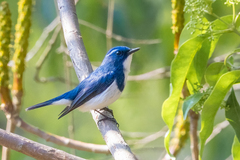
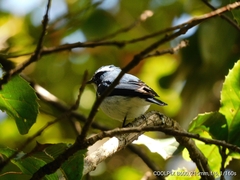
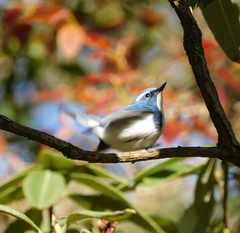
Somewhat smaller in size than a sparrow (c. 10 cm) and with a stocky build. The male is deep blue above, sides of head and neck are deep blue, and a prominent white patch runs from centre of throat, through breast to belly. The amount of white on the brow and tail show clinal variation from West to East along the Himalayan foothills, which is sometimes taken to distinguish three subspecies:

The western subspecies from the western Himalayas has a distinctive white supercilium and white bases to the outer tail feathers. The eastern subspecies (Ficedula superciliaris aestigma) from the eastern Himalayas lacks distinct white patches.

The population from the south Assam hills (sometimes designated a third subspecies cleta) completely lack any supercilium. Usually singly, though sometimes in mixed hunting parties in the winter. Keeps largely to the low trees and bushes, feeding among the foliage... Wikipedia →

Sounds

Call0:17

Thailand · 2019

© Somkiat Pakapinyo (Chai) · XC596720 · CC BY-NC-SA 4.0

Song1:12

India · 2019

© Andrew Spencer · XC547711 · CC BY-NC-ND 4.0

Call0:11

India · 2019

© Prashant Kumar · XC492390 · CC BY-NC-SA 4.0

Global Distribution

Parks Where Found

# Park Country Daily sighting probability
1 Langtang National Park 🇳🇵 Nepal
~10%
2 Bandhavgarh National Park 🇮🇳 India
<5%
3 Satpura National Park 🇮🇳 India
<5%
4 Royal Manas National Park 🇧🇹 Bhutan
<5%
5 Kanha National Park 🇮🇳 India
<5%
6 Jim Corbett National Park 🇮🇳 India
<5%
7 Keoladeo National Park 🇮🇳 India
<5%
8 Chitwan National Park 🇳🇵 Nepal
<5%
9 Ranthambore National Park 🇮🇳 India
<5%
10 Khao Yai National Park 🇹🇭 Thailand
<5%
11 Manas National Park 🇮🇳 India
<5%

Cities Where Found

# City Country Daily sighting probability
1 Karachi 🇵🇰 Pakistan
~10%
2 Jabalpur 🇮🇳 India
~10%
3 Chhatrapati Sambhajinagar 🇮🇳 India
<5%
4 Srinagar 🇮🇳 India
<5%
5 Nagpur 🇮🇳 India
<5%
6 Pune 🇮🇳 India
<5%
7 Dehradun 🇮🇳 India
<5%
8 Kathmandu 🇳🇵 Nepal
<5%
9 Kolkata 🇮🇳 India
<5%
10 Hyderabad 🇮🇳 India
<5%

Before you go

What are the chances of seeing an Ultramarine Flycatcher in Nagpur?

Rare

Under 5% of wildlife watchers report an Ultramarine Flycatcher sighting in Nagpur on a given day, based on 25 verified sightings from GBIF citizen-science data. It is the 140th most-seen of the 196 birds we can rate there. Over three days the chance rises to about 10%, if each day is a fresh chance.

When is the best time to see an Ultramarine Flycatcher in Nagpur?

February and December

In those months about 10% of wildlife watchers report an Ultramarine Flycatcher in Nagpur on a given day, against under 5% in January and March–November, the lowest months. Those are among Nagpur's driest months, with about 5 mm of rain a month against 310 mm in July.

What time of day is best to see an Ultramarine Flycatcher?

Between 7 and 10 am

Across all the parks we cover, that three-hour window holds the most Ultramarine Flycatcher sightings with a recorded time, and about 9 in 10 of them come between 6 am and 6 pm: it is a daytime animal.

Is Nagpur the best place to see an Ultramarine Flycatcher?

5th of 13

Of the 13 cities where we can rate Ultramarine Flycatcher sightings, Nagpur ranks 5th at under 5%. The best odds are in Karachi (Pakistan, about 10%), Jabalpur (India, about 10%) and Chhatrapati Sambhajinagar (India, under 5%).

Where does the Ultramarine Flycatcher sighting chance come from?

GBIF citizen-science records

It is estimated from how often the Ultramarine Flycatcher is recorded against all the birds logged in Nagpur (25 verified sightings), calibrated against known sighting rates. Figures are rounded to the nearest 10% because citizen-science data supports honest approximations, not decimals, and months with records from fewer than five people show "—". How it works.

← Back to Nagpur