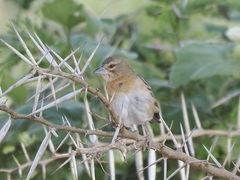
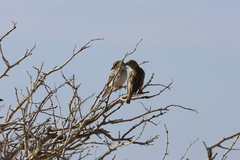
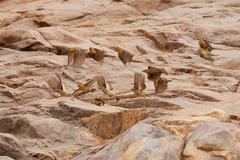
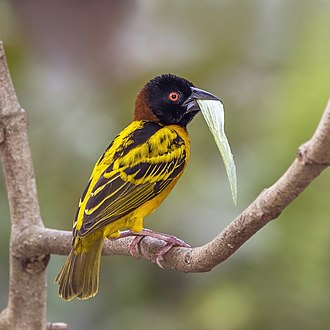
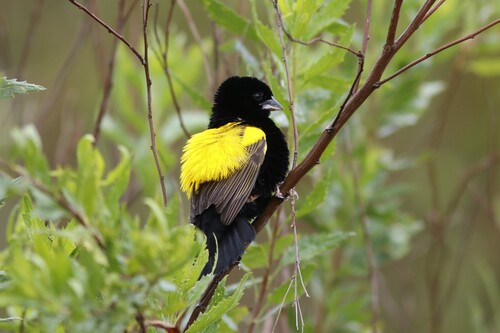
Chestnut Weaver

Chestnut Weaver

Ploceus rubiginosus

Silhouette: Sheatherius · PhyloPic

LCLeast ConcernNTVUENCR
Daily sighting probability <5% · Rare
at Nairobi

In 3 days ~10%

29 Verified sightings at Nairobi
1,599 In all 17 parks From 2019 to 2026
November Best month
☀️ Diurnal When it's spotted

About the Chestnut Weaver

The chestnut weaver (Ploceus rubiginosus) is a species of bird in the family Ploceidae. It is found in eastern and south-western Africa. They can typically be found in Kenya, Botswana, Ethiopia, Somalia, Uganda, Tanzania, Angola, and Namibia. Chestnut Weavers are considered locally abundant and of least concern. It is a nomadic as well as residential species that moves in response to rainfall and food availability.

Its general habitat is dry. It can be found in shrubland and thornveld, typically below 1,500 Meters. Colonies of Chestnut Weavers can be found near Nairobi and on the Laikipia Plateau in Kenya, but only when there is good rain, they will also appear further South in Kenya, in Tsavo, from October to April.

It is often seen in flocks, which is because they are colonial breeders; many birds nest together in one area. They breed in October in Ethiopia, in May in Somalia, May to July in Uganda, April to July in Kenya, as well as November in the northern arid region, March to April in Tanzania, April in Angola, and December to May in Namibia. Sometimes they will extend their breeding grounds into northwestern Botswana, being found... Wikipedia →

Sounds

Song0:44

Tanzania · 2019

© Peter Boesman · XC510351 · CC BY-NC-ND 4.0

Call0:20

Ethiopia · 2014

© Andrew Spencer · XC268875 · CC BY-NC-ND 4.0

Call0:28

Somalia · 2014

© Bram Piot · XC171590 · CC BY-NC-SA 4.0

Global Distribution

Parks Where Found

# Park Country Daily sighting probability
1 Meru National Park 🇰🇪 Kenya
~60%
2 Samburu National Reserve 🇰🇪 Kenya
~40%
3 Tsavo West National Park 🇰🇪 Kenya
~30%
4 Tsavo East National Park 🇰🇪 Kenya
~20%
5 Awash National Park 🇪🇹 Ethiopia
~10%
6 Mkomazi National Park 🇹🇿 Tanzania
~10%
7 Amboseli National Park 🇰🇪 Kenya
~10%
8 Lake Manyara National Park 🇹🇿 Tanzania
~10%
9 Tarangire National Park 🇹🇿 Tanzania
~10%
10 Nairobi National Park 🇰🇪 Kenya
<5%
11 Waterberg Plateau Park 🇳🇦 Namibia
<5%
12 Ngorongoro Conservation Area 🇹🇿 Tanzania
<5%
13 Serengeti National Park 🇹🇿 Tanzania
<5%
14 Etosha National Park 🇳🇦 Namibia
<5%
15 Arusha National Park 🇹🇿 Tanzania
<5%
16 Lake Nakuru National Park 🇰🇪 Kenya
<5%
17 Kidepo Valley National Park 🇺🇬 Uganda
<5%

Cities Where Found

# City Country Daily sighting probability
1 Nairobi 🇰🇪 Kenya
<5%

Zoos & Centres Where Found

# Zoo / Centre Country
1 Omaha’s Henry Doorly Zoo and Aquarium 🇺🇸 United States In captivity

Before you go

What are the chances of seeing a Chestnut Weaver in Nairobi?

Rare

Under 5% of wildlife watchers report a Chestnut Weaver sighting in Nairobi on a given day, based on 29 verified sightings from GBIF citizen-science data. It is the 144th most-seen of the 234 birds we can rate there. Over three days the chance rises to about 10%, if each day is a fresh chance.

When is the best time to see a Chestnut Weaver in Nairobi?

Any time of year

In every month with enough records, under 5% of wildlife watchers report a Chestnut Weaver in Nairobi on a given day, so our monthly data shows no clear season.

What time of day is best to see a Chestnut Weaver?

Between 7 and 10 am

Across all the parks we cover, that three-hour window holds the most Chestnut Weaver sightings with a recorded time, and about 8 in 10 of them come between 6 am and 6 pm: it is a daytime animal.

Where else can you see a Chestnut Weaver?

Only Nairobi, in our data

Nairobi is the only city on Wallace's Line with enough records to rate Chestnut Weaver sightings: under 5% of wildlife watchers there report one on a given day.

Which relatives of the Chestnut Weaver live in Nairobi?

Same genus: Ploceus

The closest relatives of the Chestnut Weaver that you can see in Nairobi (genus Ploceus, Typical Weavers) are Baglafecht Weaver (about 70%), Holub's Golden-Weaver (about 20%) and Village Weaver (about 20%), with each one's daily chance of a sighting.

Where does the Chestnut Weaver sighting chance come from?

GBIF citizen-science records

It is estimated from how often the Chestnut Weaver is recorded against all the birds logged in Nairobi (29 verified sightings), calibrated against known sighting rates. Figures are rounded to the nearest 10% because citizen-science data supports honest approximations, not decimals, and months with records from fewer than five people show "—". How it works.

← Back to Nairobi