Common Mapwing

Common Mapwing

Cyrestis thyodamas

Daily sighting probability <5% · Rare
at Osaka

In 3 days ~10% in a week ~30%

7 Verified sightings at Osaka
177 In all 9 parks From 2019 to 2026
October Best month
☀️ Diurnal When it's spotted

About the Common Mapwing

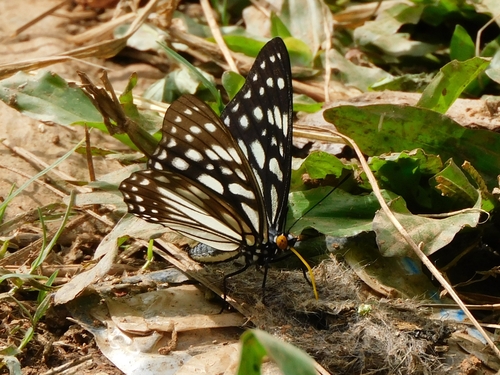
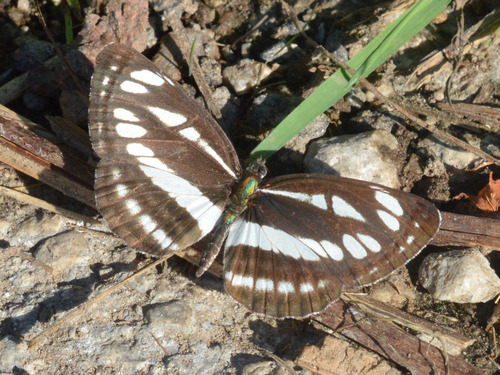
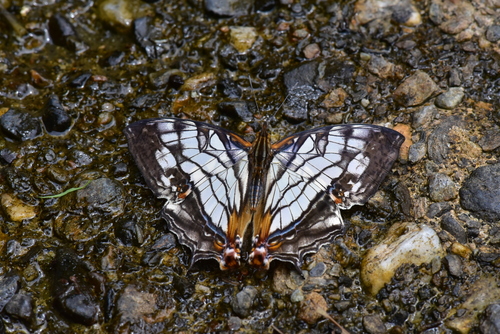
Cyrestis thyodamas, the common map, is a species of butterfly in the family Nymphalidae. It was first described by Jean Baptiste Boisduval in 1836. It is found in the Indian subcontinent and Southeast Asia. Males and females upperside white, in many specimens pale ochraceous yellow, veins black. Forewing with four very slender irregularly sinuous transverse black lines, the costal margin shaded with ochraceous at base and fuscous beyond; cell crossed by three or four additional short lines; a postdiscal very incomplete series of white-centred broad fuscous rings in the interspaces, tinged with ochraceous near the tornus and broadly interrupted in interspaces 3 and 4; beyond this two transverse black lines not reaching the dorsal margin, shaded with fuscous between; the apex broadly and the termen also shaded with fuscous. Hindwing with three transverse fine lines; a pair of postdiscal broad black lines shaded with light sepia brown between, forming a conspicuous band, the outer line broken and incomplete, followed by two irregular black lines, a subterminal more pronounced black line, and posteriorly a narrow black terminal margin; dorsal margin broadly fuscous at... Wikipedia →

Global Distribution

Parks Where Found

# Park Country Daily sighting probability
1 Namdapha National Park 🇮🇳 India
~50%
2 Cuc Phuong National Park 🇻🇳 Vietnam
~40%
3 Royal Manas National Park 🇧🇹 Bhutan
~40%
4 Taroko National Park 🇹🇼 Taiwan
~30%
5 Khao Yai National Park 🇹🇭 Thailand
~20%
6 Periyar National Park 🇮🇳 India
~20%
7 Kanha National Park 🇮🇳 India
~10%
8 Cat Tien National Park 🇻🇳 Vietnam
~10%
9 Doi Inthanon National Park 🇹🇭 Thailand
~10%

Cities Where Found

# City Country Daily sighting probability
1 Naha 🇯🇵 Japan
~40%
2 Taipei 🇹🇼 Taiwan
~20%
3 Tuen Mun 🇨🇳 China
~20%
4 Dehradun 🇮🇳 India
~20%
5 Hong Kong 🇨🇳 China
~20%
6 Kathmandu 🇳🇵 Nepal
~10%
7 Taichung 🇹🇼 Taiwan
~10%
8 Zhuhai [Macau] 🇨🇳 China
~10%
9 Guangzhou 🇨🇳 China
~10%
10 Kaohsiung 🇹🇼 Taiwan
~10%

Before you go

What are the chances of seeing a Common Mapwing in Osaka?

Rare

Under 5% of wildlife watchers report a Common Mapwing sighting in Osaka on a given day, based on 7 verified sightings from GBIF citizen-science data. It is the 246th most-seen of the 352 insects we can rate there. Over three days the chance rises to about 10%, and over a week to about 30%, if each day is a fresh chance.

When is the best time to see a Common Mapwing in Osaka?

April and September–November

In those months about 10% of wildlife watchers report a Common Mapwing in Osaka on a given day, against under 5% in May–August and December–March, the lowest months.

What time of day is best to see a Common Mapwing?

Between 9 am and noon

Across all the parks we cover, that three-hour window holds the most Common Mapwing sightings with a recorded time, and about 9 in 10 of them come between 6 am and 6 pm: it is a daytime animal.

Is Osaka the best place to see a Common Mapwing?

12th of 12

Of the 12 cities where we can rate Common Mapwing sightings, Osaka ranks 12th at under 5%. The best odds are in Naha (Japan, about 40%), Taipei (Taiwan, about 20%) and Tuen Mun (China, about 20%).

Which relatives of the Common Mapwing live in Osaka?

Same family: Nymphalidae

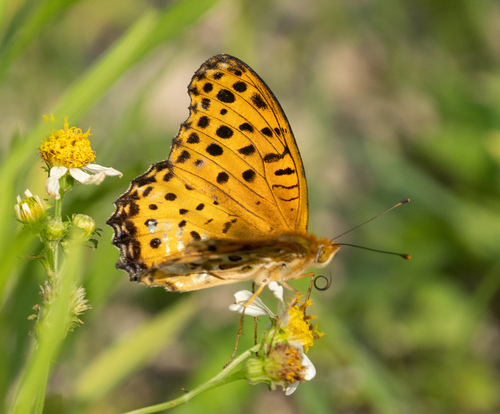
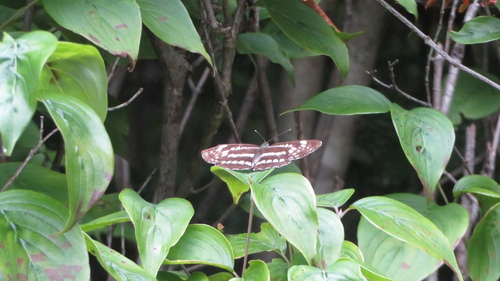
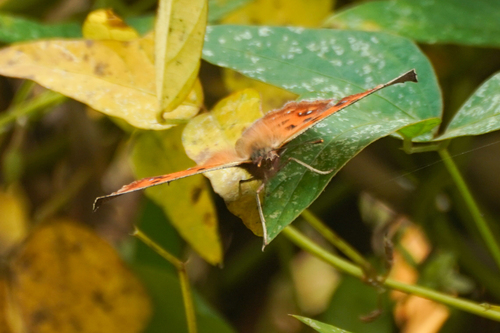
The closest relatives of the Common Mapwing that you can see in Osaka (family Nymphalidae, Brush-footed Butterflies) are Tropical Fritillary (about 30%), Dot-Dash Sailer (about 10%) and Asian Comma (about 10%), with each one's daily chance of a sighting.

Where does the Common Mapwing sighting chance come from?

GBIF citizen-science records

It is estimated from how often the Common Mapwing is recorded against all the insects logged in Osaka (7 verified sightings), calibrated against known sighting rates. Figures are rounded to the nearest 10% because citizen-science data supports honest approximations, not decimals, and months with records from fewer than five people show "—". How it works.
← Back to Osaka