Broad-Bodied Chaser

Broad-Bodied Chaser

Libellula depressa

Daily sighting probability ~10% · With luck
at Paris

In 3 days ~20% in a week ~40%

60 Verified sightings at Paris
238 In all 9 parks From 2019 to 2026
May Best month
☀️ Diurnal When it's spotted

About the Broad-Bodied Chaser

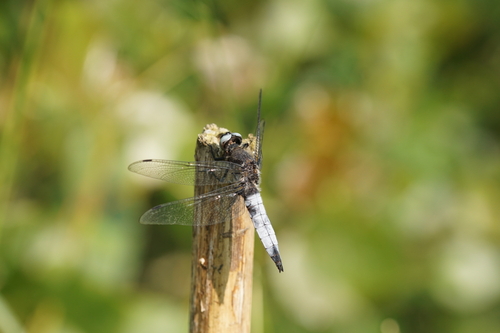
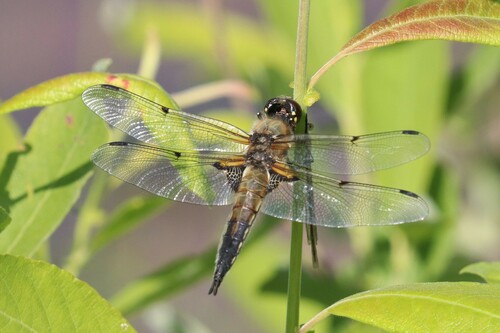
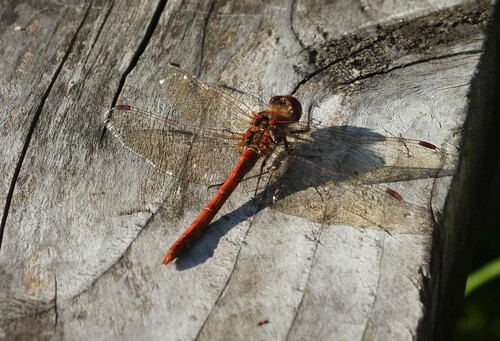
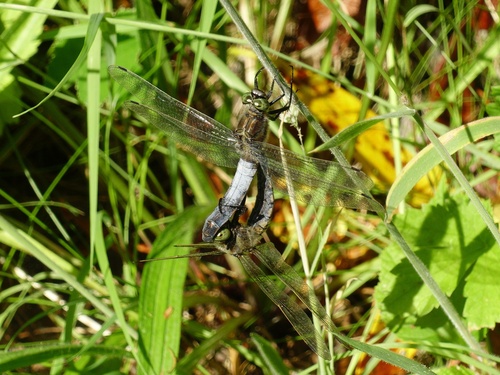
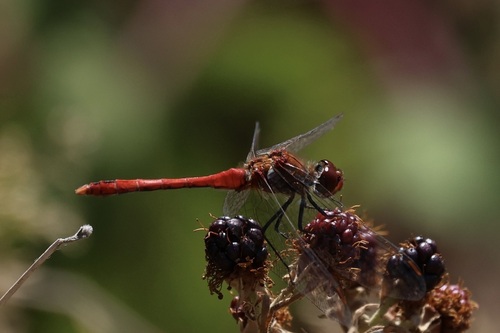
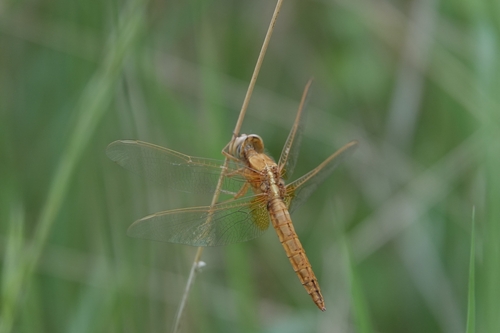
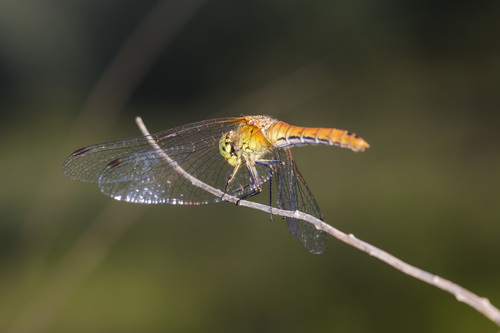
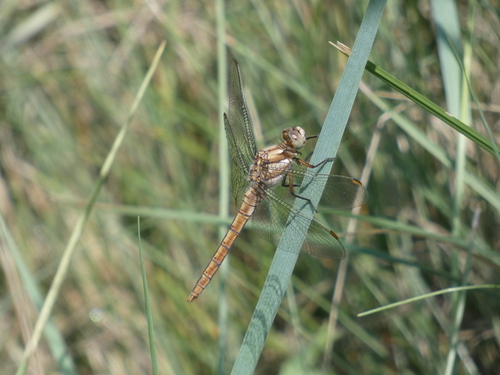
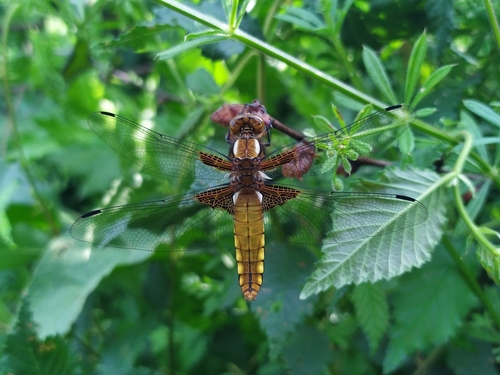
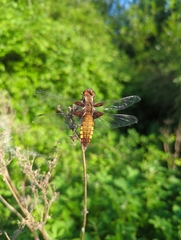
Libellula depressa, the broad-bodied chaser is one of the most common dragonflies in Europe and central Asia. It is very distinctive with a very broad flattened abdomen, four wing patches and, in the male, the abdomen becomes pruinose blue.

This insect is around 39–48 mm in length, with both the male and the female having a broad, flattened abdomen which is brown with yellow patches down the sides. In the male, the abdomen develops a blue pruinosity that covers the brown colour. Both fore and hind wings have a dark patch at the base. Both the male and female have broad antehumeral stripes. The average wingspan is approximately 70 mm. L. depressa is very distinctive and is not easily confused with any other dragonflies in the region.

L. depressa is found in central and southern Europe, central Asia and the Middle East. Its range extends northwards throughout England and Wales and into southern Scotland, southern Sweden and southern Finland. and it occurs on some Mediterranean islands including Corsica, Sardinia, Sicily, and Menorca. Historically its range did not extend into Scotland, but it has colonised north there in recent decades... Wikipedia →
Global Distribution

Parks Where Found

# Park Country Daily sighting probability
1 Aigüestortes National Park 🇪🇸 Spain
~20%
2 Cévennes National Park 🇫🇷 France
~20%
3 Bavarian Forest National Park 🇩🇪 Germany
~10%
4 Pyrénées National Park 🇫🇷 France
~10%
5 Sierra Nevada National Park 🇪🇸 Spain
~10%
6 Snowdonia National Park 🇬🇧 United Kingdom
~10%
7 Monfragüe National Park 🇪🇸 Spain
~10%
8 Sierra de Guadarrama National Park 🇪🇸 Spain
~10%
9 Wadden Sea National Park 🇩🇪 Germany
<5%

Cities Where Found

# City Country Daily sighting probability
1 Birmingham 🇬🇧 United Kingdom
~10%
2 Leeds 🇬🇧 United Kingdom
~10%
3 Budapest 🇭🇺 Hungary
~10%
4 Manchester 🇬🇧 United Kingdom
~10%
5 Rostov-on-Don 🇷🇺 Russia
~10%
6 Liverpool 🇬🇧 United Kingdom
~10%
7 London 🇬🇧 United Kingdom
~10%
8 Copenhagen 🇩🇰 Denmark
~10%
9 Milan 🇮🇹 Italy
~10%
10 Hamburg 🇩🇪 Germany
~10%

Before you go

What are the chances of seeing a Broad-Bodied Chaser in Paris?

With luck

About 10% of wildlife watchers report a Broad-Bodied Chaser sighting in Paris on a given day, based on 60 verified sightings from GBIF citizen-science data. It is the 162nd most-seen of the 916 insects we can rate there. Over three days the chance rises to about 20%, and over a week to about 40%, if each day is a fresh chance.

When is the best time to see a Broad-Bodied Chaser in Paris?

May

In that month about 20% of wildlife watchers report a Broad-Bodied Chaser in Paris on a given day, against under 5% in July to March, the lowest months.

What time of day is best to see a Broad-Bodied Chaser?

Between 1 and 4 pm

Across all the parks we cover, that three-hour window holds the most Broad-Bodied Chaser sightings with a recorded time, and about 9 in 10 of them come between 6 am and 6 pm: it is a daytime animal.

Is Paris the best place to see a Broad-Bodied Chaser?

Among the best

Of the 28 cities where we can rate Broad-Bodied Chaser sightings, Paris ranks 13th at about 10%, level with the leaders once rounded. The best odds are in Birmingham (United Kingdom, about 10%), Leeds (United Kingdom, about 10%) and Budapest (Hungary, about 10%).

Which relatives of the Broad-Bodied Chaser live in Paris?

Same genus: Libellula

The closest relatives of the Broad-Bodied Chaser that you can see in Paris (genus Libellula, Chasers and King Skimmers) are Scarce Chaser (about 10%) and Four-Spotted Skimmer (about 10%), with each one's daily chance of a sighting.

Where does the Broad-Bodied Chaser sighting chance come from?

GBIF citizen-science records

It is estimated from how often the Broad-Bodied Chaser is recorded against all the insects logged in Paris (60 verified sightings), calibrated against known sighting rates. Figures are rounded to the nearest 10% because citizen-science data supports honest approximations, not decimals, and months with records from fewer than five people show "—". How it works.

← Back to Paris