Stable Fly

Stable Fly

Stomoxys calcitrans

Daily sighting probability <5% · Rare
at Porto

In 3 days ~10% in a week ~20%

7 Verified sightings at Porto
30 In all 3 parks From 2019 to 2026
October Best month
☀️ Diurnal When it's spotted

About the Stable Fly

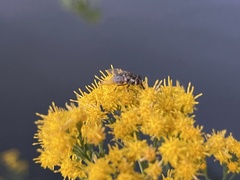
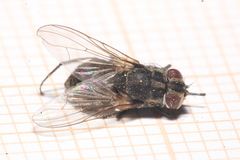
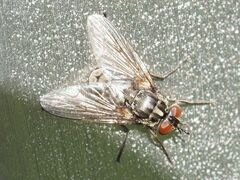
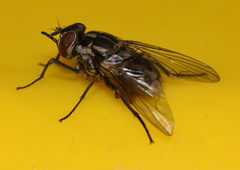
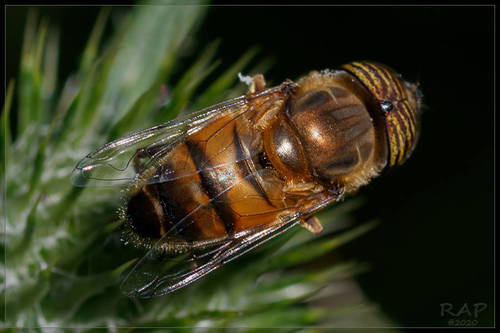
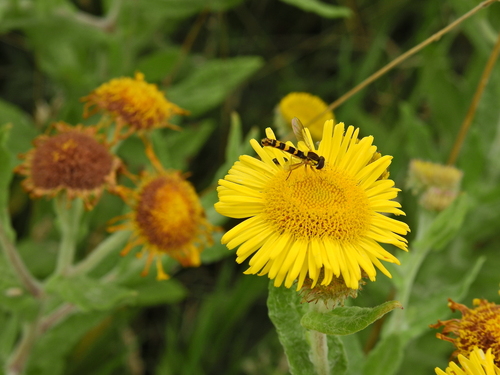
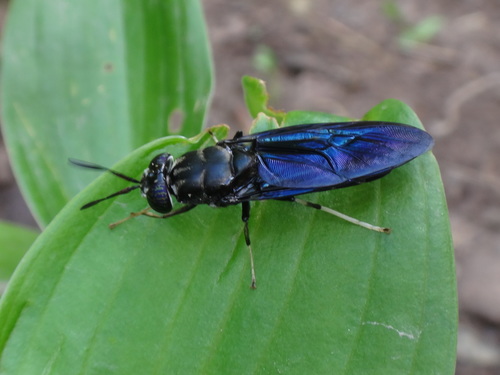
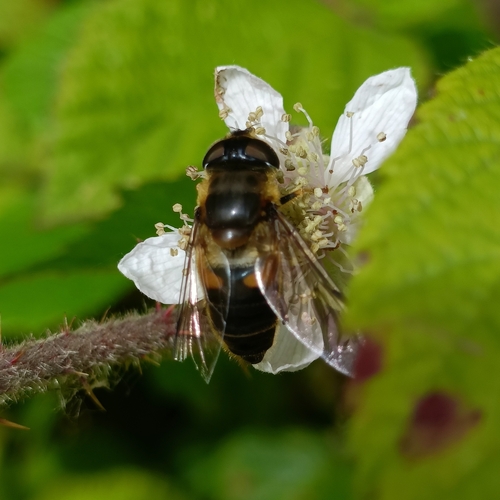
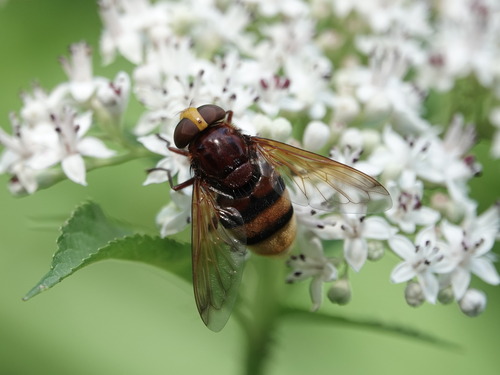
Stomoxys calcitrans is known by the common names stable fly, barn fly, biting house fly, dog fly, and power mower fly. Unlike most members of the family Muscidae, Stomoxys calcitrans ('sharp mouth' + 'kicking') and others of its genus suck blood from mammals. Now found worldwide, the species is considered to be of Eurasian or African origin.

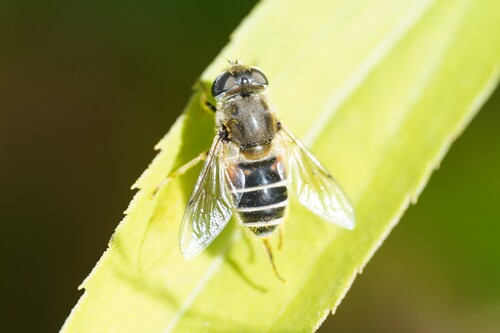
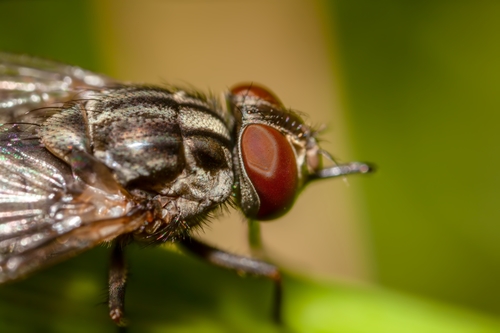
The stable fly resembles the common housefly (Musca domestica), though smaller, and on closer examination has a slightly wider and spotted abdomen. Adults are generally about 6–8 mm (1⁄4–5⁄16 inch) in length and a lighter color than the housefly. Unlike the housefly, where the mouth part is adapted for sponging, the stable fly mouth parts have biting structures. An additional distinction from M. domestica is in the aristae, which bear a single, superior row of hairs in S. calcitrans instead of two opposing rows.

As its name suggests, the stable fly is abundant in and around where cattle are kept. Its maggots are often seen in the rotting manure near cattle and poultry. It also occurs in coastal areas where larvae may inhabit masses of decaying aquatic vegetation deposited ashore.

The earliest... Wikipedia →
Global Distribution

Parks Where Found

# Park Country Daily sighting probability
1 Point Pelee National Park 🇨🇦 Canada
~10%
2 Great Smoky Mountains National Park 🇺🇸 United States
<5%
3 Wadden Sea National Park 🇩🇪 Germany
<5%

Cities Where Found

# City Country Daily sighting probability
1 Quito 🇪🇨 Ecuador
~10%
2 San Luis Potosí 🇲🇽 México
~10%
3 Boston 🇺🇸 United States
<5%
4 Lima 🇵🇪 Peru
<5%
5 Porto 🇵🇹 Portugal
<5%
6 Lisbon 🇵🇹 Portugal
<5%
7 Baltimore 🇺🇸 United States
<5%
8 Auckland 🇳🇿 New Zealand
<5%
9 New York City 🇺🇸 United States
<5%
10 Sacramento 🇺🇸 United States
<5%

Before you go

What are the chances of seeing a Stable Fly in Porto?

Rare

Under 5% of wildlife watchers report a Stable Fly sighting in Porto on a given day, based on 7 verified sightings from GBIF citizen-science data. It is the 395th most-seen of the 498 insects we can rate there. Over three days the chance rises to about 10%, and over a week to about 20%, if each day is a fresh chance.

When is the best time to see a Stable Fly in Porto?

June and October–December

In those months about 10% of wildlife watchers report a Stable Fly in Porto on a given day, against under 5% in January–May and July–September, the lowest months.

What time of day is best to see a Stable Fly?

Between 1 and 4 pm

Across all the parks we cover, that three-hour window holds the most Stable Fly sightings with a recorded time, and about 9 in 10 of them come between 6 am and 6 pm: it is a daytime animal.

Is Porto the best place to see a Stable Fly?

5th of 25

Of the 25 cities where we can rate Stable Fly sightings, Porto ranks 5th at under 5%. The best odds are in Quito (Ecuador, about 10%), San Luis Potosí (México, about 10%) and Boston (United States, under 5%).

Where does the Stable Fly sighting chance come from?

GBIF citizen-science records

It is estimated from how often the Stable Fly is recorded against all the insects logged in Porto (7 verified sightings), calibrated against known sighting rates. Figures are rounded to the nearest 10% because citizen-science data supports honest approximations, not decimals, and months with records from fewer than five people show "—". How it works.

← Back to Porto