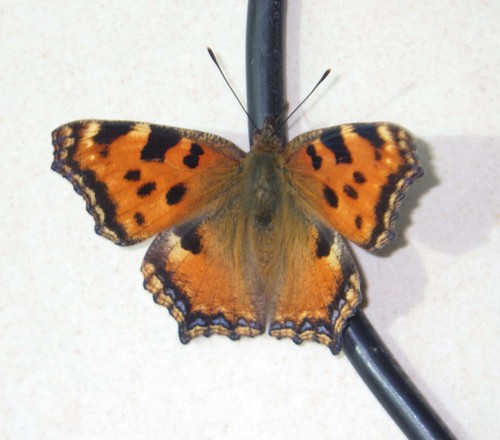
Large Tortoiseshell

Large Tortoiseshell

Nymphalis polychloros

Daily sighting probability <5% · Rare
at Rome

In 3 days ~10% in a week ~30%

5 Verified sightings at Rome
277 In all 9 parks From 2019 to 2026
March Best month
☀️ Diurnal When it's spotted

About the Large Tortoiseshell

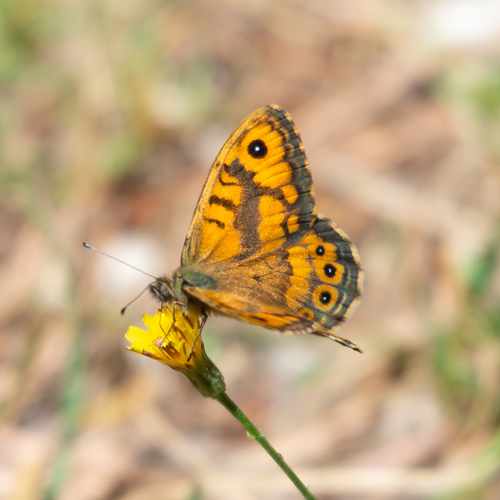
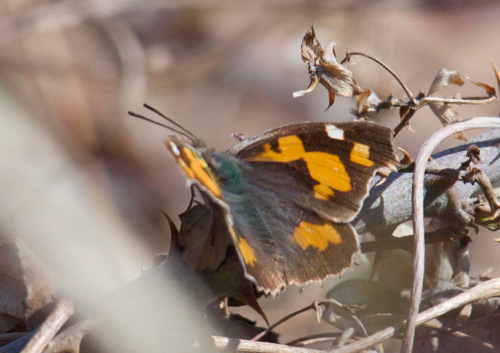
The large tortoiseshell or blackleg tortoiseshell (Nymphalis polychloros) is a butterfly of the family Nymphalidae. The species is found in North Africa, southern and central Europe, Turkey, southern Russia, the central and southern Urals, Kazakhstan and the Himalayas. In Central Europe it occurs mainly in warmer regions and has become generally rare, while populations remain more numerous in parts of the Mediterranean region and the southern Alps.

Large tortoiseshells inhabit open woodland, woodland edges and clearings, as well as orchards, hedgerows and areas of scattered trees. The larvae feed on a variety of deciduous trees including elm, poplar, willow and related species, while adults are often found basking on tree trunks or feeding on sap runs, overripe fruit and honeydew.

The species also occurs in Great Britain, where it has recently begun to re-establish itself following a prolonged absence. The large tortoiseshell was formerly widespread throughout England and Wales... Wikipedia →

Global Distribution

Parks Where Found

# Park Country Daily sighting probability
1 Sierra de Guadarrama National Park 🇪🇸 Spain
~20%
2 Monfragüe National Park 🇪🇸 Spain
~20%
3 Sierra Nevada National Park 🇪🇸 Spain
~10%
4 Cévennes National Park 🇫🇷 France
~10%
5 Mercantour National Park 🇫🇷 France
~10%
6 Aigüestortes National Park 🇪🇸 Spain
~10%
7 Fertő-Hanság National Park 🇭🇺 Hungary
~10%
8 Pyrénées National Park 🇫🇷 France
~10%
9 Bavarian Forest National Park 🇩🇪 Germany
~10%

Cities Where Found

# City Country Daily sighting probability
1 Vienna 🇦🇹 Austria
~10%
2 Budapest 🇭🇺 Hungary
~10%
3 Prague 🇨🇿 Czechia
~10%
4 Lyon 🇫🇷 France
~10%
5 Paris 🇫🇷 France
~10%
6 Berlin 🇩🇪 Germany
<5%
7 Rome 🇮🇹 Italy
<5%
8 Essen 🇩🇪 Germany
<5%

Before you go

What are the chances of seeing a Large Tortoiseshell in Rome?

Rare

Under 5% of wildlife watchers report a Large Tortoiseshell sighting in Rome on a given day, based on 5 verified sightings from GBIF citizen-science data. It is the 247th most-seen of the 289 insects we can rate there. Over three days the chance rises to about 10%, and over a week to about 30%, if each day is a fresh chance.

When is the best time to see a Large Tortoiseshell in Rome?

March and June

In those months about 10% of wildlife watchers report a Large Tortoiseshell in Rome on a given day, against under 5% in April–May and July–February, the lowest months.

What time of day is best to see a Large Tortoiseshell?

Between 11 am and 2 pm

Across all the parks we cover, that three-hour window holds the most Large Tortoiseshell sightings with a recorded time, and about 8 in 10 of them come between 6 am and 6 pm: it is a daytime animal.

Is Rome the best place to see a Large Tortoiseshell?

7th of 8

Of the 8 cities where we can rate Large Tortoiseshell sightings, Rome ranks 7th at under 5%. The best odds are in Vienna (Austria, about 10%), Budapest (Hungary, about 10%) and Prague (Czechia, about 10%).

Which relatives of the Large Tortoiseshell live in Rome?

Same family: Nymphalidae

The closest relatives of the Large Tortoiseshell that you can see in Rome (family Nymphalidae, Brush-footed Butterflies) are Red Admiral (about 30%), Painted Lady (about 20%) and Speckled Wood (about 10%), with each one's daily chance of a sighting.

Where does the Large Tortoiseshell sighting chance come from?

GBIF citizen-science records

It is estimated from how often the Large Tortoiseshell is recorded against all the insects logged in Rome (5 verified sightings), calibrated against known sighting rates. Figures are rounded to the nearest 10% because citizen-science data supports honest approximations, not decimals, and months with records from fewer than five people show "—". How it works.

← Back to Rome