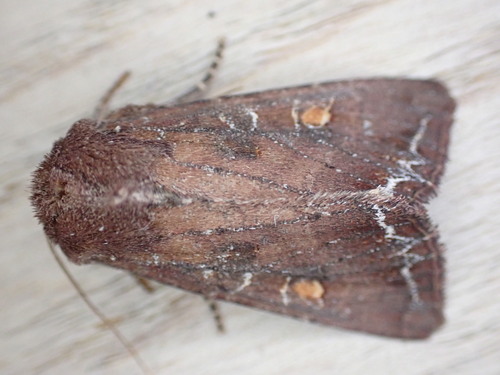
Dark Arches

Dark Arches

Apamea monoglypha

Daily sighting probability <5% · Rare
at Saint Petersburg

In 3 days ~10% in a week ~20%

10 Verified sightings at Saint Petersburg
323 In all 9 parks From 2019 to 2026
July Best month
☀️🌙 Day & Night When it's spotted

About the Dark Arches

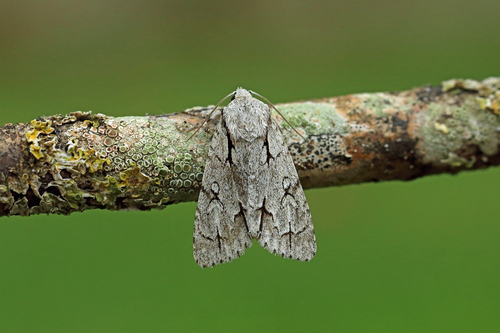
Apamea monoglypha, the dark arches, is a moth of the family Noctuidae. The species was first described by Johann Siegfried Hufnagel in 1766. It is a common, sometimes abundant, European species. It is found in most of Europe except northernmost Fennoscandia and the southern parts of the Iberian Peninsula and Greece. The species is also found in Anatolia, Turkestan, Western Asia and Central Asia, Siberia and Mongolia. In the Alps it is found up to heights of 2,500 meters. The smaller subspecies sardoa is found on Sardinia and Corsica.

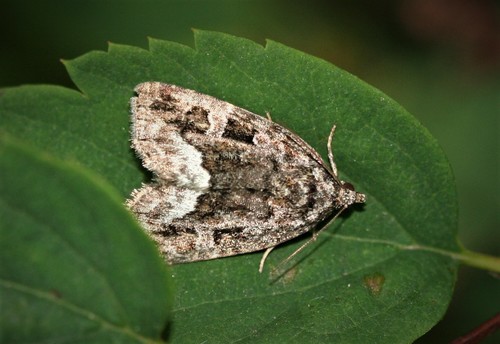
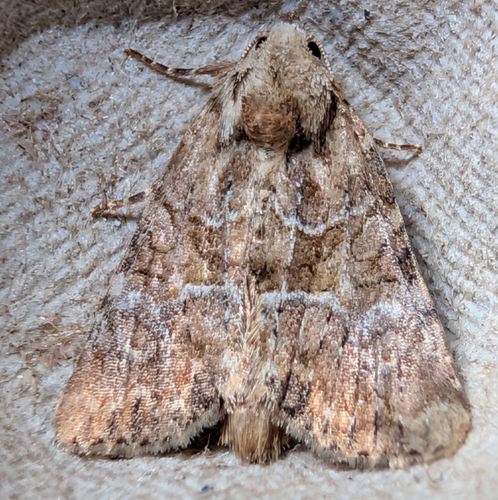
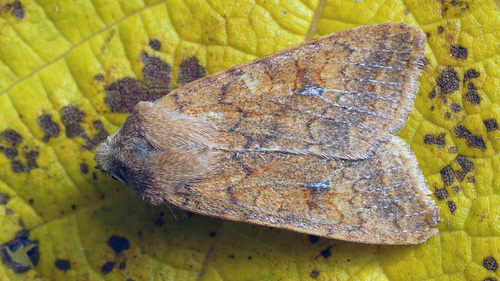
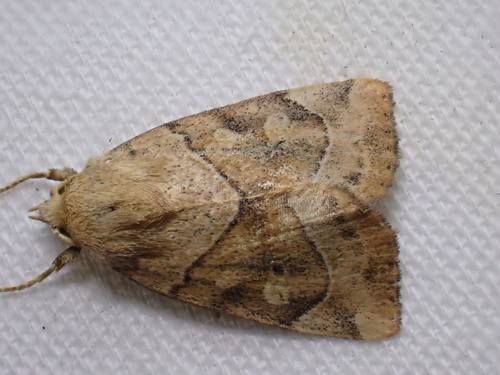
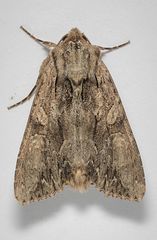
This species has a wingspan of 46 to 54 mm, the forewings varying from pale greyish brown to almost black and cryptically patterned. All but the darkest individuals usually have an obvious black mark close to the dorsum and a pale zigzag subterminal line. The hindwings are whitish with darker venation and a dark shaded band at the margin. The larva is dull whitish grey or dark grey; dorsal line pale: lateral line broadly pale; tubercles large and black; head and thoracic plate brown black.

Forewing varying from whitish ochreous, through pale and dark grey to brownish grey, dark brown and black; a black streak from... Wikipedia →
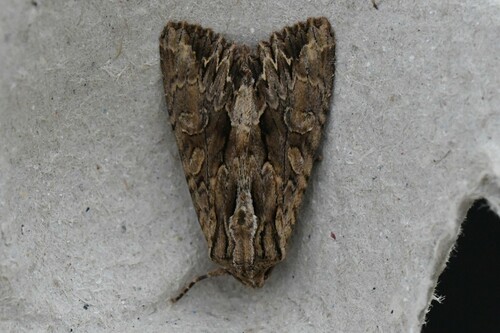
Global Distribution

Parks Where Found

# Park Country Daily sighting probability
1 Snowdonia National Park 🇬🇧 United Kingdom
~30%
2 Cairngorms National Park 🇬🇧 United Kingdom
~20%
3 Vanoise National Park 🇫🇷 France
~10%
4 Wadden Sea National Park 🇩🇪 Germany
~10%
5 Mercantour National Park 🇫🇷 France
~10%
6 Bavarian Forest National Park 🇩🇪 Germany
~10%
7 Sierra Nevada National Park 🇪🇸 Spain
~10%
8 Pyrénées National Park 🇫🇷 France
~10%
9 Cévennes National Park 🇫🇷 France
<5%

Cities Where Found

# City Country Daily sighting probability
1 Liverpool 🇬🇧 United Kingdom
~30%
2 London 🇬🇧 United Kingdom
~20%
3 Manchester 🇬🇧 United Kingdom
~10%
4 Birmingham 🇬🇧 United Kingdom
~10%
5 Leeds 🇬🇧 United Kingdom
~10%
6 Helsinki 🇫🇮 Finland
~10%
7 Minsk 🇧🇾 Belarus
~10%
8 Berlin 🇩🇪 Germany
~10%
9 Nizhny Novgorod 🇷🇺 Russia
~10%
10 Hamburg 🇩🇪 Germany
~10%

Before you go

What are the chances of seeing a Dark Arches in Saint Petersburg?

Rare

Under 5% of wildlife watchers report a Dark Arches sighting in Saint Petersburg on a given day, based on 10 verified sightings from GBIF citizen-science data. It is the 220th most-seen of the 448 insects we can rate there. Over three days the chance rises to about 10%, and over a week to about 20%, if each day is a fresh chance.

When is the best time to see a Dark Arches in Saint Petersburg?

July

In that month about 10% of wildlife watchers report a Dark Arches in Saint Petersburg on a given day, against under 5% in August to June, the lowest months. That is one of Saint Petersburg's wettest months, with about 100 mm of rain against 40 mm in February.

What time of day is best to see a Dark Arches?

Between 6 and 9 am

Across all the parks we cover, that three-hour window holds the most Dark Arches sightings with a recorded time, and about 6 in 10 of them come between 6 am and 6 pm: it is seen both by day and at night.

Is Saint Petersburg the best place to see a Dark Arches?

17th of 17

Of the 17 cities where we can rate Dark Arches sightings, Saint Petersburg ranks 17th at under 5%. The best odds are in Liverpool (United Kingdom, about 30%), London (United Kingdom, about 20%) and Manchester (United Kingdom, about 10%).

Which relatives of the Dark Arches live in Saint Petersburg?

Same family: Noctuidae

The closest relatives of the Dark Arches that you can see in Saint Petersburg (family Noctuidae, Cutworm Moths and Allies) are Sycamore Moth (about 10%) and Large Yellow Underwing (about 10%), with each one's daily chance of a sighting.

Where does the Dark Arches sighting chance come from?

GBIF citizen-science records

It is estimated from how often the Dark Arches is recorded against all the insects logged in Saint Petersburg (10 verified sightings), calibrated against known sighting rates. Figures are rounded to the nearest 10% because citizen-science data supports honest approximations, not decimals, and months with records from fewer than five people show "—". How it works.

← Back to Saint Petersburg