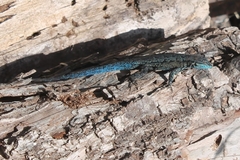
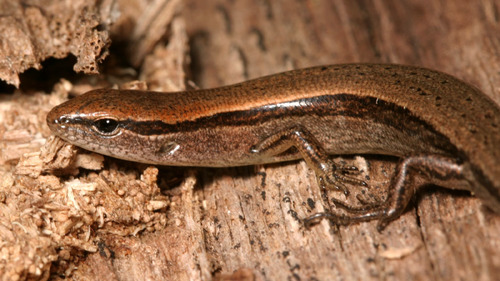
Ornate Tree Lizard

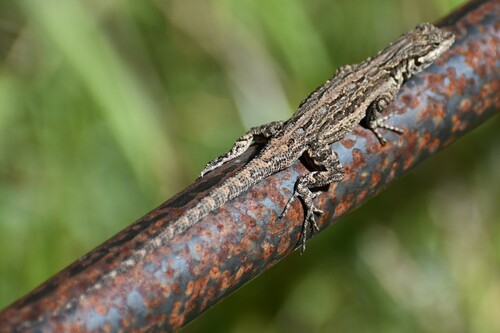
Ornate Tree Lizard

Urosaurus ornatus

Silhouette: Gopal Murali · PhyloPic

LCLeast ConcernNTVUENCR
Daily sighting probability <5% · Rare
at San Antonio

In 3 days ~10% in a week ~20%

5 Verified sightings at San Antonio
683 In all 6 parks From 2019 to 2026
July Best month
☀️ Diurnal When it's spotted

About the Ornate Tree Lizard

Urosaurus ornatus, commonly known as the ornate tree lizard, is a species of lizard in the family Phrynosomatidae. The species is native to the southwestern United States and northwestern Mexico. The species, which was formerly called simply the "tree lizard", has been used to study physiological changes during the fight-or-flight response as related to stress and aggressive competition. Its life history and costs of reproduction have been documented in field populations in New Mexico and Arizona. This species has been fairly well studied because of its interesting variation in throat color in males (within a population) that can correlate with different reproductive strategies.

The ornate tree lizard may grow to a snout-to-vent length (SVL) of up to 59 millimetres (2.3 in). As adults, all males have paired turquoise patches of skin on the abdomen; females lack this abdominal coloration. Male ornate tree lizards are found in a variety of colors. While not all populations contain more than one or two colors, 9 color types have been documented within U. ornatus. A population documented in Verde River, Arizona, has two types of coloration patterns among male tree lizards... Wikipedia →

Global Distribution

Parks Where Found

# Park Country Daily sighting probability
1 Guadalupe Mountains National Park 🇺🇸 United States
~60%
2 Grand Canyon National Park 🇺🇸 United States
~40%
3 Saguaro National Park 🇺🇸 United States
~30%
4 Zion National Park 🇺🇸 United States
~30%
5 Big Bend National Park 🇺🇸 United States
~20%
6 Death Valley National Park 🇺🇸 United States
~10%

Cities Where Found

# City Country Daily sighting probability
1 Mesa 🇺🇸 United States
~40%
2 Phoenix 🇺🇸 United States
~30%
3 Austin 🇺🇸 United States
<5%
4 San Antonio 🇺🇸 United States
<5%

Before you go

What are the chances of seeing an Ornate Tree Lizard in San Antonio?

Rare

Under 5% of wildlife watchers report an Ornate Tree Lizard sighting in San Antonio on a given day, based on 5 verified sightings from GBIF citizen-science data. It is the 31st most-seen of the 33 reptiles we can rate there. Over three days the chance rises to about 10%, and over a week to about 20%, if each day is a fresh chance.

When is the best time to see an Ornate Tree Lizard in San Antonio?

Any time of year

In every month with enough records, under 5% of wildlife watchers report an Ornate Tree Lizard in San Antonio on a given day, so our monthly data shows no clear season.

What time of day is best to see an Ornate Tree Lizard?

Between 9 am and noon

Across all the parks we cover, that three-hour window holds the most Ornate Tree Lizard sightings with a recorded time, and about 9 in 10 of them come between 6 am and 6 pm: it is a daytime animal.

Is San Antonio the best place to see an Ornate Tree Lizard?

4th of 4

Of the 4 cities where we can rate Ornate Tree Lizard sightings, San Antonio ranks 4th at under 5%. The best odds are in Mesa (United States, about 40%), Phoenix (United States, about 30%) and Austin (United States, under 5%).

Which relatives of the Ornate Tree Lizard live in San Antonio?

Same family: Phrynosomatidae

The closest relatives of the Ornate Tree Lizard that you can see in San Antonio (family Phrynosomatidae, Phrynosomatid Lizards) are Texas Spiny Lizard (about 50%) and Rose-bellied Lizard (about 30%), with each one's daily chance of a sighting.

Where does the Ornate Tree Lizard sighting chance come from?

GBIF citizen-science records

It is estimated from how often the Ornate Tree Lizard is recorded against all the reptiles logged in San Antonio (5 verified sightings), calibrated against known sighting rates. Figures are rounded to the nearest 10% because citizen-science data supports honest approximations, not decimals, and months with records from fewer than five people show "—". How it works.
← Back to San Antonio