Leptoglossus zonatus

Leptoglossus zonatus

Leptoglossus zonatus

Daily sighting probability <5% · Rare
at São Paulo

In 3 days ~10% in a week ~20%

13 Verified sightings at São Paulo
51 In all 5 parks From 2019 to 2026
February Best month
☀️ Diurnal When it's spotted

About the Leptoglossus zonatus

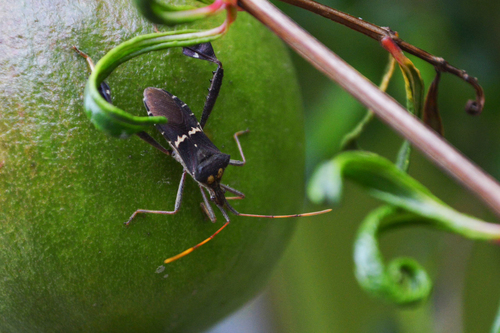
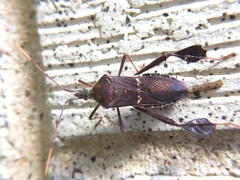
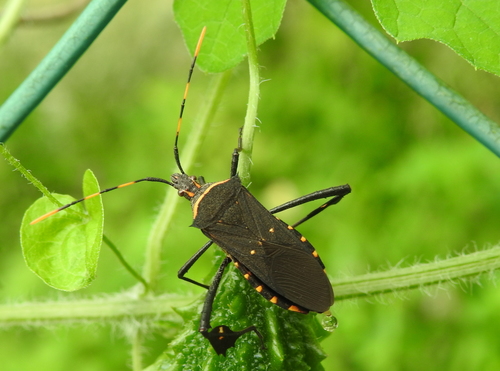
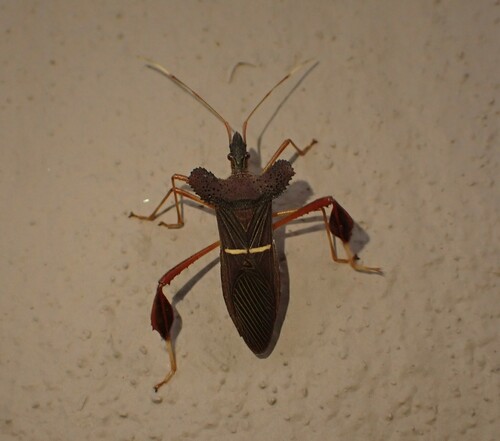
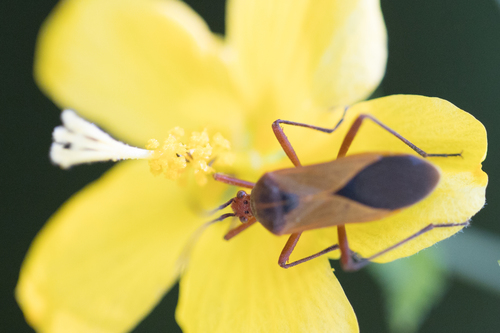
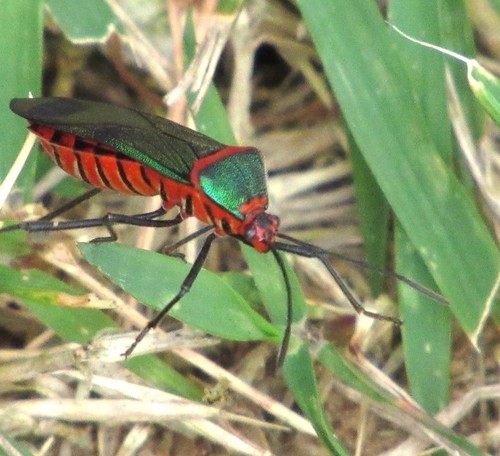
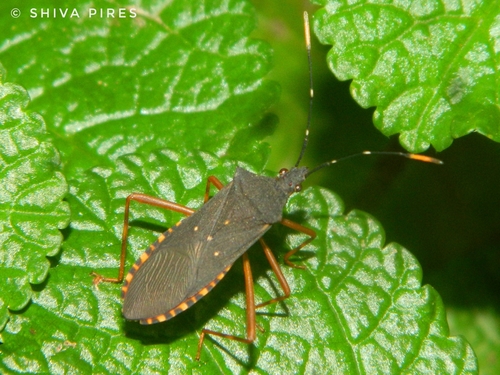
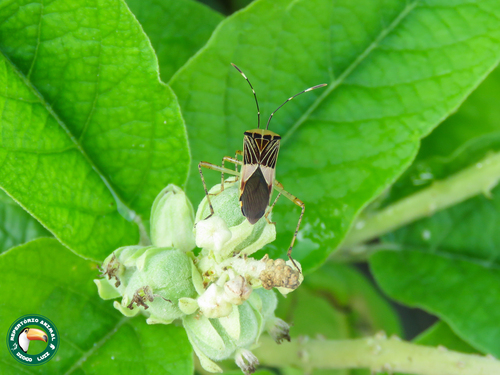
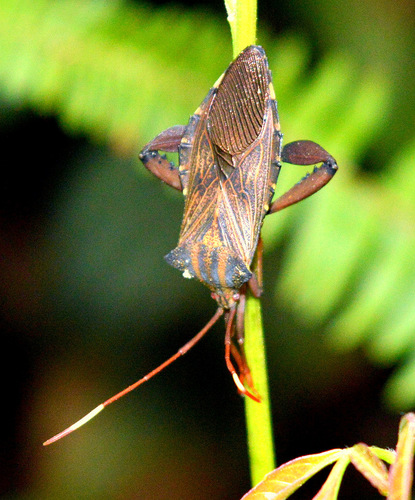
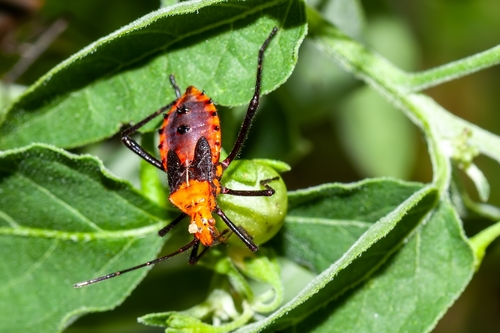
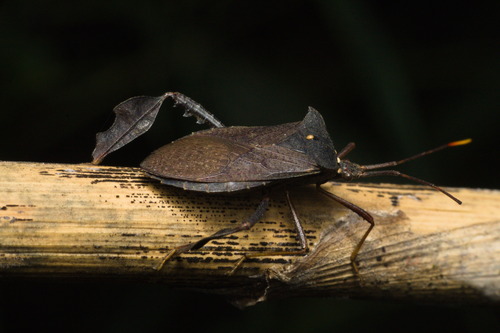
Leptoglossus zonatus is a species of leaf-footed bug, a type of true bugs. It is found throughout much of South America, Central America, Mexico, and the southwestern United States. The bug is two centimeters in length, gray in color, with a zigzagging whitish band across its back and two distinctive yellowish spots on its anterior pronotum, the identifying characteristic for the species.

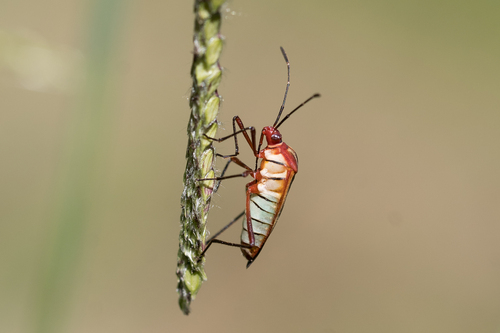
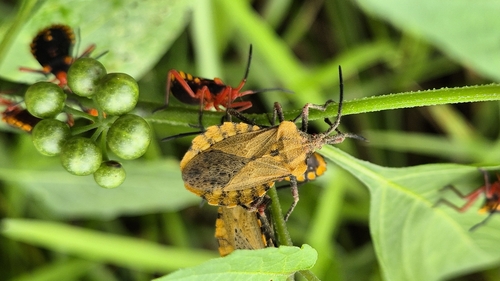
This leaf-footed bug is one of the two major pests of physic nut plants in Nicaragua. In Honduras, where the bug is known commonly as chinche patona (large-legged bug), it is a minor garden pest. It is a pest of many crops in Brazil and it may transmit the plant pathogen Herpetomonas macgheei, a trypanosomatid protozoan. It breeds in pomegranate and desert willow trees, and the gregarious bright orange nymphs aggregate there. It is a serious pest of satsuma oranges in Louisiana, causing damage by feeding and by transmitting the pathogenic yeast Nematospora coryli.

Biological pest control agents found to be effective against this insect include the entomopathogenic fungus Beauveria bassiana. Wikipedia →

Global Distribution

Parks Where Found

# Park Country Daily sighting probability
1 Cabo Pulmo National Park 🇲🇽 Mexico
~20%
2 Channel Islands National Park 🇺🇸 United States
~10%
3 Saguaro National Park 🇺🇸 United States
~10%
4 Monteverde Cloud Forest Reserve 🇨🇷 Costa Rica
~10%
5 Cumbres de Monterrey National Park 🇲🇽 Mexico
<5%

Cities Where Found

# City Country Daily sighting probability
1 Sacramento 🇺🇸 United States
~20%
2 Quito 🇪🇨 Ecuador
~20%
3 Torreón 🇲🇽 México
~10%
4 San José 🇨🇷 Costa Rica
~10%
5 Houston 🇺🇸 United States
~10%
6 Mesa 🇺🇸 United States
~10%
7 Guatemala City 🇬🇹 Guatemala
~10%
8 Austin 🇺🇸 United States
~10%
9 Las Vegas 🇺🇸 United States
~10%
10 Medellín 🇨🇴 Colombia
~10%

Before you go

What are the chances of seeing a Leptoglossus zonatus in São Paulo?

Rare

Under 5% of wildlife watchers report a Leptoglossus zonatus sighting in São Paulo on a given day, based on 13 verified sightings from GBIF citizen-science data. It is the 443rd most-seen of the 832 insects we can rate there. Over three days the chance rises to about 10%, and over a week to about 20%, if each day is a fresh chance.

When is the best time to see a Leptoglossus zonatus in São Paulo?

February

In that month about 10% of wildlife watchers report a Leptoglossus zonatus in São Paulo on a given day, against under 5% in March to January, the lowest months. That is one of São Paulo's wettest months, with about 180 mm of rain against 35 mm in August.

What time of day is best to see a Leptoglossus zonatus?

Between 7 and 10 am

Across all the parks we cover, that three-hour window holds the most Leptoglossus zonatus sightings with a recorded time, and about 9 in 10 of them come between 6 am and 6 pm: it is a daytime animal.

Is São Paulo the best place to see a Leptoglossus zonatus?

21st of 22

Of the 22 cities where we can rate Leptoglossus zonatus sightings, São Paulo ranks 21st at under 5%. The best odds are in Sacramento (United States, about 20%), Quito (Ecuador, about 20%) and Torreón (México, about 10%).

Where does the Leptoglossus zonatus sighting chance come from?

GBIF citizen-science records

It is estimated from how often the Leptoglossus zonatus is recorded against all the insects logged in São Paulo (13 verified sightings), calibrated against known sighting rates. Figures are rounded to the nearest 10% because citizen-science data supports honest approximations, not decimals, and months with records from fewer than five people show "—". How it works.

← Back to São Paulo