About the Stable Fly
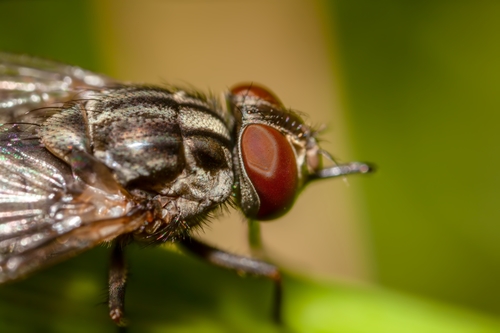
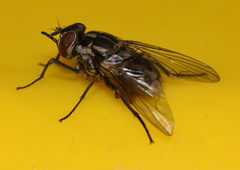
Stomoxys calcitrans is known by the common names stable fly, barn fly, biting house fly, dog fly, and power mower fly. Unlike most members of the family Muscidae, Stomoxys calcitrans ('sharp mouth' + 'kicking') and others of its genus suck blood from mammals. Now found worldwide, the species is considered to be of Eurasian or African origin.
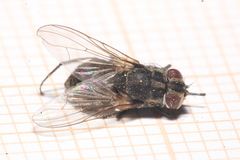
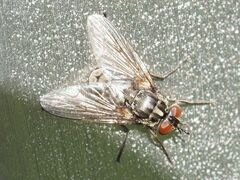
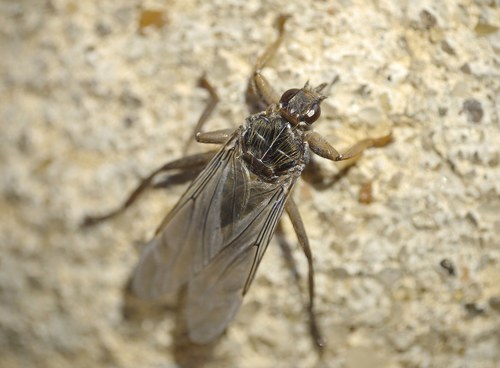
The stable fly resembles the common housefly (Musca domestica), though smaller, and on closer examination has a slightly wider and spotted abdomen. Adults are generally about 6–8 mm (1⁄4–5⁄16 inch) in length and a lighter color than the housefly. Unlike the housefly, where the mouth part is adapted for sponging, the stable fly mouth parts have biting structures. An additional distinction from M. domestica is in the aristae, which bear a single, superior row of hairs in S. calcitrans instead of two opposing rows.
As its name suggests, the stable fly is abundant in and around where cattle are kept. Its maggots are often seen in the rotting manure near cattle and poultry. It also occurs in coastal areas where larvae may inhabit masses of decaying aquatic vegetation deposited ashore.
The earliest... Wikipedia →