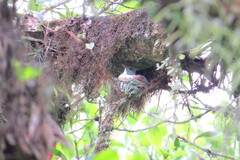
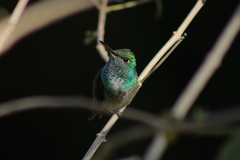
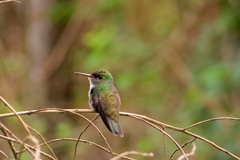

Versicolored Emerald

Versicolored Emerald

Chrysuronia versicolor

Silhouette: Ferran Sayol · PhyloPic

LCLeast ConcernNTVUENCR
Daily sighting probability <5% · Rare
at São Paulo

In 3 days <5%

65 Verified sightings at São Paulo
1,556 In all 8 parks From 2019 to 2026
August Best month
☀️ Diurnal When it's spotted

About the Versicolored Emerald

The versicoloured emerald (Chrysuronia versicolor) is a species of hummingbird from central and eastern South America. The taxonomy is very complex and remains a matter of dispute. The nominate subspecies (C. v. versicolor) occurs in two main morphs; a white-throated coastal type and a green/turquoise-throated inland type. At some localities individuals with intermediate features are commonly seen, but at others the two morphs seemingly co-occur without signs of intergradation. The coastal morph was formerly known as C. brevirostris, but a review lead to this name being considered to belong to the white-chested emerald of northern South America. Recently, it has been suggested that the coastal type should remain as C. brevirostris, but this has been disputed, and has yet to gain wide recognition.

The exact distribution limits between several subspecies of the versicoloured emerald are poorly known, and, in addition to the coastal nominate, some other subspecies have been considered separate species, especially the blue-green emerald (C. (v.) rondoniae), also known as the Rondonia emerald. This was based on plumage and reported sympatry with C. versicolor (ssp?), but... Wikipedia →

Sounds

Song0:24

Brazil · 2026

© JAYRSON ARAUJO DE OLIVEIRA · XC1162260 · CC BY-NC-SA 4.0

Alarm call0:04

Argentina · 2024

© Marcos E. Sosa · XC1074793 · CC BY-NC-SA 4.0

Call0:04

Colombia · 2022

© Mauricio Cuéllar Ramírez · XC706535 · CC BY-NC-SA 4.0

Global Distribution

Parks Where Found

# Park Country Daily sighting probability
1 Itatiaia National Park 🇧🇷 Brazil
~20%
2 Iguazú National Park 🇦🇷 Argentina
~20%
3 Serra dos Órgãos National Park 🇧🇷 Brazil
~10%
4 Iguaçu National Park 🇧🇷 Brazil
~10%
5 Chapada Diamantina National Park 🇧🇷 Brazil
<5%
6 Sierra de la Macarena National Park 🇨🇴 Colombia
<5%
7 Chapada dos Guimarães National Park 🇧🇷 Brazil
<5%
8 Serra da Canastra National Park 🇧🇷 Brazil
<5%

Cities Where Found

# City Country Daily sighting probability
1 Brasilia 🇧🇷 Brazil
<5%
2 Santos 🇧🇷 Brazil
<5%
3 Belo Horizonte 🇧🇷 Brazil
<5%
4 São Paulo 🇧🇷 Brazil
<5%

Zoos & Centres Where Found

# Zoo / Centre Country
1 Parque das Aves 🇧🇷 Brazil In captivity

Before you go

What are the chances of seeing a Versicolored Emerald in São Paulo?

Rare

Under 5% of wildlife watchers report a Versicolored Emerald sighting in São Paulo on a given day, based on 65 verified sightings from GBIF citizen-science data. It is the 215th most-seen of the 353 birds we can rate there. Over three days the chance rises to under 5%, if each day is a fresh chance.

When is the best time to see a Versicolored Emerald in São Paulo?

Any time of year

In every month with enough records, under 5% of wildlife watchers report a Versicolored Emerald in São Paulo on a given day, so our monthly data shows no clear season.

What time of day is best to see a Versicolored Emerald?

Between 9 am and noon

Across all the parks we cover, that three-hour window holds the most Versicolored Emerald sightings with a recorded time, and about 9 in 10 of them come between 6 am and 6 pm: it is a daytime animal.

Is São Paulo the best place to see a Versicolored Emerald?

Among the best

Of the 4 cities where we can rate Versicolored Emerald sightings, São Paulo ranks 4th at under 5%, level with the leaders once rounded. The best odds are in Brasilia (Brazil, under 5%), Santos (Brazil, under 5%) and Belo Horizonte (Brazil, under 5%).

Where does the Versicolored Emerald sighting chance come from?

GBIF citizen-science records

It is estimated from how often the Versicolored Emerald is recorded against all the birds logged in São Paulo (65 verified sightings), calibrated against known sighting rates. Figures are rounded to the nearest 10% because citizen-science data supports honest approximations, not decimals, and months with records from fewer than five people show "—". How it works.

← Back to São Paulo