Black Arches

Black Arches

Lymantria monacha

Daily sighting probability <5% · Rare
at Seoul

In 3 days ~10% in a week ~20%

7 Verified sightings at Seoul
219 In all 10 parks From 2019 to 2026
August Best month
☀️🌙 Day & Night When it's spotted

About the Black Arches

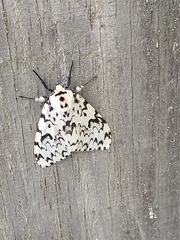
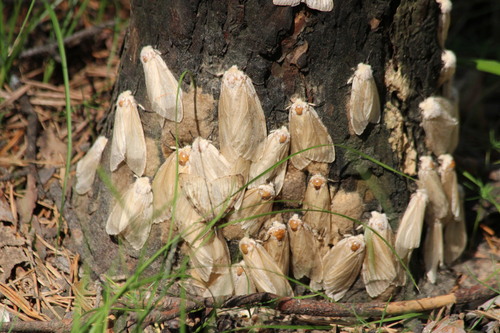
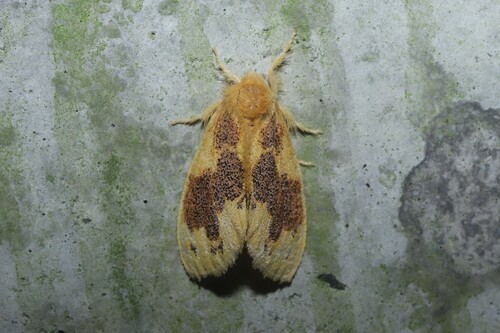
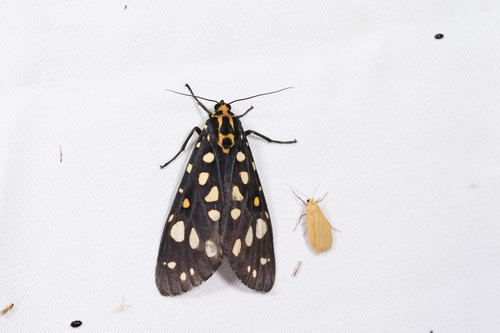
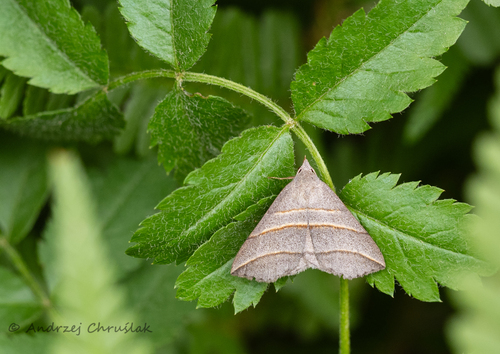
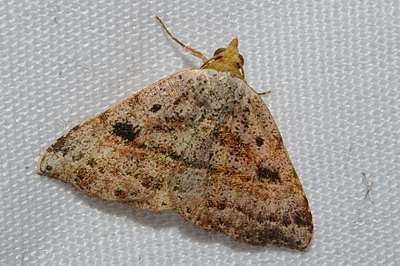
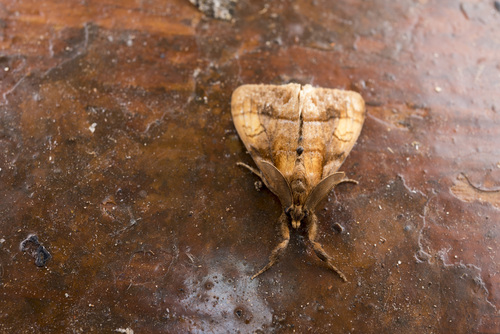
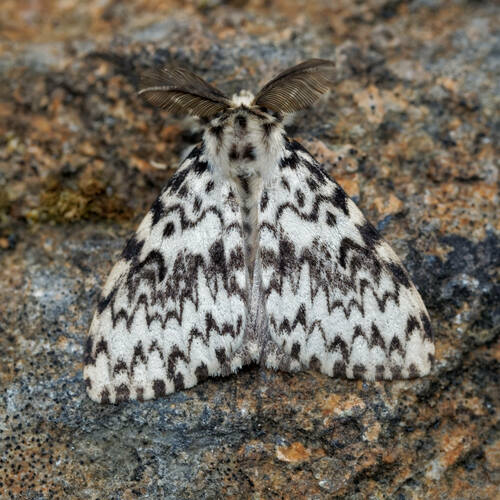
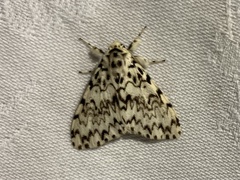
The black arches or nun moth (Lymantria monacha) is a small Palaearctic moth. It is considered a forest pest. The moths of Lymantria monacha have a wingspan of 40 to 50 mm. They have white forewings with black connected wavy arches which gives the moth its name. The light brown hindwings have white fringes having black spots. They also have a characteristic biscuit-coloured abdomen with a black band. Females are larger and have elongated wings.

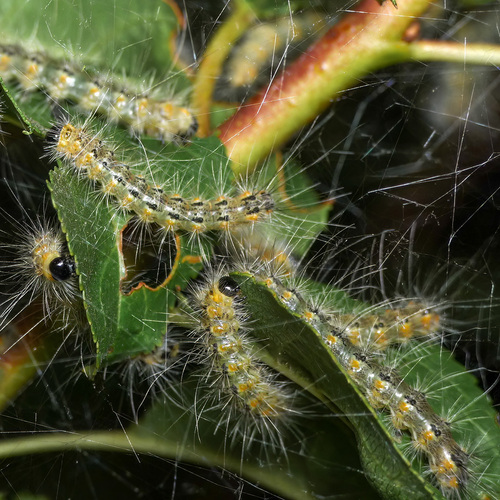
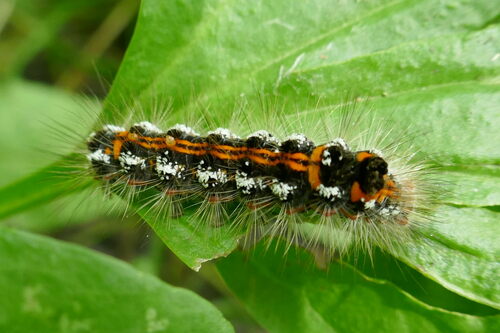
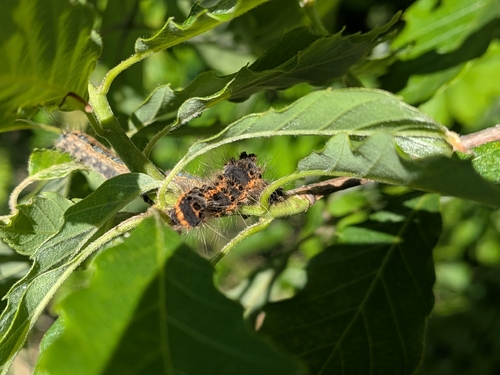
The eggs are oval, light brown or light red. Larvae are whitish grey to blackish, with grey hairs, red and blue warts, and a dark longitudinal dorsal line which is interrupted or broadened into spots in places. Pupa is golden glossy red-brown or dark brown, with reddish hairs dorsally and rather long anal point.

White forewing with black basal spots and four sharply angulate black transverse lines, the second of which is the broadest; hindwing greyish white and grey. Abdomen light rosepink. The species varies strongly and has received the following aberrational names, nigra Fr.: The two central bands are confluent at the costal and posterior margins, forming black spots, or the whole... Wikipedia →
Global Distribution

Parks Where Found

# Park Country Daily sighting probability
1 Snowdonia National Park 🇬🇧 United Kingdom
~20%
2 Ordesa y Monte Perdido National Park 🇪🇸 Spain
~10%
3 Aigüestortes National Park 🇪🇸 Spain
~10%
4 Cévennes National Park 🇫🇷 France
~10%
5 Pyrénées National Park 🇫🇷 France
~10%
6 Mercantour National Park 🇫🇷 France
~10%
7 Triglav National Park 🇸🇮 Slovenia
~10%
8 Bavarian Forest National Park 🇩🇪 Germany
~10%
9 Ecrins National Park 🇫🇷 France
~10%
10 Sierra de Guadarrama National Park 🇪🇸 Spain
<5%

Cities Where Found

# City Country Daily sighting probability
1 London 🇬🇧 United Kingdom
~10%
2 Birmingham 🇬🇧 United Kingdom
~10%
3 Berlin 🇩🇪 Germany
<5%
4 Seoul 🇰🇷 South Korea
<5%
5 Helsinki 🇫🇮 Finland
<5%
6 Vienna 🇦🇹 Austria
<5%
7 Moscow 🇷🇺 Russia
<5%

Before you go

What are the chances of seeing a Black Arches in Seoul?

Rare

Under 5% of wildlife watchers report a Black Arches sighting in Seoul on a given day, based on 7 verified sightings from GBIF citizen-science data. It is the 353rd most-seen of the 525 insects we can rate there. Over three days the chance rises to about 10%, and over a week to about 20%, if each day is a fresh chance.

When is the best time to see a Black Arches in Seoul?

August and September

In those months about 10% of wildlife watchers report a Black Arches in Seoul on a given day, against under 5% in October to July, the lowest months. Those are among Seoul's wettest months, with about 200 mm of rain a month against 20 mm in January.

What time of day is best to see a Black Arches?

Between 10 pm and 1 am

Across all the parks we cover, that three-hour window holds the most Black Arches sightings with a recorded time, and about half of them come between 6 pm and 6 am: it is seen both by day and at night.

Is Seoul the best place to see a Black Arches?

4th of 7

Of the 7 cities where we can rate Black Arches sightings, Seoul ranks 4th at under 5%. The best odds are in London (United Kingdom, about 10%), Birmingham (United Kingdom, about 10%) and Berlin (Germany, under 5%).

Where does the Black Arches sighting chance come from?

GBIF citizen-science records

It is estimated from how often the Black Arches is recorded against all the insects logged in Seoul (7 verified sightings), calibrated against known sighting rates. Figures are rounded to the nearest 10% because citizen-science data supports honest approximations, not decimals, and months with records from fewer than five people show "—". How it works.

← Back to Seoul