Western Subalpine Warbler

Western Subalpine Warbler

Curruca iberiae

Silhouette: Alexis Lours · PhyloPic

Daily sighting probability <5% · Rare
at Serrekunda

In 3 days ~10%

15 Verified sightings at Serrekunda
1,799 In all 9 parks From 2019 to 2026
February Best month
☀️ Diurnal When it's spotted

About the Western Subalpine Warbler

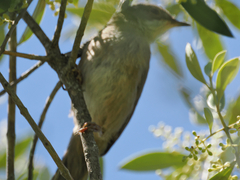
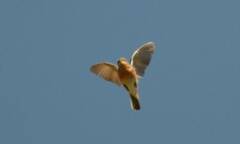
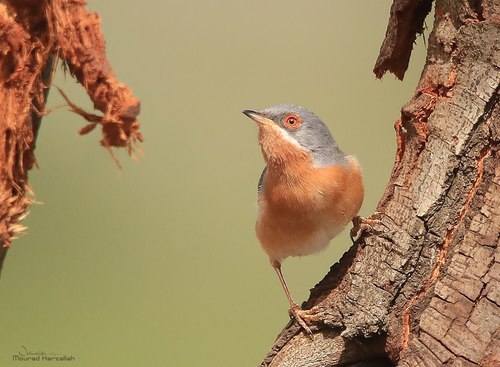
The western subalpine warbler (Curruca iberiae) is a small Sylviidae warbler which breeds in the southernmost areas of Europe and north-western Africa. Like most Curruca species, it has distinct male and female plumages. The adult male has a grey back and head, brick-red underparts, and white malar streaks ("moustaches"). The female is mainly brown above, with a greyer head, and whitish below with a pink flush. The subalpine warbler's song is fast and rattling, and is similar to the lesser whitethroat.

This bird seems to be related to the Sardinian warbler–Menetries' warbler superspecies. They all have white malar areas, the heads being dark above in adult males, and naked eye-rings. These three species are related to a superspecies consisting of Rüppell's warbler and the Cyprus warbler, which also share the white malar area with blackish above (Shirihai et al. 2001, Jønsson & Fjeldså 2006 ).

The subalpine warbler is divided into two distinct subspecies groups, which may possibly be sufficiently diverged to qualify as two separate species (Shirihai et al. 2001). The two groups have differing male plumages, distinctive calls, and are allopatric; further study is needed. In May 2020, the IOC world bird list the western and eastern subalpine warblers were split into two distinct species.

This is a bird of dry open country, often on hill slopes, with bushes for nesting. The nest is built in low shrub or gorse, and 3–5 eggs are laid. Like most "warblers", it is insectivorous, but will also take berries. Wikipedia →
Sounds

Song0:41

Spain · 2023

© Esperanza Poveda · XC1133411 · CC BY-NC-SA 4.0

Call0:08

Italy · 2026

© Nicolò Grasso · XC1107209 · CC BY-NC-SA 4.0

Alarm call0:35

Spain · 2025

© Paul Driver · XC1023764 · CC BY-NC-SA 4.0

Global Distribution

Parks Where Found

# Park Country Daily sighting probability
1 Monfragüe National Park 🇪🇸 Spain
~20%
2 Sierra de Guadarrama National Park 🇪🇸 Spain
~10%
3 Cévennes National Park 🇫🇷 France
~10%
4 Sierra Nevada National Park 🇪🇸 Spain
~10%
5 Camargue 🇫🇷 France
<5%
6 Pyrénées National Park 🇫🇷 France
<5%
7 Ordesa y Monte Perdido National Park 🇪🇸 Spain
<5%
8 Doñana National Park 🇪🇸 Spain
<5%
9 Aigüestortes National Park 🇪🇸 Spain
<5%

Cities Where Found

# City Country Daily sighting probability
1 Dakar 🇸🇳 Senegal
~10%
2 Valencia 🇪🇸 Spain
<5%
3 Barcelona 🇪🇸 Spain
<5%
4 Serrekunda 🇬🇲 Gambia
<5%
5 Marrakesh 🇲🇦 Morocco
<5%
6 Madrid 🇪🇸 Spain
<5%
7 Lisbon 🇵🇹 Portugal
<5%

Before you go

What are the chances of seeing a Western Subalpine Warbler in Serrekunda?

Rare

Under 5% of wildlife watchers report a Western Subalpine Warbler sighting in Serrekunda on a given day, based on 15 verified sightings from GBIF citizen-science data. It is the 165th most-seen of the 213 birds we can rate there. Over three days the chance rises to about 10%, if each day is a fresh chance.

When is the best time to see a Western Subalpine Warbler in Serrekunda?

January and February

In those months about 10% of wildlife watchers report a Western Subalpine Warbler in Serrekunda on a given day, against under 5% in March to December, the lowest months. Those are among Serrekunda's driest months, with almost no rain against 290 mm in August.

What time of day is best to see a Western Subalpine Warbler?

Between 8 and 11 am

Across all the parks we cover, that three-hour window holds the most Western Subalpine Warbler sightings with a recorded time, and about 9 in 10 of them come between 6 am and 6 pm: it is a daytime animal.

Is Serrekunda the best place to see a Western Subalpine Warbler?

4th of 7

Of the 7 cities where we can rate Western Subalpine Warbler sightings, Serrekunda ranks 4th at under 5%. The best odds are in Dakar (Senegal, about 10%), Valencia (Spain, under 5%) and Barcelona (Spain, under 5%).

Which relatives of the Western Subalpine Warbler live in Serrekunda?

Same order: Passeriformes

The closest relatives of the Western Subalpine Warbler that you can see in Serrekunda (order Passeriformes, Perching Birds) are Pied Crow (about 90%), Common Bulbul (about 90%) and Beautiful Sunbird (about 70%), with each one's daily chance of a sighting.

Where does the Western Subalpine Warbler sighting chance come from?

GBIF citizen-science records

It is estimated from how often the Western Subalpine Warbler is recorded against all the birds logged in Serrekunda (15 verified sightings), calibrated against known sighting rates. Figures are rounded to the nearest 10% because citizen-science data supports honest approximations, not decimals, and months with records from fewer than five people show "—". How it works.

← Back to Serrekunda