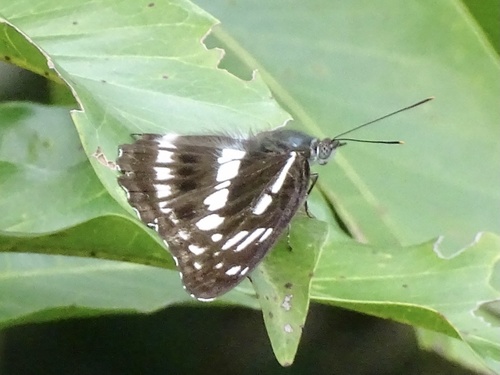
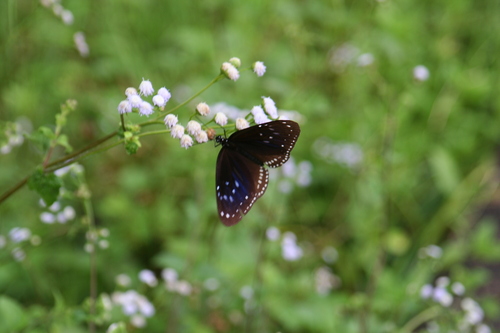
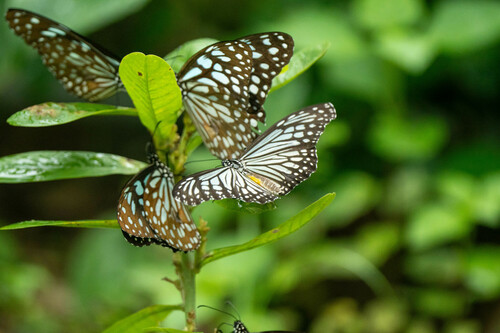
Glassy Tiger

Glassy Tiger

Parantica aglea

Daily sighting probability ~10% · With luck
at Tuen Mun

In 3 days ~30% in a week ~60%

45 Verified sightings at Tuen Mun
114 In all 10 parks From 2019 to 2026
October Best month
☀️ Diurnal When it's spotted

About the Glassy Tiger

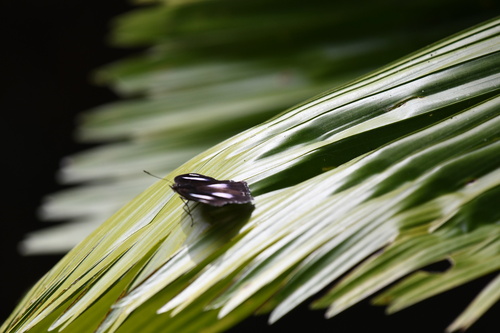
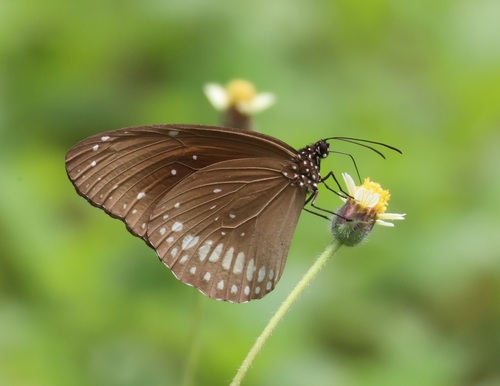
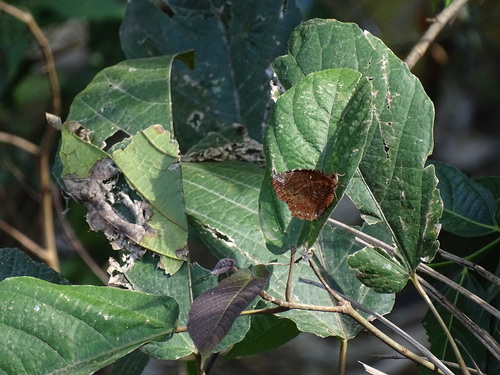
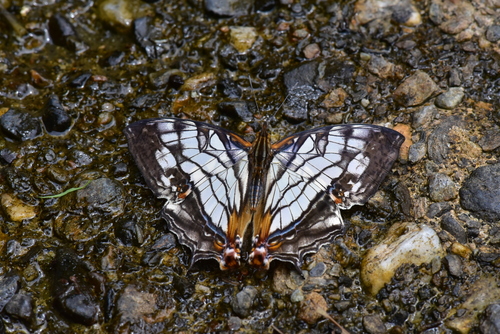
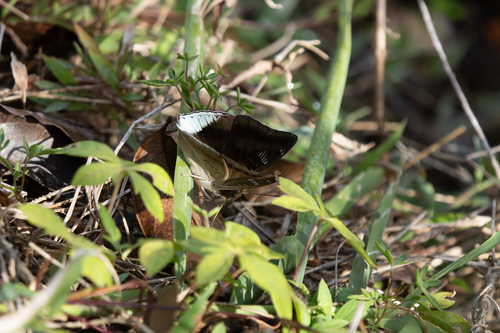
Parantica aglea, commonly known as the glassy tiger, is a butterfly found in the Indomalayan realm. The species is a member of the Danainae subfamily of the Nymphalidae family. Several subspecies are recognized. In the British Museum's collection, there are specimens of the true Parantica aglea aglea from Myanmar, as well as others, indistinguishable from the typical Parantica aglea melanoides, from Mysore.

The ground color of this species is a sooty black, with subhyaline bluish-white streaks and spots. On the forewing, the 11th vein is fused with the 12th. Additionally, the first interspace of the upperside forewing has two relatively long, broad streaks that unite at the base and are truncated outwardly. The cell contains a very broad, somewhat club-shaped streak, traversed by two fine black lines. Interspaces 2 and 3 display basal spots, an irregular discal series of three spots and two elongated streaks, as well as a subterminal series of spots. These two series curve inward opposite the apex of the wing, with the latter continuing along the apical half of the costa. Finally, a terminal row of smaller paired spots appears... Wikipedia →
Global Distribution

Parks Where Found

# Park Country Daily sighting probability
1 Cuc Phuong National Park 🇻🇳 Vietnam
~40%
2 Royal Manas National Park 🇧🇹 Bhutan
~30%
3 Namdapha National Park 🇮🇳 India
~30%
4 Sinharaja Forest Reserve 🇱🇰 Sri Lanka
~20%
5 Cat Tien National Park 🇻🇳 Vietnam
~20%
6 Khao Yai National Park 🇹🇭 Thailand
~10%
7 Doi Inthanon National Park 🇹🇭 Thailand
~10%
8 Taroko National Park 🇹🇼 Taiwan
~10%
9 Khao Sok National Park 🇹🇭 Thailand
~10%
10 Kaeng Krachan National Park 🇹🇭 Thailand
~10%

Cities Where Found

# City Country Daily sighting probability
1 Nashik 🇮🇳 India
~20%
2 Hong Kong 🇨🇳 China
~20%
3 Kathmandu 🇳🇵 Nepal
~20%
4 Colombo [Sri Jayawardenepura Kotte] 🇱🇰 Sri Lanka
~20%
5 Thiruvananthapuram 🇮🇳 India
~20%
6 Mumbai 🇮🇳 India
~10%
7 Tuen Mun 🇨🇳 China
~10%
8 Dehradun 🇮🇳 India
~10%
9 Pune 🇮🇳 India
~10%
10 Kozhikode 🇮🇳 India
~10%

Before you go

What are the chances of seeing a Glassy Tiger in Tuen Mun?

With luck

About 10% of wildlife watchers report a Glassy Tiger sighting in Tuen Mun on a given day, based on 45 verified sightings from GBIF citizen-science data. It is the 118th most-seen of the 557 insects we can rate there. Over three days the chance rises to about 30%, and over a week to about 60%, if each day is a fresh chance.

When is the best time to see a Glassy Tiger in Tuen Mun?

May and September–November

In those months about 20% of wildlife watchers report a Glassy Tiger in Tuen Mun on a given day, against about 10% in June–August and December–April, the lowest months.

What time of day is best to see a Glassy Tiger?

Between 8 and 11 am

Across all the parks we cover, that three-hour window holds the most Glassy Tiger sightings with a recorded time, and about 9 in 10 of them come between 6 am and 6 pm: it is a daytime animal.

Is Tuen Mun the best place to see a Glassy Tiger?

7th of 14

Of the 14 cities where we can rate Glassy Tiger sightings, Tuen Mun ranks 7th at about 10%. The best odds are in Nashik (India, about 20%), Hong Kong (China, about 20%) and Kathmandu (Nepal, about 20%).

Which relatives of the Glassy Tiger live in Tuen Mun?

Same family: Nymphalidae

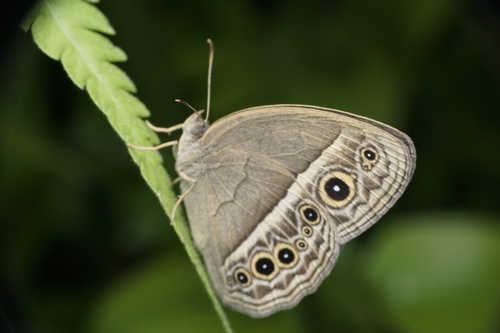
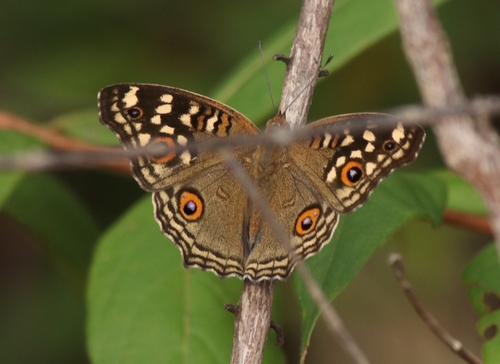
The closest relatives of the Glassy Tiger that you can see in Tuen Mun (family Nymphalidae, Brush-footed Butterflies) are Great Eggfly (about 40%), Dark-Branded Bushbrown (about 30%) and Plain Tiger Butterfly (about 30%), with each one's daily chance of a sighting.

Where does the Glassy Tiger sighting chance come from?

GBIF citizen-science records

It is estimated from how often the Glassy Tiger is recorded against all the insects logged in Tuen Mun (45 verified sightings), calibrated against known sighting rates. Figures are rounded to the nearest 10% because citizen-science data supports honest approximations, not decimals, and months with records from fewer than five people show "—". How it works.

← Back to Tuen Mun