
Variable Cattleheart

Variable Cattleheart

Parides erithalion

Daily sighting probability ~30% · Possible
at Cockscomb Basin Wildlife Sanctuary

In 3 days ~60% in a week ~90%

7 Verified sightings at Cockscomb Basin Wildlife Sanctuary From 2019 to 2026
46 In all 6 parks
January Best month
☀️ Diurnal When it's spotted

About the Variable Cattleheart

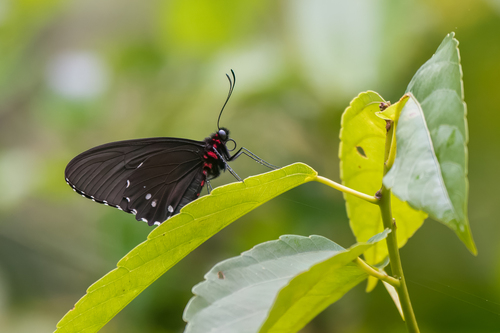
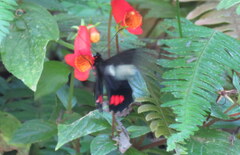
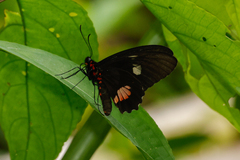
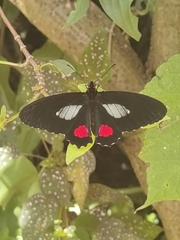
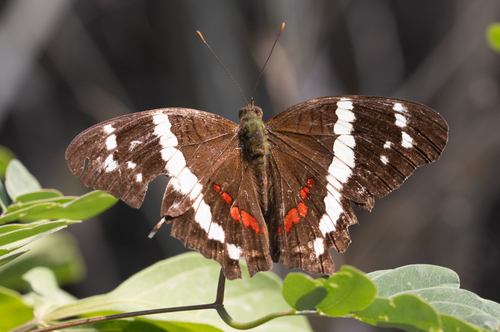
Parides erithalion, the variable cattleheart, is a North and South American butterfly in the family Papilionidae. The species was first described by Jean Baptiste Boisduval in 1836. The upperside of the wings is black with a row of red postmedian spots. The underside of the wings is also black with a row of pink and whitish spots.

In males of some subspecies the uppersides of the forewings have a large olivaceous-green patch from the inner margin forward, with a creamy-white spot, while hindwings have a band of three red spots. Fringe in both sexes is dotted with white. Wikipedia →

Global Distribution

Parks Where Found

# Park Country Daily sighting probability
1 Cockscomb Basin Wildlife Sanctuary 🇧🇿 Belize
~30%
2 Podocarpus National Park 🇪🇨 Ecuador
~20%
3 Lago de Yojoa 🇭🇳 Honduras
~10%
4 Cerro Azul Meámbar National Park 🇭🇳 Honduras
~10%
5 Arenal Volcano National Park 🇨🇷 Costa Rica
~10%
6 Soberanía National Park 🇵🇦 Panama
~10%

Cities Where Found

# City Country Daily sighting probability
1 Medellín 🇨🇴 Colombia
~10%

Before you go

What are the chances of seeing a Variable Cattleheart in Cockscomb Basin Wildlife Sanctuary?

Possible

About 30% of wildlife watchers report a Variable Cattleheart sighting in Cockscomb Basin Wildlife Sanctuary on a given day, based on 7 verified sightings from GBIF citizen-science data from 2019 to 2026. It is the 6th most-seen of the 15 insects we can rate there. Over three days the chance rises to about 60%, and over a week to about 90%, if each day is a fresh chance.

When is the best time to see a Variable Cattleheart in Cockscomb Basin Wildlife Sanctuary?

December and January

In those months about 40% of wildlife watchers report a Variable Cattleheart in Cockscomb Basin Wildlife Sanctuary on a given day, against under 5% in May to July, the lowest months. September has too few records to rate.

What time of day is best to see a Variable Cattleheart?

Between 9 am and noon

Across all the parks we cover, that three-hour window holds the most Variable Cattleheart sightings with a recorded time, and about 9 in 10 of them come between 6 am and 6 pm: it is a daytime animal.

Is Cockscomb Basin Wildlife Sanctuary the best place to see a Variable Cattleheart?

Yes

Of the 6 parks where we can rate Variable Cattleheart sightings, Cockscomb Basin Wildlife Sanctuary has the highest daily chance: about 30%. Next come Podocarpus National Park (Ecuador, about 20%) and Lago de Yojoa (Honduras, about 10%).

Which relatives of the Variable Cattleheart live in Cockscomb Basin Wildlife Sanctuary?

Same order: Lepidoptera

The closest relatives of the Variable Cattleheart that you can see in Cockscomb Basin Wildlife Sanctuary (order Lepidoptera, Butterflies and Moths) are Banded Peacock (about 50%), Julia Heliconian (about 30%) and Clio Crescent (about 20%), with each one's daily chance of a sighting.

Where does the Variable Cattleheart sighting chance come from?

GBIF citizen-science records

It is estimated from how often the Variable Cattleheart is recorded against all the insects logged in Cockscomb Basin Wildlife Sanctuary (7 verified sightings from 2019 to 2026), calibrated against known sighting rates. Figures are rounded to the nearest 10% because citizen-science data supports honest approximations, not decimals, and months with records from fewer than five people show "—". How it works.

← Back to Cockscomb Basin Wildlife Sanctuary