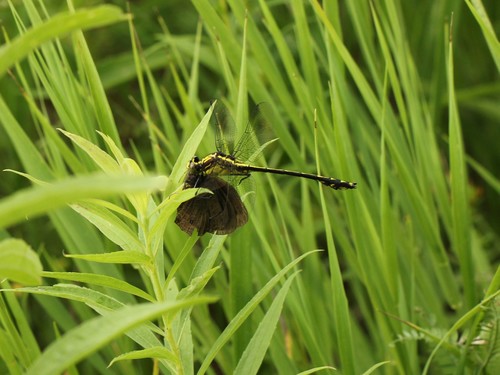
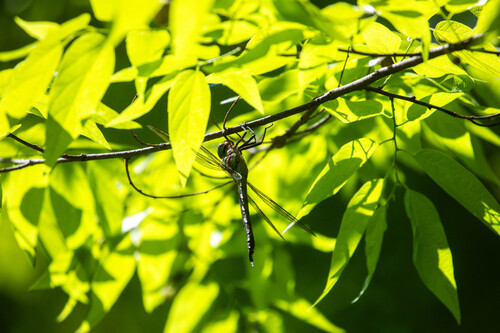
Eastern Amberwing

Eastern Amberwing

Perithemis tenera

Daily sighting probability ~10% · With luck
at Congaree National Park

In 3 days ~20% in a week ~50%

6 Verified sightings at Congaree National Park From 2019 to 2026
327 In all 11 parks
June Best month
☀️ Diurnal When it's spotted

About the Eastern Amberwing

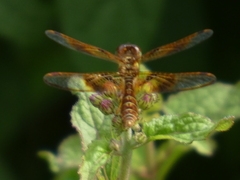
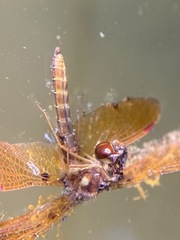
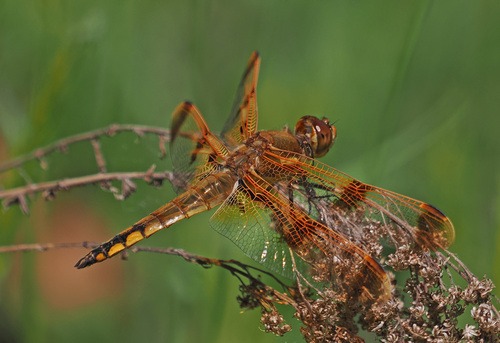
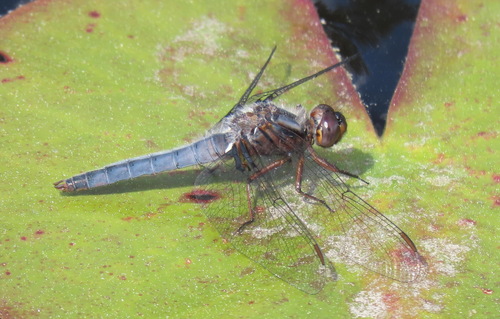
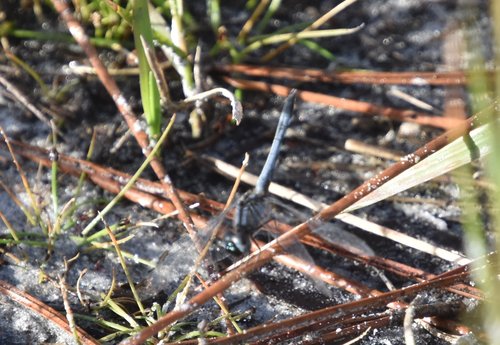
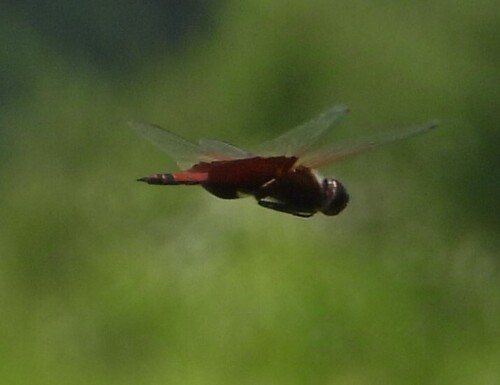
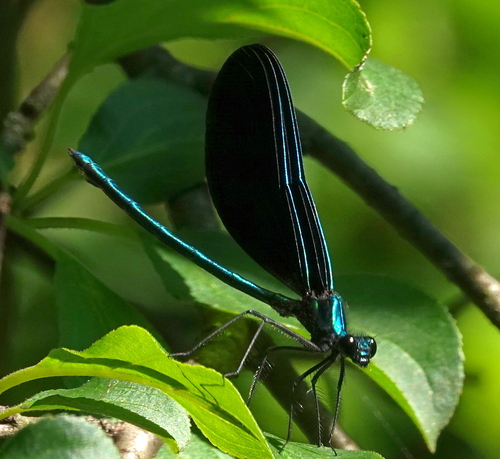
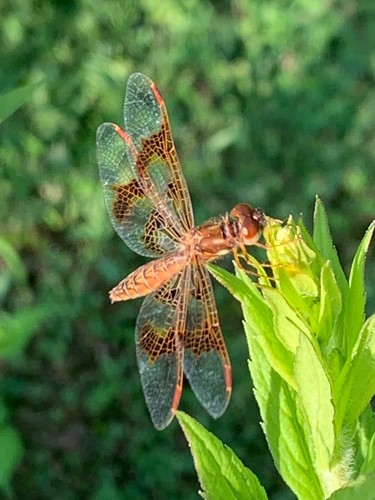
The eastern amberwing (Perithemis tenera) is a species of dragonfly in the family Libellulidae. It is very small, reaching a total length of no more than 25 millimetres (0.98 in). The males have orange or amber wings, which likely contain pheomelanin. Both sexes have a red pterostigma. It is found in eastern North America, from northern Mexico north to south-eastern Canada.

The eastern amberwing dragonfly is one of the only types of dragonfly that actively mimics a wasp. The yellow and brown stripes on its abdomen encourage predators to stay away. When perched, they wiggle their abdomen and wings in a wasp-like fashion to deter other animals from eating it. Males have an elaborate courtship ritual. When a female approaches his territory, the male will lead her to his selected egg-laying site and hover above it with wings whirring and abdomen raised.

The common name refers to its eastern range, although this dragonfly does extend westward well into the central part of the United States. The scientific name, tenera, means delicate and alludes to its small size. Media related to Perithemis tenera at Wikimedia Commons

Perithemis tenera... Wikipedia →
Global Distribution

Parks Where Found

# Park Country Daily sighting probability
1 Big Cypress National Preserve 🇺🇸 United States
~30%
2 Everglades National Park 🇺🇸 United States
~20%
3 Lago de Yojoa 🇭🇳 Honduras
~10%
4 Merritt Island National Wildlife Refuge 🇺🇸 United States
~10%
5 Ría Lagartos Biosphere Reserve 🇲🇽 Mexico
~10%
6 Big Bend National Park 🇺🇸 United States
~10%
7 Congaree National Park 🇺🇸 United States
~10%
8 Soberanía National Park 🇵🇦 Panama
~10%
9 Parque Natural Metropolitano 🇵🇦 Panama
~10%
10 Shenandoah National Park 🇺🇸 United States
~10%
11 Manu National Park 🇵🇪 Peru
~10%

Cities Where Found

# City Country Daily sighting probability
1 Orlando 🇺🇸 United States
~10%
2 Austin 🇺🇸 United States
~10%
3 Miami 🇺🇸 United States
~10%
4 Washington 🇺🇸 United States
~10%
5 Dallas 🇺🇸 United States
~10%
6 Rosario 🇦🇷 Argentina
~10%
7 Houston 🇺🇸 United States
~10%
8 Boston 🇺🇸 United States
~10%
9 New York City 🇺🇸 United States
~10%
10 Philadelphia 🇺🇸 United States
~10%

Before you go

What are the chances of seeing an Eastern Amberwing in Congaree National Park?

With luck

About 10% of wildlife watchers report an Eastern Amberwing sighting in Congaree National Park on a given day, based on 6 verified sightings from GBIF citizen-science data from 2019 to 2026. It is the 117th most-seen of the 145 insects we can rate there. Over three days the chance rises to about 20%, and over a week to about 50%, if each day is a fresh chance.

When is the best time to see an Eastern Amberwing in Congaree National Park?

June

In that month about 30% of wildlife watchers report an Eastern Amberwing in Congaree National Park on a given day, against under 5% in July and September–May, the lowest months.

What time of day is best to see an Eastern Amberwing?

Between 11 am and 2 pm

Across all the parks we cover, that three-hour window holds the most Eastern Amberwing sightings with a recorded time, and about 9 in 10 of them come between 6 am and 6 pm: it is a daytime animal.

Is Congaree National Park the best place to see an Eastern Amberwing?

7th of 11

Of the 11 parks where we can rate Eastern Amberwing sightings, Congaree National Park ranks 7th at about 10%. The best odds are in Big Cypress National Preserve (United States, about 30%), Everglades National Park (United States, about 20%) and Lago de Yojoa (Honduras, about 10%).

Which relatives of the Eastern Amberwing live in Congaree National Park?

Same family: Libellulidae

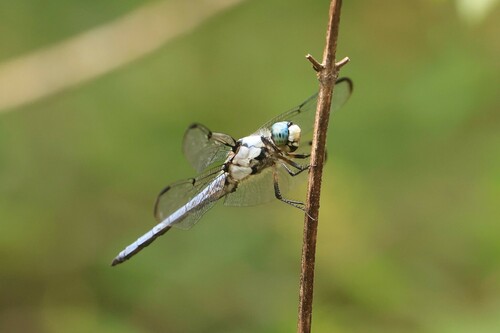
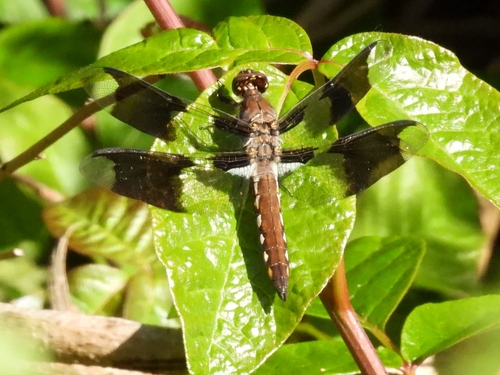
The closest relatives of the Eastern Amberwing that you can see in Congaree National Park (family Libellulidae, Skimmers) are Great Blue Skimmer (about 50%), Common Whitetail (about 20%) and Eastern Pondhawk (about 20%), with each one's daily chance of a sighting.

Where does the Eastern Amberwing sighting chance come from?

GBIF citizen-science records

It is estimated from how often the Eastern Amberwing is recorded against all the insects logged in Congaree National Park (6 verified sightings from 2019 to 2026), calibrated against known sighting rates. Figures are rounded to the nearest 10% because citizen-science data supports honest approximations, not decimals, and months with records from fewer than five people show "—". How it works.

← Back to Congaree National Park