
Pheasant Coucal

Pheasant Coucal

Centropus phasianinus

Silhouette: Nicolas Huet le Jeune and Jean-Gabriel Prêtre (vectorized by T. Michael Keesey) · PhyloPic

LCLeast ConcernNTVUENCR
Daily sighting probability ~20% · Possible
at Daintree National Park

In 3 days ~60% in a week ~80%

432 Verified sightings at Daintree National Park From 2019 to 2026
1,052 In all 7 parks
November Best month
☀️ Diurnal When it's spotted

About the Pheasant Coucal

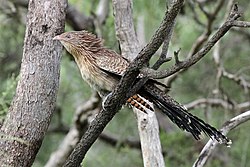
The pheasant coucal (Centropus phasianinus) is a species of cuckoo in the family Cuculidae. It is found in Australia, Timor and New Guinea. Its natural habitats are subtropical or tropical moist lowland forests and subtropical or tropical mangrove forests. It has adapted well to canefields in northern Australia. The pheasant coucal is unusual among Australian cuckoos in that it incubates and raises its own young instead of laying its eggs in the nest of another species.

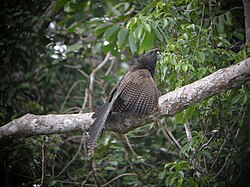
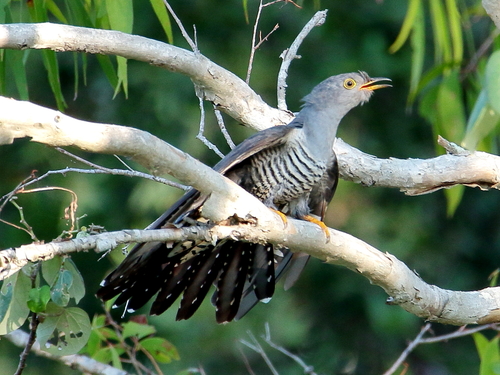
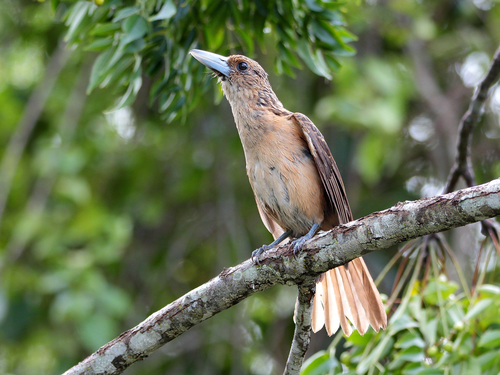
The ornithologist John Latham described the pheasant coucal as Cuculus phasianinus in 1801, based on a drawing by Thomas Watling. Six subspecies are recognised, two of which are found in Australia with an abrupt demarcation between them occurring around the Burdekin River in Central Queensland. South is the nominate subspecies phasianinus, while north is the subspecies melanurus, which is larger in size and has darker and more prominent black bands on its rectrices. The little known subspecies mui is found in eastern Timor, and has distinctive white plumage of its upperparts, head and breast. The remaining three subspecies are found in New Guinea, and all have darker plumage than other forms. Subspecies... Wikipedia →

Sounds

Call0:12

Australia · 2024

© Tom Cooney · XC1104894 · CC BY-NC-SA 4.0

Song0:14

Australia · 2022

© Marc Anderson · XC816172 · CC BY-NC-ND 4.0

Alarm call0:12

Australia · 2021

© James Lambert · XC685419 · CC BY-NC-ND 4.0

Global Distribution

Parks Where Found

# Park Country Daily sighting probability
1 Kakadu National Park 🇦🇺 Australia
~30%
2 Daintree National Park 🇦🇺 Australia
~20%
3 Nitmiluk National Park 🇦🇺 Australia
~10%
4 Litchfield National Park 🇦🇺 Australia
~10%
5 Noosa National Park 🇦🇺 Australia
<5%
6 Springbrook National Park 🇦🇺 Australia
<5%
7 Lamington National Park 🇦🇺 Australia
<5%

Cities Where Found

# City Country Daily sighting probability
1 Brisbane 🇦🇺 Australia
~10%

Zoos & Centres Where Found

# Zoo / Centre Country
1 Territory Wildlife Park 🇦🇺 Australia In captivity
2 Taronga Zoo 🇦🇺 Australia In captivity
3 Australian Reptile Park 🇦🇺 Australia In captivity
4 Gorge Wildlife Park 🇦🇺 Australia In captivity
5 Featherdale Sydney Wildlife Park 🇦🇺 Australia In captivity

Before you go

What are the chances of seeing a Pheasant Coucal in Daintree National Park?

Possible

About 20% of wildlife watchers report a Pheasant Coucal sighting in Daintree National Park on a given day, based on 432 verified sightings from GBIF citizen-science data from 2019 to 2026. It is the 44th most-seen of the 208 birds we can rate there. Over three days the chance rises to about 60%, and over a week to about 80%, if each day is a fresh chance.

When is the best time to see a Pheasant Coucal in Daintree National Park?

October and November

In those months about 40% of wildlife watchers report a Pheasant Coucal in Daintree National Park on a given day, against about 10% in May to August, the lowest months. Those are among Daintree National Park's driest months, with about 60 mm of rain a month against 380 mm in January.

What time of day is best to see a Pheasant Coucal?

Between 2 and 5 pm

Across all the parks we cover, that three-hour window holds the most Pheasant Coucal sightings with a recorded time, and nearly all of them come between 6 am and 6 pm: it is a daytime animal.

Is Daintree National Park the best place to see a Pheasant Coucal?

2nd of 7

Of the 7 parks where we can rate Pheasant Coucal sightings, Daintree National Park ranks 2nd at about 20%. The best odds are in Kakadu National Park (Australia, about 30%).

Which relatives of the Pheasant Coucal live in Daintree National Park?

Same family: Cuculidae

The closest relatives of the Pheasant Coucal that you can see in Daintree National Park (family Cuculidae, Cuckoos) are Pacific Koel (about 20%), Little Bronze Cuckoo (about 10%) and Rusty-breasted Cuckoo (about 10%), with each one's daily chance of a sighting.

Where does the Pheasant Coucal sighting chance come from?

GBIF citizen-science records

It is estimated from how often the Pheasant Coucal is recorded against all the birds logged in Daintree National Park (432 verified sightings from 2019 to 2026), calibrated against known sighting rates. Figures are rounded to the nearest 10% because citizen-science data supports honest approximations, not decimals, and months with records from fewer than five people show "—". How it works.

← Back to Daintree National Park