Barking Gecko

Barking Gecko

Underwoodisaurus milii

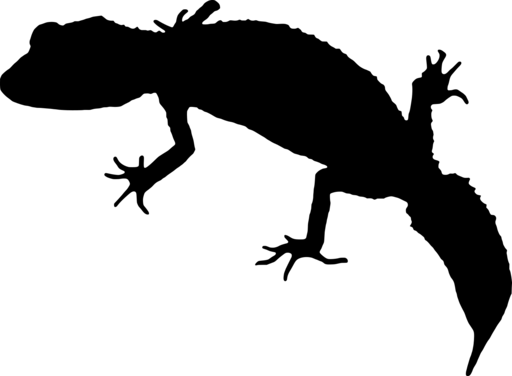
Silhouette: Jose Carlos Arenas-Monroy · PhyloPic

LCLeast ConcernNTVUENCR Endemic
Daily sighting probability ~40% · Likely
at Flinders Ranges National Park

In 3 days ~80% in a week >90%

31 Verified sightings at Flinders Ranges National Park From 2019 to 2026
46 In all 2 parks
March Best month
☀️🌙 Day & Night When it's spotted

About the Barking Gecko

Underwoodisaurus milii is a species of gecko, a lizard in the family Carphodactylidae. The species is commonly known as the thick-tailed or barking gecko, referring to its distinctive plump tail and sharp, barking defensive call. The genus is also often called thick-tailed geckos as a group, along with the species Uvidicolus sphyrurus.

The specific name, milii, is in honor of French sailor and naturalist Pierre Bernard Milius. Underwoodisaurus milii is reddish-brown with bands of white and yellow spots, and a paler underbelly. It usually grows to a total length (tail included) of 120–140 mm (4.7–5.5 in). The original tail is black with several pale bands; however, the regenerated tail has little pattern.

Underwoodisaurus milii is found in southern regions of Australia. Its distribution in Western Australia is throughout the southwest, the goldfields, wheatbelt, and Nullarbor regions to the east, and to Shark Bay in the north. It is also found at the Houtman Abrolhos and the Archipelago of the Recherche. U. milii is found in rocky outcrops and is slightly more cold-tolerant than many other Australian gecko species... Wikipedia →

Global Distribution

Parks Where Found

# Park Country Daily sighting probability
1 Flinders Ranges National Park 🇦🇺 Australia
~40%
2 Royal National Park 🇦🇺 Australia
~10%

Zoos & Centres Where Found

# Zoo / Centre Country
1 Downtown Aquarium, Houston 🇺🇸 United States In captivity

Closest Relatives at Flinders Ranges National Park

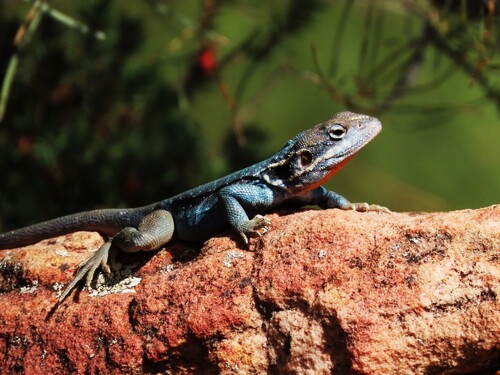
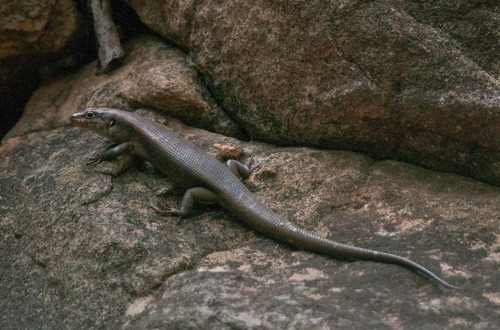
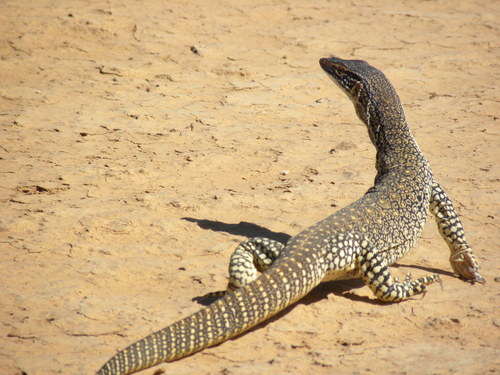
No species of the same family or order lives in Flinders Ranges National Park, so these are its closest relatives here: other reptiles.

Before you go

What are the chances of seeing a Barking Gecko in Flinders Ranges National Park?

Likely

About 40% of wildlife watchers report a Barking Gecko sighting in Flinders Ranges National Park on a given day, based on 31 verified sightings from GBIF citizen-science data from 2019 to 2026. It is the 6th most-seen of the 19 reptiles we can rate there. Over three days the chance rises to about 80%, and over a week to over 90%, if each day is a fresh chance.

When is the best time to see a Barking Gecko in Flinders Ranges National Park?

March

In that month about 60% of wildlife watchers report a Barking Gecko in Flinders Ranges National Park on a given day, against under 5% in May and September, the lowest months.

What time of day is best to see a Barking Gecko?

Between 7 and 10 pm

Across all the parks we cover, that three-hour window holds the most Barking Gecko sightings with a recorded time, and about 6 in 10 of them come between 6 am and 6 pm: it is seen both by day and at night.

Is Flinders Ranges National Park the best place to see a Barking Gecko?

Yes

Of the 2 parks where we can rate Barking Gecko sightings, Flinders Ranges National Park has the highest daily chance: about 40%. Next come Royal National Park (Australia, about 10%).

Where does the Barking Gecko sighting chance come from?

GBIF citizen-science records

It is estimated from how often the Barking Gecko is recorded against all the reptiles logged in Flinders Ranges National Park (31 verified sightings from 2019 to 2026), calibrated against known sighting rates. Figures are rounded to the nearest 10% because citizen-science data supports honest approximations, not decimals, and months with records from fewer than five people show "—". How it works.

← Back to Flinders Ranges National Park