Shingleback Lizard

Shingleback Lizard

Tiliqua rugosa

Silhouette: David Orr · PhyloPic

LCLeast ConcernNTVUENCR Endemic
Daily sighting probability ~50% · Likely
at Flinders Ranges National Park

In 3 days ~90% in a week >90%

39 Verified sightings at Flinders Ranges National Park From 2019 to 2026
358 In all 4 parks
October Best month
☀️ Diurnal When it's spotted

About the Shingleback Lizard

Tiliqua rugosa, most commonly known as the shingleback skink, shingleback lizard, bobtail lizard, and the two-headed skink (often simply shingleback or bobtail); is a short-tailed, slow-moving species of blue-tongued skink (genus Tiliqua) endemic to Australia. Three of its four recognised subspecies are found in Western Australia, where the bobtail name is most frequently used. The fourth subspecies, T. rugosa asper, is the only one native to eastern Australia, where it goes by the common name of the eastern shingleback.

Apart from bobtail and shingleback, a variety of other common names are used in different states, including two-headed skink, stumpy lizard, stumpy-tailed lizard, pinecone lizard, bogeye or boggi, and less commonly: sleepy lizard. The Noongar Aboriginal people refer to T. rugosa as yoorn in their language.

T. rugosa has a short, wide, stumpy tail that resembles its head and may serve the purpose of confusing predators. The tail also contains fat reserves, which are drawn upon during brumation in winter, during which many lizards perform a behaviour similar to hibernation except they require water every day, but can go without food. This skink is an omnivore; it eats snails and plants and spends much of its time browsing through vegetation for food. In human habitation, it is often seen basking on roadsides or other paved areas. Wikipedia →

Global Distribution

Parks Where Found

# Park Country Daily sighting probability
1 Grampians National Park 🇦🇺 Australia
~70%
2 Flinders Ranges National Park 🇦🇺 Australia
~50%
3 Hattah-Kulkyne National Park 🇦🇺 Australia
~40%
4 Rottnest Island 🇦🇺 Australia
~30%

Cities Where Found

# City Country Daily sighting probability
1 Perth 🇦🇺 Australia
~40%
2 Melbourne 🇦🇺 Australia
<5%

Zoos & Centres Where Found

# Zoo / Centre Country
1 San Diego Zoo 🇺🇸 United States In captivity
2 National Zoological Park 🇺🇸 United States In captivity
3 Basel Zoo 🇨🇭 Switzerland In captivity
4 Denver Zoo 🇺🇸 United States In captivity
5 Zürich Zoo 🇨🇭 Switzerland In captivity
6 Australia Zoo 🇦🇺 Australia In captivity
7 Werribee Open Range Zoo 🇦🇺 Australia In captivity
8 Bronx Zoo 🇺🇸 United States In captivity
9 Sedgwick County Zoo 🇺🇸 United States In captivity
10 Orana Wildlife Park 🇳🇿 New Zealand In captivity
11 Kyabram Fauna Park 🇦🇺 Australia In captivity
12 Dallas Zoo 🇺🇸 United States In captivity
13 Phoenix Zoo 🇺🇸 United States In captivity
14 Birmingham Zoo 🇺🇸 United States In captivity
15 Audubon Zoo 🇺🇸 United States In captivity
16 Australia Walkabout Wildlife Park 🇦🇺 Australia In captivity
17 Saint Louis Zoo 🇺🇸 United States In captivity
18 National Zoo & Aquarium 🇦🇺 Australia In captivity
19 Taronga Zoo 🇦🇺 Australia In captivity
20 Virginia Zoological Park 🇺🇸 United States In captivity
21 Cleland Wildlife Park 🇦🇺 Australia In captivity
22 Melbourne Zoo 🇦🇺 Australia In captivity
23 Lone Pine Koala Sanctuary 🇦🇺 Australia In captivity
24 Perth Zoo 🇦🇺 Australia In captivity
25 Philadelphia Zoo 🇺🇸 United States In captivity
26 Budapest Zoo & Botanical Garden 🇭🇺 Hungary In captivity
27 Hartley’s Crocodile Adventures 🇦🇺 Australia In captivity
28 Moonlit Sanctuary Wildlife Conservation Park 🇦🇺 Australia In captivity
29 Gladys Porter Zoo 🇺🇸 United States In captivity
30 Sydney Zoo 🇦🇺 Australia In captivity
31 Reptile Gardens 🇺🇸 United States In captivity
32 Gorge Wildlife Park 🇦🇺 Australia In captivity
33 Symbio Wildlife Park 🇦🇺 Australia In captivity
34 Featherdale Sydney Wildlife Park 🇦🇺 Australia In captivity
35 Melbourne Aquarium 🇦🇺 Australia In captivity
36 Sea Life Sydney Aquarium 🇦🇺 Australia In captivity
37 Haus des Meeres 🇦🇹 Austria In captivity
38 Wild Life Sydney 🇦🇺 Australia In captivity
39 National Aquarium 🇺🇸 United States In captivity
40 Reptile House 🇭🇰 Hong Kong SAR China In captivity
41 African Safari World 🇦🇺 Australia In captivity
42 Caversham Wildlife Park 🇦🇺 Australia In captivity
43 Ranger Red’s Zoo & Conservation Park 🇦🇺 Australia In captivity
44 The Lair 🇦🇺 Australia In captivity

Closest Relatives at Flinders Ranges National Park

Before you go

What are the chances of seeing a Shingleback Lizard in Flinders Ranges National Park?

Likely

About 50% of wildlife watchers report a Shingleback Lizard sighting in Flinders Ranges National Park on a given day, based on 39 verified sightings from GBIF citizen-science data from 2019 to 2026. It is the 2nd most-seen of the 19 reptiles we can rate there. Over three days the chance rises to about 90%, and over a week to over 90%, if each day is a fresh chance.

When is the best time to see a Shingleback Lizard in Flinders Ranges National Park?

October

In that month about 80% of wildlife watchers report a Shingleback Lizard in Flinders Ranges National Park on a given day, against under 5% in April and June, the lowest months.

What time of day is best to see a Shingleback Lizard?

Between 11 am and 2 pm

Across all the parks we cover, that three-hour window holds the most Shingleback Lizard sightings with a recorded time, and nearly all of them come between 6 am and 6 pm: it is a daytime animal.

Is Flinders Ranges National Park the best place to see a Shingleback Lizard?

2nd of 4

Of the 4 parks where we can rate Shingleback Lizard sightings, Flinders Ranges National Park ranks 2nd at about 50%. The best odds are in Grampians National Park (Australia, about 70%). All parks ranked.

Which relatives of the Shingleback Lizard live in Flinders Ranges National Park?

Same family: Scincidae

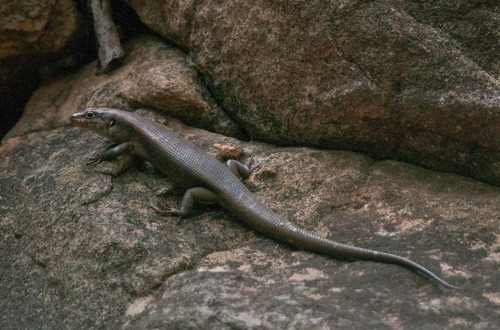
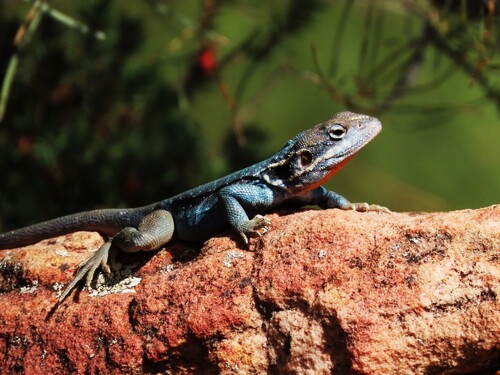
The closest relatives of the Shingleback Lizard that you can see in Flinders Ranges National Park (family Scincidae, Skinks) are Flinder's Ranges Rock-skink (about 50%), Tree Skink (about 40%) and Boulenger's Snake-eyed Skink (about 30%), with each one's daily chance of a sighting.

Where does the Shingleback Lizard sighting chance come from?

GBIF citizen-science records

It is estimated from how often the Shingleback Lizard is recorded against all the reptiles logged in Flinders Ranges National Park (39 verified sightings from 2019 to 2026), calibrated against known sighting rates. Figures are rounded to the nearest 10% because citizen-science data supports honest approximations, not decimals, and months with records from fewer than five people show "—". How it works.

← Back to Flinders Ranges National Park