Boulenger's Snake-eyed Skink

Boulenger's Snake-eyed Skink

Morethia boulengeri

Silhouette: David Orr · PhyloPic

LCLeast ConcernNTVUENCR Endemic
Daily sighting probability ~30% · Possible
at Flinders Ranges National Park

In 3 days ~70% in a week ~90%

17 Verified sightings at Flinders Ranges National Park From 2019 to 2026
36 In all 2 parks
October Best month
☀️ Diurnal When it's spotted

About the Boulenger's Snake-eyed Skink

Morethia boulengeri is a species of lizard in the family Scincidae. The species is endemic to Australia. Common names for M. boulengeri include south-eastern Morethia skink, Boulenger's snake-eyed skink, Boulenger's Morethia, and Boulenger's skink.

The specific name, boulengeri, as well as three of the common names for this skink, are in honour of George Albert Boulenger, a Belgian-born British herpetologist who described a wide range of reptile, amphibian, and fish species new to science.

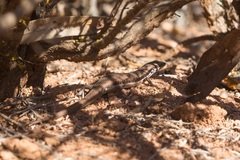
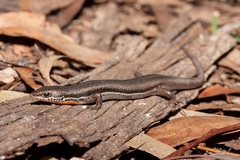
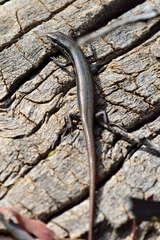
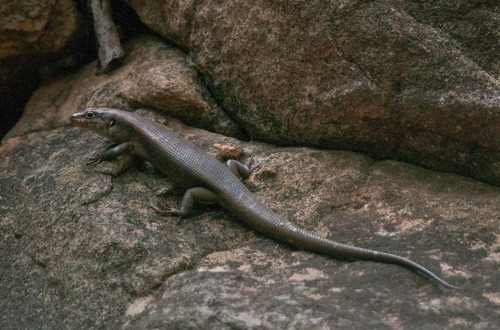
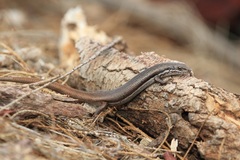
The markings and colouration of M. boulengeri can vary significantly between individuals. In general, it is grey or brown in colour with darker-coloured flecks in a longitudinal pattern along the dorsal side of the lizard, while the ventral side is largely white. A thin white stripe also runs longitudinally from the mouth to the groin region on both sides. Above the white line is a thicker black stripe that borders the white stripes. Juvenile lizards also have a distinctive red-orange tinge on the ventral side of the tail, which is a distinguishing feature of the genus Morethia. Boulenger's skink can grow to a total length (including... Wikipedia →

Global Distribution

Parks Where Found

# Park Country Daily sighting probability
1 Hattah-Kulkyne National Park 🇦🇺 Australia
~30%
2 Flinders Ranges National Park 🇦🇺 Australia
~30%

Before you go

What are the chances of seeing a Boulenger's Snake-eyed Skink in Flinders Ranges National Park?

Possible

About 30% of wildlife watchers report a Boulenger's Snake-eyed Skink sighting in Flinders Ranges National Park on a given day, based on 17 verified sightings from GBIF citizen-science data from 2019 to 2026. It is the 8th most-seen of the 19 reptiles we can rate there. Over three days the chance rises to about 70%, and over a week to about 90%, if each day is a fresh chance.

When is the best time to see a Boulenger's Snake-eyed Skink in Flinders Ranges National Park?

September and October

In those months about 50% of wildlife watchers report a Boulenger's Snake-eyed Skink in Flinders Ranges National Park on a given day, against under 5% in March–April, June–July and December, the lowest months.

What time of day is best to see a Boulenger's Snake-eyed Skink?

Between 11 am and 2 pm

Across all the parks we cover, that three-hour window holds the most Boulenger's Snake-eyed Skink sightings with a recorded time, and about 9 in 10 of them come between 6 am and 6 pm: it is a daytime animal.

Is Flinders Ranges National Park the best place to see a Boulenger's Snake-eyed Skink?

Among the best

Of the 2 parks where we can rate Boulenger's Snake-eyed Skink sightings, Flinders Ranges National Park ranks 2nd at about 30%, level with the leaders once rounded. The best odds are in Hattah-Kulkyne National Park (Australia, about 30%).

Which relatives of the Boulenger's Snake-eyed Skink live in Flinders Ranges National Park?

Same family: Scincidae

The closest relatives of the Boulenger's Snake-eyed Skink that you can see in Flinders Ranges National Park (family Scincidae, Skinks) are Shingleback Lizard (about 50%), Flinder's Ranges Rock-skink (about 50%) and Tree Skink (about 40%), with each one's daily chance of a sighting.

Where does the Boulenger's Snake-eyed Skink sighting chance come from?

GBIF citizen-science records

It is estimated from how often the Boulenger's Snake-eyed Skink is recorded against all the reptiles logged in Flinders Ranges National Park (17 verified sightings from 2019 to 2026), calibrated against known sighting rates. Figures are rounded to the nearest 10% because citizen-science data supports honest approximations, not decimals, and months with records from fewer than five people show "—". How it works.

← Back to Flinders Ranges National Park