White-browed Babbler

White-browed Babbler

Pomatostomus superciliosus

Silhouette: Sheatherius · PhyloPic

LCLeast ConcernNTVUENCR Endemic
Daily sighting probability ~40% · Likely
at Flinders Ranges National Park

In 3 days ~80% in a week >90%

165 Verified sightings at Flinders Ranges National Park From 2019 to 2026
632 In all 4 parks
March Best month
☀️ Diurnal When it's spotted

About the White-browed Babbler

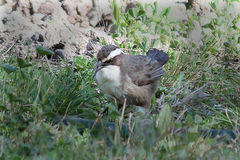
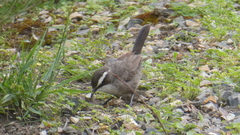
The white-browed babbler (Pomatostomus superciliosus) is a small, gregarious species of bird in the family Pomatostomidae. They are endemic to the open woodlands and shrubby areas of central and southern Australia. The Latin name superciliosus refers to the supercilium, or 'eyebrow', which is a feature synonymous with the pomatostomine babblers (Hall's babbler, chestnut-crowned babbler, grey-crowned babbler, and white-browed babbler).

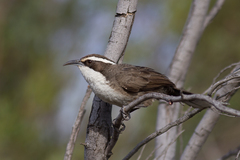
Ranging from 17 cm to 21 cm in length, the white-browed babbler is the smallest of the Australian babblers. It is a medium-sized terrestrial bird with a long and decurved bill. The wings are short and rounded in shape, adjacent to a plump, full body which is similar but slightly smaller than the chestnut-crowned or Hall's babbler. The tail is long and graduated, ending with a rounded tip. The gregarious nature of this species means that the tail is often fanned, raised, or a mix of the two. There are many variations to colour; however, the adult babbler generally varies from a dark grey-brown to solid dark brown with distinguished white supercilium and dark brown eye stripe. The underside is usually lighter in colour, varying from... Wikipedia →

Sounds

Alarm call0:46

Australia · 2022

© Eddy Smith · XC750568 · CC BY-NC-SA 4.0

Call0:52

Australia · 2022

© Khristos Nizamis · XC715866 · CC BY-NC-ND 4.0

Song0:14

Australia · 2020

© Marc Anderson · XC577202 · CC BY-NC-ND 4.0

Global Distribution

Parks Where Found

# Park Country Daily sighting probability
1 Flinders Ranges National Park 🇦🇺 Australia
~40%
2 Hattah-Kulkyne National Park 🇦🇺 Australia
~20%
3 Grampians National Park 🇦🇺 Australia
~10%
4 Uluru-Kata Tjuta National Park 🇦🇺 Australia
~10%

Zoos & Centres Where Found

# Zoo / Centre Country
1 Alice Springs Desert Park 🇦🇺 Australia In captivity

Before you go

What are the chances of seeing a White-browed Babbler in Flinders Ranges National Park?

Likely

About 40% of wildlife watchers report a White-browed Babbler sighting in Flinders Ranges National Park on a given day, based on 165 verified sightings from GBIF citizen-science data from 2019 to 2026. It is the 18th most-seen of the 94 birds we can rate there. Over three days the chance rises to about 80%, and over a week to over 90%, if each day is a fresh chance.

When is the best time to see a White-browed Babbler in Flinders Ranges National Park?

March and June

In those months about 60% of wildlife watchers report a White-browed Babbler in Flinders Ranges National Park on a given day, against about 30% in February and July–August, the lowest months. December has too few records to rate.

What time of day is best to see a White-browed Babbler?

Between 10 am and 1 pm

Across all the parks we cover, that three-hour window holds the most White-browed Babbler sightings with a recorded time, and nearly all of them come between 6 am and 6 pm: it is a daytime animal.

Is Flinders Ranges National Park the best place to see a White-browed Babbler?

Yes

Of the 4 parks where we can rate White-browed Babbler sightings, Flinders Ranges National Park has the highest daily chance: about 40%. Next come Hattah-Kulkyne National Park (Australia, about 20%) and Grampians National Park (Australia, about 10%).

Which relatives of the White-browed Babbler live in Flinders Ranges National Park?

Same order: Passeriformes

The closest relatives of the White-browed Babbler that you can see in Flinders Ranges National Park (order Passeriformes, Perching Birds) are Australian Raven (about 80%), Australian Magpie (about 80%) and Yellow-throated Miner (about 80%), with each one's daily chance of a sighting.

Where does the White-browed Babbler sighting chance come from?

GBIF citizen-science records

It is estimated from how often the White-browed Babbler is recorded against all the birds logged in Flinders Ranges National Park (165 verified sightings from 2019 to 2026), calibrated against known sighting rates. Figures are rounded to the nearest 10% because citizen-science data supports honest approximations, not decimals, and months with records from fewer than five people show "—". How it works.

← Back to Flinders Ranges National Park