Siberian Ibex

Siberian Ibex

Capra sibirica

Silhouette: Steven Traver · PhyloPic

LCNTNear ThreatenedVUENCR
Daily sighting probability ~80% · Very likely
at Gobi Gurvansaikhan National Park

In 3 days >90%

36 Verified sightings at Gobi Gurvansaikhan National Park From 2019 to 2026
36 In 1 park
June Best month
🌅 Crepuscular When it's spotted

About the Siberian Ibex

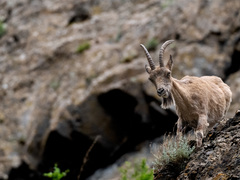
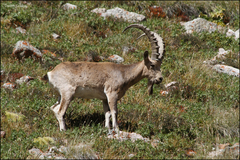
The Siberian ibex (Capra sibirica), also known by regional names including Altai ibex, Asian ibex, Central Asian ibex, Gobi ibex, Himalayan ibex, Mongolian ibex, and Tian Shan ibex, is a polytypic species of ibex, a wild relative of goats and sheep. It lives in Central Asia, and is, by far, the most widely distributed species in the genus Capra. In terms of population stability, Siberian ibex are currently ranked as near

threatened. Low densities (in most areas) and overall decline; still, reliable data is minimal and difficult to come by, in addition to the animals' expansive natural range, so accurate observations are still scant. The Siberian ibex has, formerly, been treated as a subspecies of the Eurasian Alpine ibex, and whether or not it is a single species or a complex of distinct units that stand out as genetically-distinct (at species level) is still not entirely clear. The Siberian ibex is the longest and heaviest member of the genus Capra, though its shoulder height is slightly surpassed by the markhor.

Siberian ibexes are large and heavily built goats, although individual sizes vary greatly. Males are between 88 and 110 cm (35 and 43 in) in shoulder height... Wikipedia →

Global Distribution

Parks Where Found

# Park Country Daily sighting probability
1 Gobi Gurvansaikhan National Park 🇲🇳 Mongolia
~80%

More parks will be added in future updates.

Zoos & Centres Where Found

# Zoo / Centre Country
1 Moscow Zoo 🇷🇺 Russia In captivity
2 Kaliningrad Zoo 🇷🇺 Russia In captivity
3 Zoo Sauvage de St-Félicien 🇨🇦 Canada In captivity
4 Tallinn Zoo 🇪🇪 Estonia In captivity
5 Beijing Zoo 🇨🇳 China In captivity
6 Novosibirsk Zoo 🇷🇺 Russia In captivity
7 Berlin Zoological Garden 🇩🇪 Germany In captivity
8 Wrocław Zoological Garden 🇵🇱 Poland In captivity
9 Chișinău Zoo 🇲🇩 Moldova In captivity
10 The Green Zoo Wuppertal 🇩🇪 Germany In captivity
11 Nikolaev Zoo 🇺🇦 Ukraine In captivity
12 Łódź Zoo 🇵🇱 Poland In captivity
13 Kharkiv Zoo 🇺🇦 Ukraine In captivity
14 Odesa Zoo 🇺🇦 Ukraine In captivity
15 Beijing Aquarium 🇨🇳 China In captivity
16 Africarium 🇵🇱 Poland In captivity
17 Aquarium Berlin 🇩🇪 Germany In captivity
18 Kharkiv Dolphinarium 🇺🇦 Ukraine In captivity
19 terrarium ogrodu zoologicznego we Wrocławiu 🇵🇱 Poland In captivity

Before you go

What are the chances of seeing a Siberian Ibex in Gobi Gurvansaikhan National Park?

Very likely

About 80% of wildlife watchers report a Siberian Ibex sighting in Gobi Gurvansaikhan National Park on a given day, based on 36 verified sightings from GBIF citizen-science data from 2019 to 2026. It is the 2nd most-seen of the 12 mammals we can rate there. Over three days the chance rises to over 90%, if each day is a fresh chance.

What time of day is best to see a Siberian Ibex?

Between 4 and 7 am

Across all the parks we cover, that three-hour window holds the most Siberian Ibex sightings with a recorded time, and about 6 in 10 of them come between 6 am and 6 pm: it is most active around dawn and dusk.

Where else can you see a Siberian Ibex?

Only Gobi Gurvansaikhan National Park, in our data

Gobi Gurvansaikhan National Park is the only park on Wallace's Line with enough records to rate Siberian Ibex sightings: about 80% of wildlife watchers there report one on a given day.

Which relatives of the Siberian Ibex live in Gobi Gurvansaikhan National Park?

Same family: Bovidae

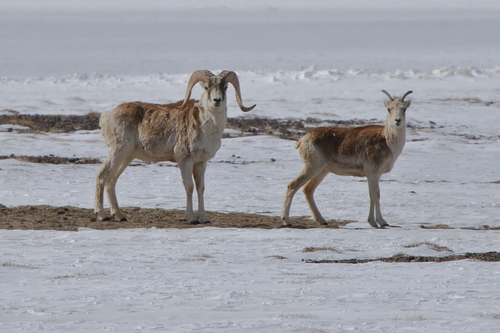
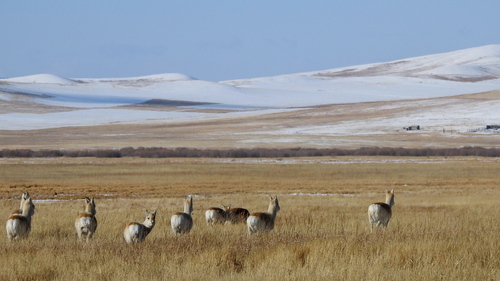
The closest relatives of the Siberian Ibex that you can see in Gobi Gurvansaikhan National Park (family Bovidae, Bovids) are Goitered Gazelle (about 70%), Argali (about 40%) and Mongolian Gazelle (about 40%), with each one's daily chance of a sighting.

Where does the Siberian Ibex sighting chance come from?

GBIF citizen-science records

It is estimated from how often the Siberian Ibex is recorded against all the mammals logged in Gobi Gurvansaikhan National Park (36 verified sightings from 2019 to 2026), calibrated against known sighting rates. Figures are rounded to the nearest 10% because citizen-science data supports honest approximations, not decimals, and months with records from fewer than five people show "—". How it works.

← Back to Gobi Gurvansaikhan National Park