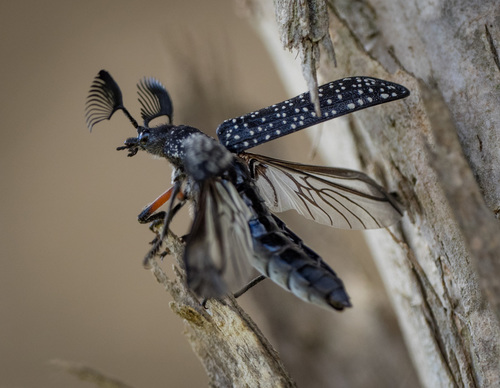
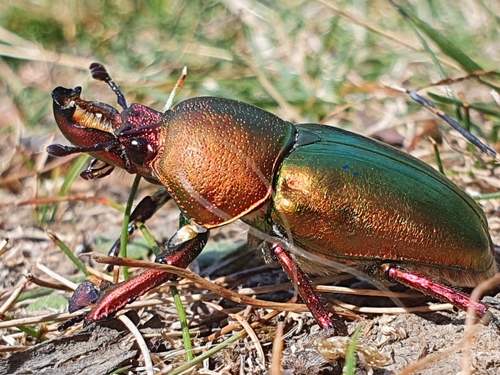
Fiddler Beetle

Fiddler Beetle

Eupoecila australasiae

Endemic
Daily sighting probability <5% · Rare
at Great Otway National Park

In 3 days ~10% in a week ~30%

5 Verified sightings at Great Otway National Park From 2019 to 2026
106 In all 5 parks
January Best month
☀️ Diurnal When it's spotted

About the Fiddler Beetle

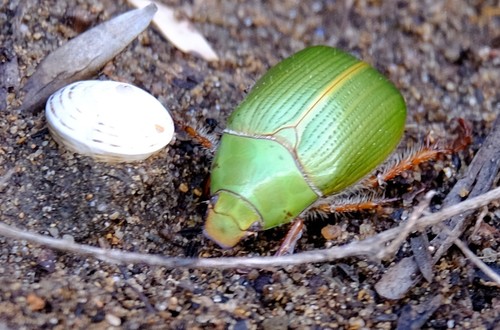
Eupoecila australasiae, commonly known as the fiddler beetle or rose chafer, is a colourful green- or yellow-and-black member of the scarab beetle family from eastern Australia. The fiddler beetle was originally described by Anglo Irish naturalist Edward Donovan as Cetonia australasiae in his 1805 work An Epitome of the Natural History of the Insects of New Holland, New Zealand, New Guinea, Otaheite, and other Islands in the Indian, Southern, and Pacific Oceans. It was reclassified in and became the type species of the new genus Eupoecila by German entomologist Hermann Burmeister in 1842. Within the scarab family, it is a member of the subfamily Cetoniinae, commonly known as flower chafers. These beetles are strong flyers and can fly without moving the elytra; they spend much of the time searching for nectar and plant exudates.

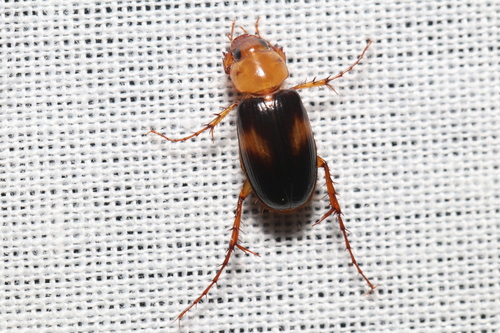
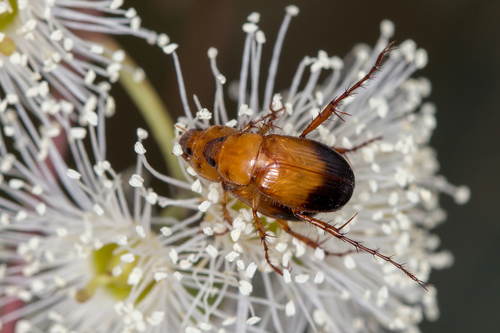
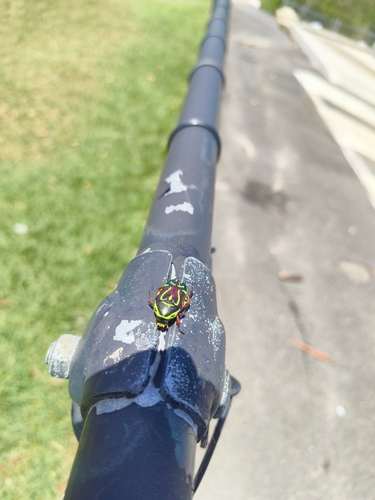
Its common name is derived from its patterned body, reminiscent of a violin. The fiddler beetle measures 15–20 millimetres (0.6–0.8 in) in length, its body patterned dark brown and lime green to yellow. It is found in eastern Australia, in Queensland, New South Wales, Victoria, and southeastern South Australia, and lives in heathland and eucalypt woodland, as well as suburban parks and gardens.

Eggs are laid in rotting logs, or in debris or soil. The larvae eat rotting wood until they mature and pupate there by making a cocoon-like chamber within the wood. Adult beetles burrow through the soil and emerge in early summer, and feed on nectar-laden flowers. These include Angophora hispida and A. woodsiana, Backhousia citriodora, and Melaleuca linariifolia. Wikipedia →
Global Distribution

Parks Where Found

# Park Country Daily sighting probability
1 Royal National Park 🇦🇺 Australia
~20%
2 Blue Mountains National Park 🇦🇺 Australia
~10%
3 Booderee National Park 🇦🇺 Australia
~10%
4 Springbrook National Park 🇦🇺 Australia
~10%
5 Great Otway National Park 🇦🇺 Australia
<5%

Cities Where Found

# City Country Daily sighting probability
1 Sydney 🇦🇺 Australia
~10%
2 Brisbane 🇦🇺 Australia
~10%
3 Melbourne 🇦🇺 Australia
~10%

Before you go

What are the chances of seeing a Fiddler Beetle in Great Otway National Park?

Rare

Under 5% of wildlife watchers report a Fiddler Beetle sighting in Great Otway National Park on a given day, based on 5 verified sightings from GBIF citizen-science data from 2019 to 2026. It is the 369th most-seen of the 418 insects we can rate there. Over three days the chance rises to about 10%, and over a week to about 30%, if each day is a fresh chance.

When is the best time to see a Fiddler Beetle in Great Otway National Park?

December to March

In those months about 10% of wildlife watchers report a Fiddler Beetle in Great Otway National Park on a given day, against under 5% in April to November, the lowest months.

What time of day is best to see a Fiddler Beetle?

Between 10 am and 1 pm

Across all the parks we cover, that three-hour window holds the most Fiddler Beetle sightings with a recorded time, and about 9 in 10 of them come between 6 am and 6 pm: it is a daytime animal.

Is Great Otway National Park the best place to see a Fiddler Beetle?

5th of 5

Of the 5 parks where we can rate Fiddler Beetle sightings, Great Otway National Park ranks 5th at under 5%. The best odds are in Royal National Park (Australia, about 20%), Blue Mountains National Park (Australia, about 10%) and Booderee National Park (Australia, about 10%).

Where does the Fiddler Beetle sighting chance come from?

GBIF citizen-science records

It is estimated from how often the Fiddler Beetle is recorded against all the insects logged in Great Otway National Park (5 verified sightings from 2019 to 2026), calibrated against known sighting rates. Figures are rounded to the nearest 10% because citizen-science data supports honest approximations, not decimals, and months with records from fewer than five people show "—". How it works.

← Back to Great Otway National Park