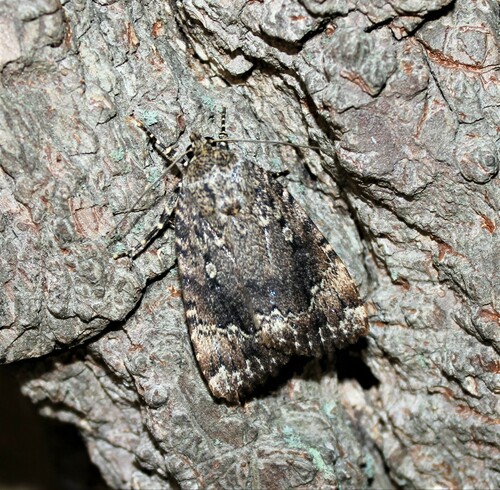
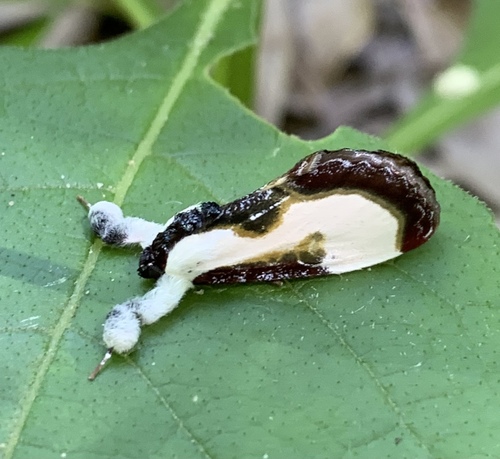
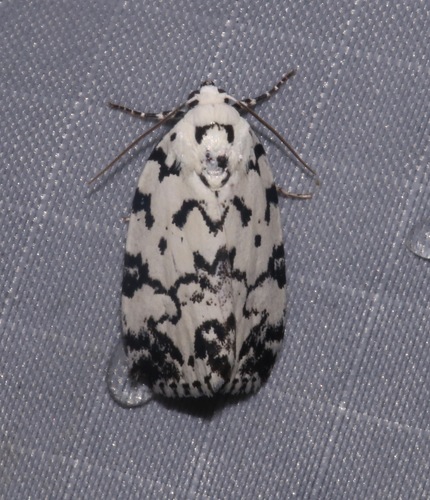
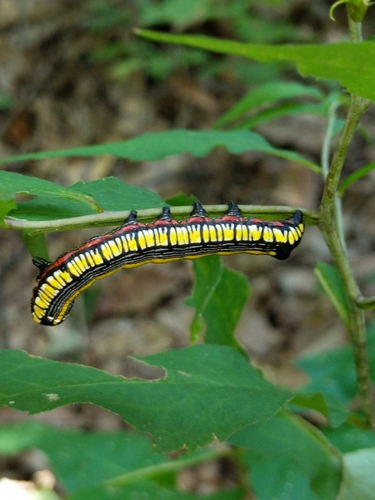
American Copper Underwing

American Copper Underwing

Amphipyra pyramidoides

Daily sighting probability <5% · Rare
at Great Smoky Mountains National Park

In 3 days ~10% in a week ~30%

9 Verified sightings at Great Smoky Mountains National Park From 2019 to 2026
14 In all 2 parks
April Best month
☀️🌙 Day & Night When it's spotted

About the American Copper Underwing

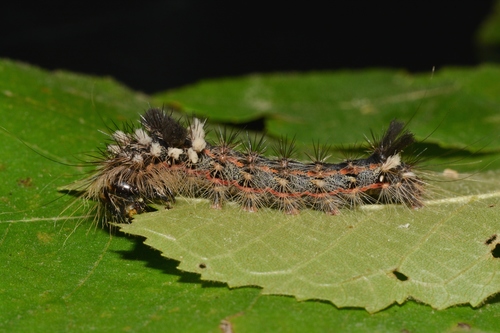
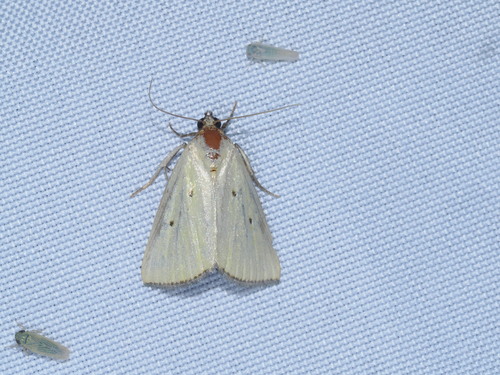
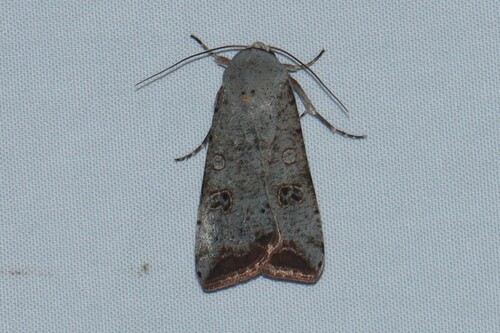
Amphipyra pyramidoides, the copper underwing, is a species of moth in the family Noctuidae. It is found in the US and southern Canada. The wingspan is 38–52 mm. Adults are on wing from July through October depending on the location. There is one generation per year. They overwinter as eggs. The caterpillars are green with a white middorsal spiracular line, yellow spotting, and a hump at their eighth abdominal segment. Adult copper underwings have dappled brown forewings, and white hindwings with a black cross line and coppery orange suffusion.

The larvae feed on the leaves of many broadleaf trees and shrubs, including apple, basswood, hawthorn, maple, oak, walnut, raspberry, grape, greenbrier (Smilax). The larvae are active in the spring; when ready to pupate they build a shelter by rolling a leaf. Aggregations of newly eclosed adults are found under bark, etc., in mid-summer. Wikipedia →

Global Distribution

Parks Where Found

# Park Country Daily sighting probability
1 Point Pelee National Park 🇨🇦 Canada
~10%
2 Great Smoky Mountains National Park 🇺🇸 United States
<5%

Cities Where Found

# City Country Daily sighting probability
1 Edmonton 🇨🇦 Canada
~10%
2 Baltimore 🇺🇸 United States
~10%
3 Boston 🇺🇸 United States
~10%
4 Minneapolis [Saint Paul] 🇺🇸 United States
~10%
5 Washington 🇺🇸 United States
~10%
6 Philadelphia 🇺🇸 United States
~10%
7 Detroit 🇺🇸 United States
~10%
8 New York City 🇺🇸 United States
<5%
9 Toronto 🇨🇦 Canada
<5%
10 Chicago 🇺🇸 United States
<5%

Before you go

What are the chances of seeing an American Copper Underwing in Great Smoky Mountains National Park?

Rare

Under 5% of wildlife watchers report an American Copper Underwing sighting in Great Smoky Mountains National Park on a given day, based on 9 verified sightings from GBIF citizen-science data from 2019 to 2026. It is the 513th most-seen of the 822 insects we can rate there. Over three days the chance rises to about 10%, and over a week to about 30%, if each day is a fresh chance.

When is the best time to see an American Copper Underwing in Great Smoky Mountains National Park?

April–May and July

In those months about 10% of wildlife watchers report an American Copper Underwing in Great Smoky Mountains National Park on a given day, against under 5% in June and August–March, the lowest months.

What time of day is best to see an American Copper Underwing?

Between 8 and 11 am

Across all the parks we cover, that three-hour window holds the most American Copper Underwing sightings with a recorded time, and about 6 in 10 of them come between 6 am and 6 pm: it is seen both by day and at night.

Is Great Smoky Mountains National Park the best place to see an American Copper Underwing?

2nd of 2

Of the 2 parks where we can rate American Copper Underwing sightings, Great Smoky Mountains National Park ranks 2nd at under 5%. The best odds are in Point Pelee National Park (Canada, about 10%).

Which relatives of the American Copper Underwing live in Great Smoky Mountains National Park?

Same family: Noctuidae

The closest relatives of the American Copper Underwing that you can see in Great Smoky Mountains National Park (family Noctuidae, Cutworm Moths and Allies) are Beautiful Wood-Nymph (about 20%), Hebrew Moth (about 10%) and American Dagger (about 10%), with each one's daily chance of a sighting.

Where does the American Copper Underwing sighting chance come from?

GBIF citizen-science records

It is estimated from how often the American Copper Underwing is recorded against all the insects logged in Great Smoky Mountains National Park (9 verified sightings from 2019 to 2026), calibrated against known sighting rates. Figures are rounded to the nearest 10% because citizen-science data supports honest approximations, not decimals, and months with records from fewer than five people show "—". How it works.

← Back to Great Smoky Mountains National Park