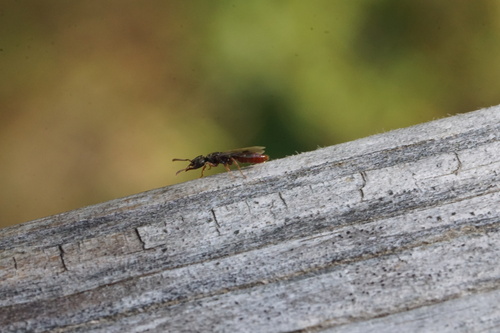
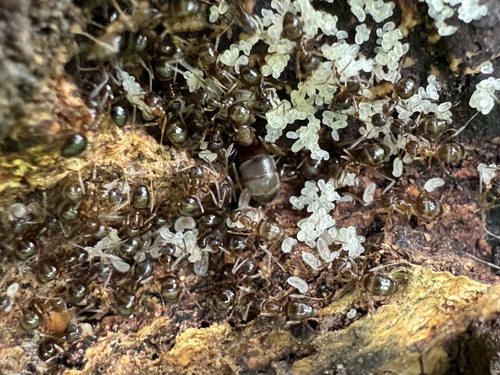
American Winter Ant

American Winter Ant

Prenolepis imparis

Daily sighting probability ~10% · With luck
at Great Smoky Mountains National Park

In 3 days ~30% in a week ~50%

54 Verified sightings at Great Smoky Mountains National Park From 2019 to 2026
101 In all 5 parks
February Best month
☀️ Diurnal When it's spotted

About the American Winter Ant

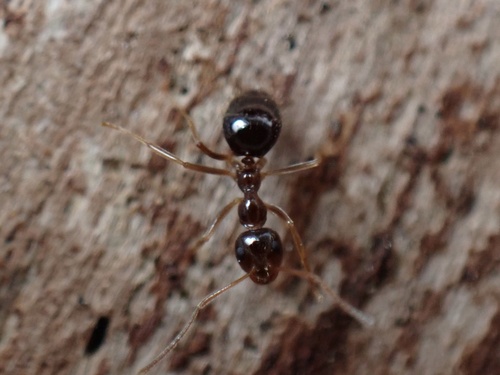
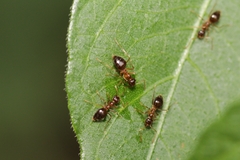
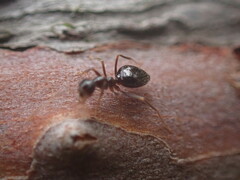
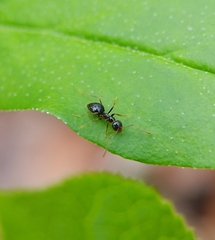
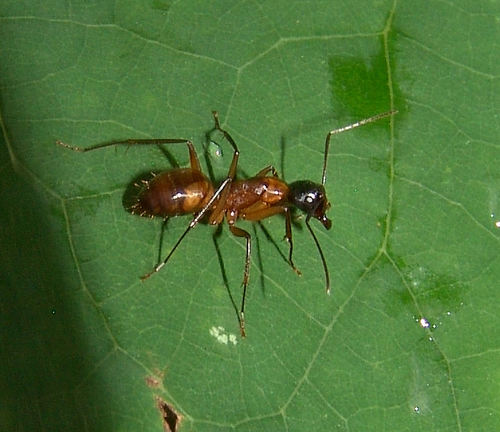
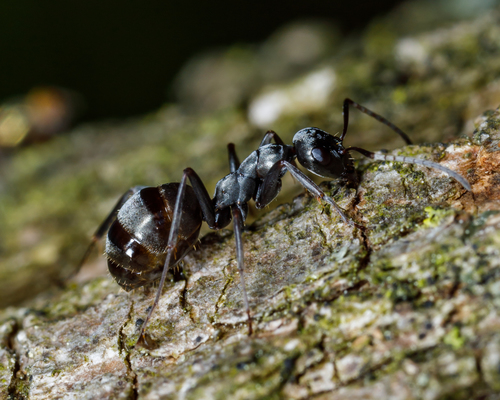
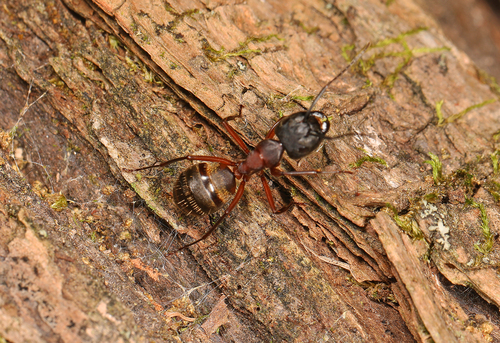
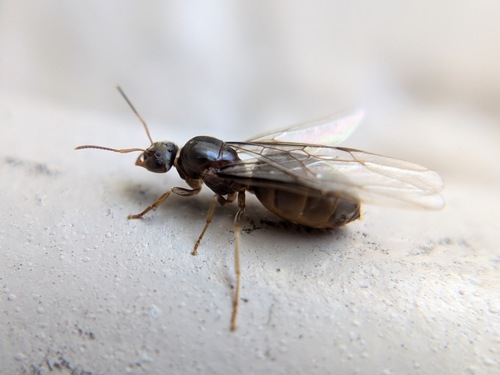
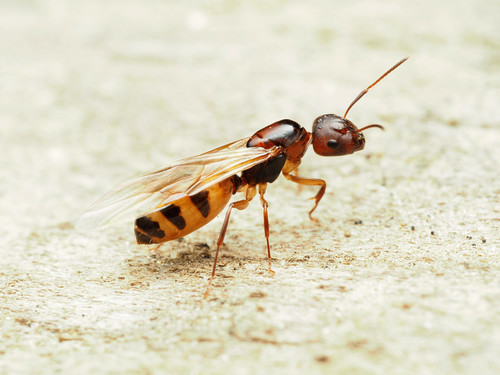
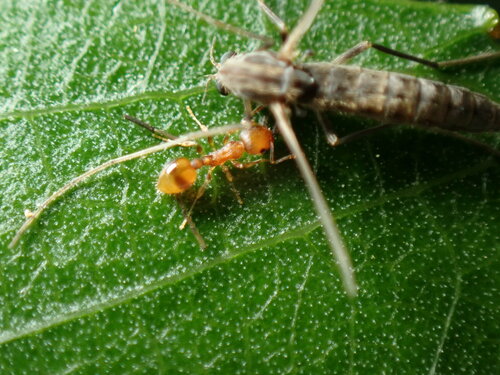
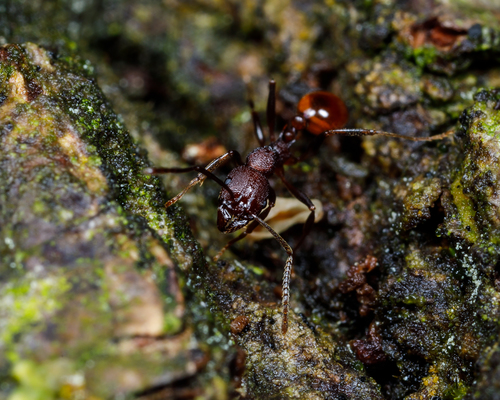
Prenolepis imparis, commonly known as the winter ant, false honey ant, or false honeypot ant, is a species of ant in the genus Prenolepis. The species is found in North America, from Canada to Mexico, nesting deep within the ground. Unusual among ants, Prenolepis imparis prefers lower temperatures, including near freezing, and is only active outside the nest during winter and early spring. Prenolepis imparis enters a hibernation-like state called aestivation during the summer.

P. imparis secretes an opaque white liquid from its abdomen as a defense against other ants, including Linepithema humile. The defensive secretions appear to be derived anatomically from the Dufour's gland and has been shown to contain a mixture of alkanes and alkenes including hexadecene, octadecene, tetradecene, octylcyclohexane, and hexadecane. Secretions from P. imparis have experimentally been shown to often kill L. humile workers. Wikipedia →

Global Distribution

Parks Where Found

# Park Country Daily sighting probability
1 Great Smoky Mountains National Park 🇺🇸 United States
~10%
2 Shenandoah National Park 🇺🇸 United States
~10%
3 Congaree National Park 🇺🇸 United States
~10%
4 Sequoia and Kings Canyon National Parks 🇺🇸 United States
~10%
5 Yosemite National Park 🇺🇸 United States
<5%

Cities Where Found

# City Country Daily sighting probability
1 Boston 🇺🇸 United States
~20%
2 Philadelphia 🇺🇸 United States
~10%
3 Washington 🇺🇸 United States
~10%
4 San Francisco 🇺🇸 United States
~10%
5 New York City 🇺🇸 United States
~10%
6 Toronto 🇨🇦 Canada
~10%
7 Sacramento 🇺🇸 United States
~10%
8 Minneapolis [Saint Paul] 🇺🇸 United States
~10%
9 Chicago 🇺🇸 United States
~10%
10 Detroit 🇺🇸 United States
~10%

Before you go

What are the chances of seeing an American Winter Ant in Great Smoky Mountains National Park?

With luck

About 10% of wildlife watchers report an American Winter Ant sighting in Great Smoky Mountains National Park on a given day, based on 54 verified sightings from GBIF citizen-science data from 2019 to 2026. It is the 106th most-seen of the 822 insects we can rate there. Over three days the chance rises to about 30%, and over a week to about 50%, if each day is a fresh chance.

When is the best time to see an American Winter Ant in Great Smoky Mountains National Park?

February

In that month about 30% of wildlife watchers report an American Winter Ant in Great Smoky Mountains National Park on a given day, against under 5% in January, the lowest month.

What time of day is best to see an American Winter Ant?

Between 1 and 4 pm

Across all the parks we cover, that three-hour window holds the most American Winter Ant sightings with a recorded time, and about 9 in 10 of them come between 6 am and 6 pm: it is a daytime animal.

Is Great Smoky Mountains National Park the best place to see an American Winter Ant?

Yes

Of the 5 parks where we can rate American Winter Ant sightings, Great Smoky Mountains National Park has the highest daily chance: about 10%. Next come Shenandoah National Park (United States, about 10%) and Congaree National Park (United States, about 10%).

Which relatives of the American Winter Ant live in Great Smoky Mountains National Park?

Same family: Formicidae

The closest relatives of the American Winter Ant that you can see in Great Smoky Mountains National Park (family Formicidae, Ants) are American Carpenter Ant (about 10%), Eastern Black Carpenter Ant (about 10%) and Silky Field Ant (about 10%), with each one's daily chance of a sighting.

Where does the American Winter Ant sighting chance come from?

GBIF citizen-science records

It is estimated from how often the American Winter Ant is recorded against all the insects logged in Great Smoky Mountains National Park (54 verified sightings from 2019 to 2026), calibrated against known sighting rates. Figures are rounded to the nearest 10% because citizen-science data supports honest approximations, not decimals, and months with records from fewer than five people show "—". How it works.

← Back to Great Smoky Mountains National Park