


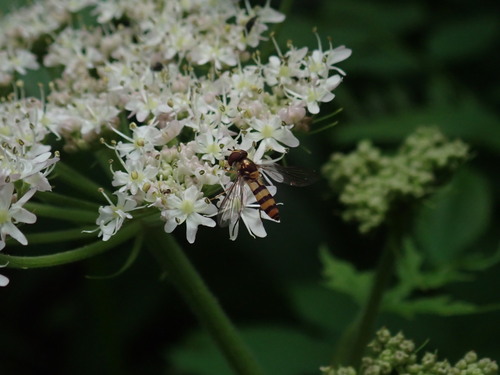
Common Picture-Winged Fly

Common Picture-Winged Fly

Delphinia picta

Daily sighting probability <5% · Rare
at Great Smoky Mountains National Park

In 3 days ~10% in a week ~20%

5 Verified sightings at Great Smoky Mountains National Park From 2019 to 2026
10 In all 2 parks
August Best month
☀️ Diurnal When it's spotted

About the Common Picture-Winged Fly

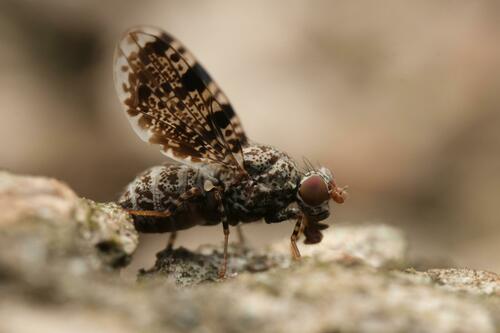
Delphinia picta is a species of picture-winged fly in the family Ulidiidae. The specific name picta is from Latin and means "painted". It is the only species in the monospecific genus Delphinia. It is found in the United States on the East Coast and in the Midwest from Florida to Maine across to Kansas through Minnesota but also can be found in Mexico and El Salvador. It is sometimes mistaken for a species of fruit fly, but D. picta do not feed on living plant matter, as they are detritivores and eat decaying plant matter. They also have been observed eating fermenting frass from Megacyllene robiniae on black locust trees. They can be found almost anywhere there is decaying vegetation: landfills, temperate deciduous forests, swamps, and even shaded fields.

The best way to identify the species is by the distinct pattern on its wings, which are shiny and dark brown with a hyaline background. Its body is about 7mm long with a black abdomen and a light brown head, thorax, and legs. The ovipositor averages 1.27mm long with two dorsal and one ventral prominent pairs of setae, as well as many short setae on both sides. The tip of the ovipositor also has a slight bend downward... Wikipedia →

Global Distribution

Parks Where Found

# Park Country Daily sighting probability
1 Shenandoah National Park 🇺🇸 United States
<5%
2 Great Smoky Mountains National Park 🇺🇸 United States
<5%

Cities Where Found

# City Country Daily sighting probability
1 Detroit 🇺🇸 United States
~10%
2 Baltimore 🇺🇸 United States
~10%
3 Philadelphia 🇺🇸 United States
~10%
4 Washington 🇺🇸 United States
~10%
5 New York City 🇺🇸 United States
~10%
6 Minneapolis [Saint Paul] 🇺🇸 United States
~10%
7 Dallas 🇺🇸 United States
~10%
8 Chicago 🇺🇸 United States
~10%
9 Boston 🇺🇸 United States
~10%
10 Austin 🇺🇸 United States
~10%

Before you go

What are the chances of seeing a Common Picture-Winged Fly in Great Smoky Mountains National Park?

Rare

Under 5% of wildlife watchers report a Common Picture-Winged Fly sighting in Great Smoky Mountains National Park on a given day, based on 5 verified sightings from GBIF citizen-science data from 2019 to 2026. It is the 628th most-seen of the 822 insects we can rate there. Over three days the chance rises to about 10%, and over a week to about 20%, if each day is a fresh chance.

When is the best time to see a Common Picture-Winged Fly in Great Smoky Mountains National Park?

June and August

In those months about 10% of wildlife watchers report a Common Picture-Winged Fly in Great Smoky Mountains National Park on a given day, against under 5% in July and September–May, the lowest months.

What time of day is best to see a Common Picture-Winged Fly?

Between 10 am and 1 pm

Across all the parks we cover, that three-hour window holds the most Common Picture-Winged Fly sightings with a recorded time, and about 9 in 10 of them come between 6 am and 6 pm: it is a daytime animal.

Is Great Smoky Mountains National Park the best place to see a Common Picture-Winged Fly?

Among the best

Of the 2 parks where we can rate Common Picture-Winged Fly sightings, Great Smoky Mountains National Park ranks 2nd at under 5%, level with the leaders once rounded. The best odds are in Shenandoah National Park (United States, under 5%).

Where does the Common Picture-Winged Fly sighting chance come from?

GBIF citizen-science records

It is estimated from how often the Common Picture-Winged Fly is recorded against all the insects logged in Great Smoky Mountains National Park (5 verified sightings from 2019 to 2026), calibrated against known sighting rates. Figures are rounded to the nearest 10% because citizen-science data supports honest approximations, not decimals, and months with records from fewer than five people show "—". How it works.

← Back to Great Smoky Mountains National Park