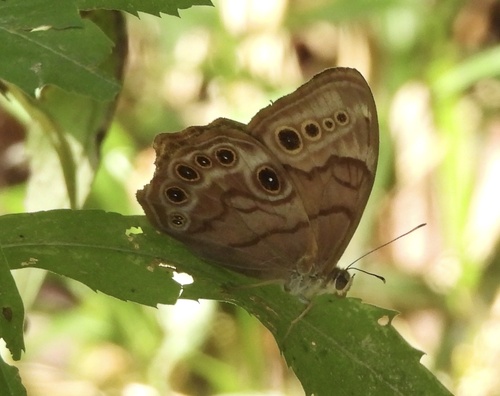
Eastern Comma

Eastern Comma

Polygonia comma

Daily sighting probability ~30% · Possible
at Great Smoky Mountains National Park

In 3 days ~60% in a week ~90%

288 Verified sightings at Great Smoky Mountains National Park From 2019 to 2026
620 In all 5 parks
March Best month
☀️ Diurnal When it's spotted

About the Eastern Comma

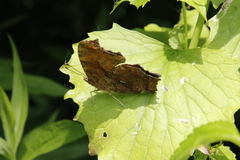
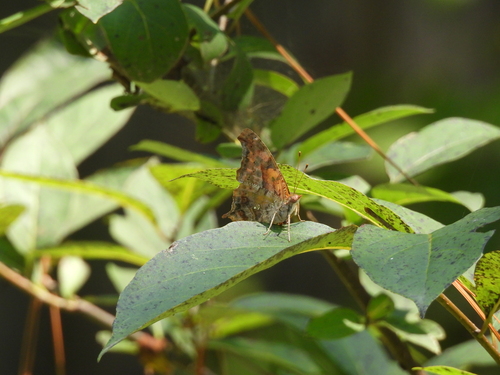
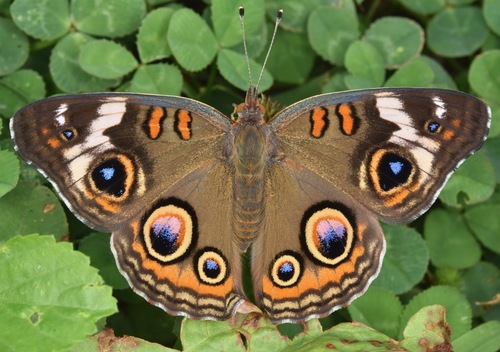
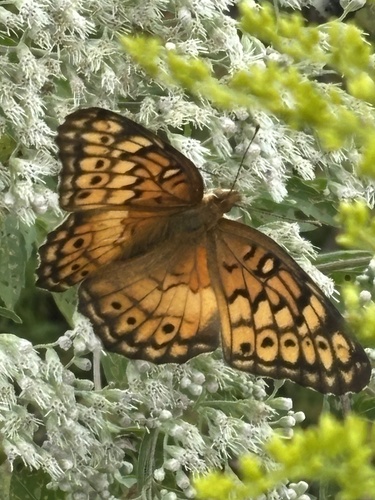
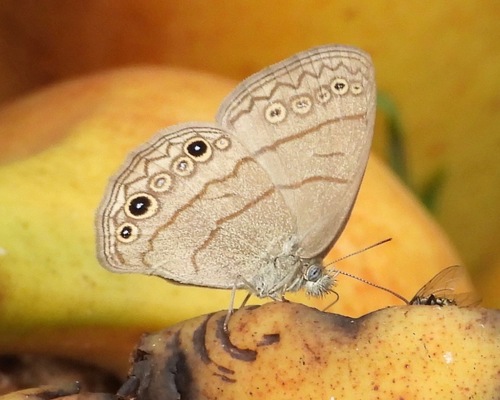
Polygonia comma, the eastern comma, is a North American butterfly in the family Nymphalidae, subfamily Nymphalinae. This butterfly is seasonally variable. The upperside of the summer form's hindwings are all black, whereas the winter forms hindwings are reddish orange. The underside of both forms is striped with dark and light brown. There is a silvery comma mark in the middle of the hindwing in both forms. Its wingspan is 4.5–6.4 cm (1.8–2.5 in).

The eastern comma may be spotted in woods near rivers, ponds, marshes, swamps, and other water sources. This butterfly seldom visits flowers, but rather feeds on sap, rotting fruit, salts and minerals from puddling, and dung.

Caterpillars feed on paper birch (Betula papyrifera), false nettle (Boehmeria cylindrica), hackberry (Celtis occidentalis), hops (Humulus), wood nettle (Laportea canadensis), currants and gooseberries (Ribes spp.), basswood (Tilia americana), American elm (Ulmus americana), nettle (Urtica), and clearweed (Pilea pumila).

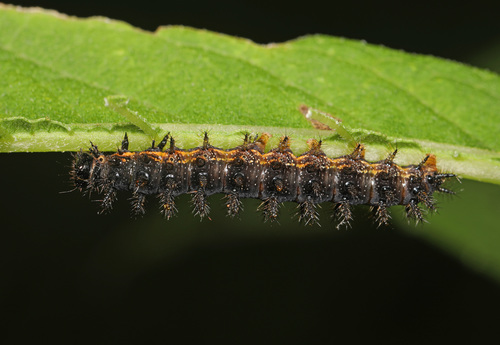
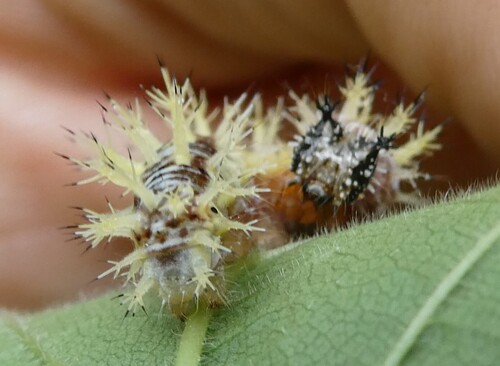
The green eggs are laid singly or in stacks under host plant leaves and stems. The spiny larva varies in color from... Wikipedia →
Global Distribution

Parks Where Found

# Park Country Daily sighting probability
1 Shenandoah National Park 🇺🇸 United States
~30%
2 Great Smoky Mountains National Park 🇺🇸 United States
~30%
3 Point Pelee National Park 🇨🇦 Canada
~30%
4 Congaree National Park 🇺🇸 United States
~20%
5 Riding Mountain National Park 🇨🇦 Canada
~10%

Cities Where Found

# City Country Daily sighting probability
1 Philadelphia 🇺🇸 United States
~10%
2 Toronto 🇨🇦 Canada
~10%
3 Minneapolis [Saint Paul] 🇺🇸 United States
~10%
4 Montreal 🇨🇦 Canada
~10%
5 Baltimore 🇺🇸 United States
~10%
6 Washington 🇺🇸 United States
~10%
7 Detroit 🇺🇸 United States
~10%
8 Chicago 🇺🇸 United States
~10%
9 New York City 🇺🇸 United States
<5%
10 Boston 🇺🇸 United States
<5%

Before you go

What are the chances of seeing an Eastern Comma in Great Smoky Mountains National Park?

Possible

About 30% of wildlife watchers report an Eastern Comma sighting in Great Smoky Mountains National Park on a given day, based on 288 verified sightings from GBIF citizen-science data from 2019 to 2026. It is the 12th most-seen of the 822 insects we can rate there. Over three days the chance rises to about 60%, and over a week to about 90%, if each day is a fresh chance.

When is the best time to see an Eastern Comma in Great Smoky Mountains National Park?

March

In that month about 50% of wildlife watchers report an Eastern Comma in Great Smoky Mountains National Park on a given day, against under 5% in December and January, the lowest months.

What time of day is best to see an Eastern Comma?

Between noon and 3 pm

Across all the parks we cover, that three-hour window holds the most Eastern Comma sightings with a recorded time, and nearly all of them come between 6 am and 6 pm: it is a daytime animal.

Is Great Smoky Mountains National Park the best place to see an Eastern Comma?

Among the best

Of the 5 parks where we can rate Eastern Comma sightings, Great Smoky Mountains National Park ranks 2nd at about 30%, level with the leaders once rounded. The best odds are in Shenandoah National Park (United States, about 30%).

Where does the Eastern Comma sighting chance come from?

GBIF citizen-science records

It is estimated from how often the Eastern Comma is recorded against all the insects logged in Great Smoky Mountains National Park (288 verified sightings from 2019 to 2026), calibrated against known sighting rates. Figures are rounded to the nearest 10% because citizen-science data supports honest approximations, not decimals, and months with records from fewer than five people show "—". How it works.

← Back to Great Smoky Mountains National Park