Question Mark

Question Mark

Polygonia interrogationis

Daily sighting probability ~10% · With luck
at Great Smoky Mountains National Park

In 3 days ~40% in a week ~60%

75 Verified sightings at Great Smoky Mountains National Park From 2019 to 2026
323 In all 7 parks
March Best month
☀️ Diurnal When it's spotted

About the Question Mark

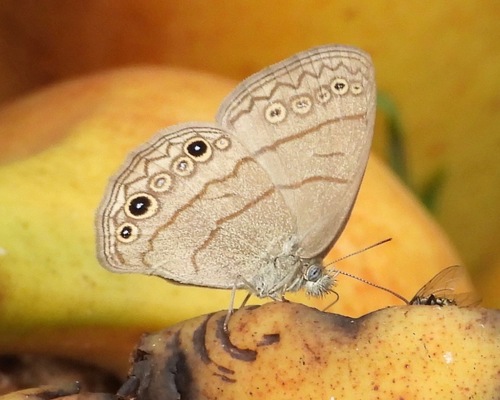
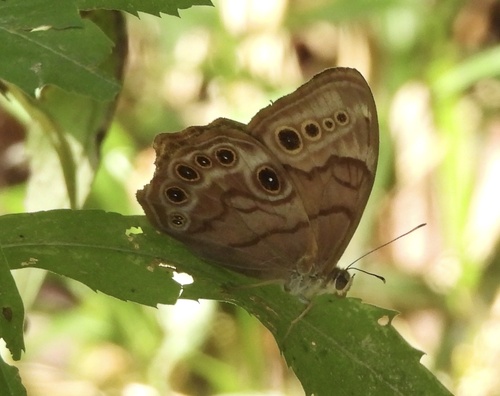
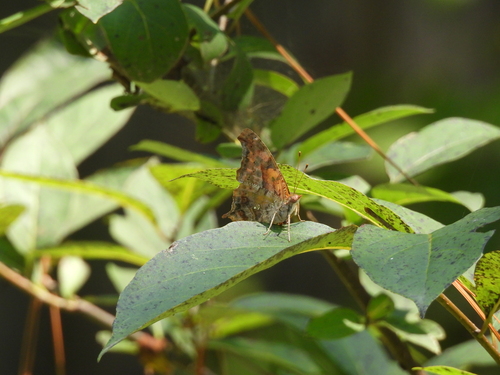
Polygonia interrogationis, commonly called the question mark butterfly, is a North American nymphalid butterfly. It lives in wooded areas, city parks, generally in areas with a combination of trees and open space. The color and textured appearance of the underside of its wings combine to provide camouflage that resembles a dead leaf. The adult butterfly has a wingspan of 4.5–7.6 cm (1.8–3.0 in). Its flight period is from May to September. "The silver mark on the underside of the hindwing is broken into two parts, a curved line and a dot, creating a ?-shaped mark that gives the species its common name."

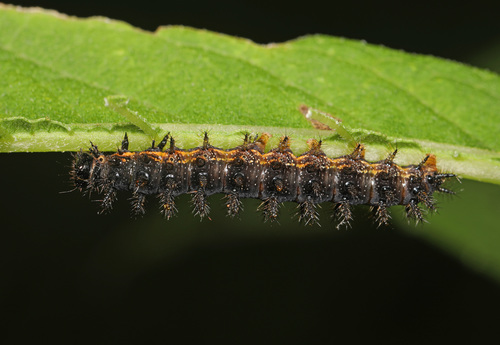
Like other species in the order of Lepidoptera, the question mark is a holometabolous insect that undergoes four life stages. These four life stages are embryo (egg), larva (in this case, caterpillar), pupa (chrysalis), and imago (or adult/butterfly).

After the male has found the female perching on a tree or in the grass, courting ensues, after which the mating of the two occurs. Females lay eggs singly or stacked under leaves of plants that are usually not the hosts. The young hatchlings must then find their food source to survive.

Larvae of the... Wikipedia →
Global Distribution

Parks Where Found

# Park Country Daily sighting probability
1 Congaree National Park 🇺🇸 United States
~40%
2 Point Pelee National Park 🇨🇦 Canada
~30%
3 Shenandoah National Park 🇺🇸 United States
~10%
4 Great Smoky Mountains National Park 🇺🇸 United States
~10%
5 Cumbres de Monterrey National Park 🇲🇽 Mexico
~10%
6 Big Bend National Park 🇺🇸 United States
~10%
7 Acadia National Park 🇺🇸 United States
~10%

Cities Where Found

# City Country Daily sighting probability
1 Austin 🇺🇸 United States
~20%
2 Dallas 🇺🇸 United States
~20%
3 Detroit 🇺🇸 United States
~10%
4 Toronto 🇨🇦 Canada
~10%
5 Houston 🇺🇸 United States
~10%
6 Chicago 🇺🇸 United States
~10%
7 San Antonio 🇺🇸 United States
~10%
8 New York City 🇺🇸 United States
~10%
9 Baltimore 🇺🇸 United States
~10%
10 Philadelphia 🇺🇸 United States
~10%

Before you go

What are the chances of seeing a Question Mark in Great Smoky Mountains National Park?

With luck

About 10% of wildlife watchers report a Question Mark sighting in Great Smoky Mountains National Park on a given day, based on 75 verified sightings from GBIF citizen-science data from 2019 to 2026. It is the 72nd most-seen of the 822 insects we can rate there. Over three days the chance rises to about 40%, and over a week to about 60%, if each day is a fresh chance.

When is the best time to see a Question Mark in Great Smoky Mountains National Park?

March and June–July

In those months about 20% of wildlife watchers report a Question Mark in Great Smoky Mountains National Park on a given day, against under 5% in December and January, the lowest months.

What time of day is best to see a Question Mark?

Between noon and 3 pm

Across all the parks we cover, that three-hour window holds the most Question Mark sightings with a recorded time, and about 9 in 10 of them come between 6 am and 6 pm: it is a daytime animal.

Is Great Smoky Mountains National Park the best place to see a Question Mark?

4th of 7

Of the 7 parks where we can rate Question Mark sightings, Great Smoky Mountains National Park ranks 4th at about 10%. The best odds are in Congaree National Park (United States, about 40%), Point Pelee National Park (Canada, about 30%) and Shenandoah National Park (United States, about 10%).

Where does the Question Mark sighting chance come from?

GBIF citizen-science records

It is estimated from how often the Question Mark is recorded against all the insects logged in Great Smoky Mountains National Park (75 verified sightings from 2019 to 2026), calibrated against known sighting rates. Figures are rounded to the nearest 10% because citizen-science data supports honest approximations, not decimals, and months with records from fewer than five people show "—". How it works.

← Back to Great Smoky Mountains National Park