Highland Tinamou

Highland Tinamou

Nothocercus bonapartei

Silhouette: George Edward Lodge · PhyloPic

LCLeast ConcernNTVUENCR
Daily sighting probability <5% · Rare
at Henri Pittier National Park

In 3 days <5% in a week ~10%

8 Verified sightings at Henri Pittier National Park From 2019 to 2026
1,092 In all 12 parks
May Best month
☀️🌙 Day & Night When it's spotted

About the Highland Tinamou

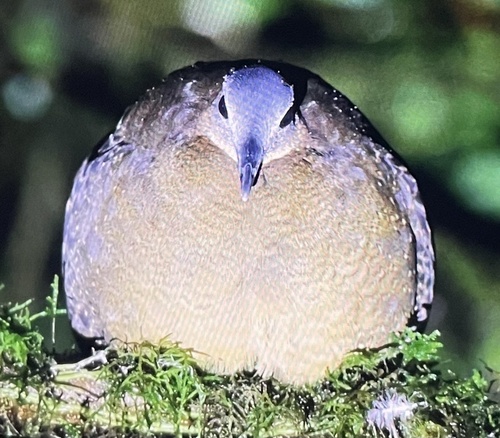
The highland tinamou or Bonaparte's tinamou (Nothocercus bonapartei) is a type of ground bird found in montane moist forest typically over 1,500 m (4,900 ft) altitude. All tinamou are from the family Tinamidae, and in the larger scheme are also ratites. Unlike other ratites, tinamous can fly, although in general, they are not strong fliers. All ratites evolved from prehistoric flying birds, and tinamous are the closest living relative of these birds.

It has five subspecies: N. b. frantzii occurs in the highlands of Costa Rica and western Panama. N. b. bonapartei occurs in northwestern Venezuela and northern Colombia. N. b. discrepans occurs in central Colombia (Tolima and Meta provinces).

N. b. plumbeiceps occurs in the Andes of eastern Ecuador and far northern Peru. George Robert Gray identified the highland tinamou from a specimen from Aragua, Venezuela, in 1867. The specific name bonapartei, a Latin genitive of the name Bonaparte, commemorates Charles Lucien Bonaparte. The highland tinamou averages 38.5 cm (15.2 in) long, and weighs 925 g (2.039 lb). Its plumage is mottled... Wikipedia →
Sounds

Song0:24

Colombia · 2021

© Mauricio Cuellar Ramirez (@Birding.travel) · XC641695 · CC BY-NC-SA 4.0

Call0:15

Colombia · 2016

© Juan Pablo López-O. · XC357041 · CC BY-NC-SA 4.0

Call0:18

Colombia · 2016

© Ross Gallardy · XC353906 · CC BY-NC-SA 4.0

Global Distribution

Parks Where Found

# Park Country Daily sighting probability
1 Monteverde Cloud Forest Reserve 🇨🇷 Costa Rica
<5%
2 Volcán Barú National Park 🇵🇦 Panama
<5%
3 Chirripó National Park 🇨🇷 Costa Rica
<5%
4 La Amistad International Park (Panama) 🇵🇦 Panama
<5%
5 Podocarpus National Park 🇪🇨 Ecuador
<5%
6 Henri Pittier National Park 🇻🇪 Venezuela
<5%
7 Los Quetzales National Park 🇨🇷 Costa Rica
<5%
8 Tapantí-Macizo de la Muerte National Park 🇨🇷 Costa Rica
<5%
9 Braulio Carrillo National Park 🇨🇷 Costa Rica
<5%
10 Poás Volcano National Park 🇨🇷 Costa Rica
<5%
11 Arenal Volcano National Park 🇨🇷 Costa Rica
<5%
12 Farallones de Cali National Natural Park 🇨🇴 Colombia
<5%

Before you go

What are the chances of seeing a Highland Tinamou in Henri Pittier National Park?

Rare

Under 5% of wildlife watchers report a Highland Tinamou sighting in Henri Pittier National Park on a given day, based on 8 verified sightings from GBIF citizen-science data from 2019 to 2026. It is the 345th most-seen of the 358 birds we can rate there. Over three days the chance rises to under 5%, and over a week to about 10%, if each day is a fresh chance.

When is the best time to see a Highland Tinamou in Henri Pittier National Park?

May

In that month about 10% of wildlife watchers report a Highland Tinamou in Henri Pittier National Park on a given day, against under 5% in June to April, the lowest months.

What time of day is best to see a Highland Tinamou?

Between 8 and 11 am

Across all the parks we cover, that three-hour window holds the most Highland Tinamou sightings with a recorded time, and about 7 in 10 of them come between 6 am and 6 pm: it is seen both by day and at night.

Is Henri Pittier National Park the best place to see a Highland Tinamou?

Among the best

Of the 12 parks where we can rate Highland Tinamou sightings, Henri Pittier National Park ranks 6th at under 5%, level with the leaders once rounded. The best odds are in Monteverde Cloud Forest Reserve (Costa Rica, under 5%), Volcán Barú National Park (Panama, under 5%) and Chirripó National Park (Costa Rica, under 5%).

Where does the Highland Tinamou sighting chance come from?

GBIF citizen-science records

It is estimated from how often the Highland Tinamou is recorded against all the birds logged in Henri Pittier National Park (8 verified sightings from 2019 to 2026), calibrated against known sighting rates. Figures are rounded to the nearest 10% because citizen-science data supports honest approximations, not decimals, and months with records from fewer than five people show "—". How it works.

← Back to Henri Pittier National Park
