Ringlet

Ringlet

Aphantopus hyperantus

Daily sighting probability ~20% · Possible
at Hohe Tauern National Park

In 3 days ~40% in a week ~70%

10 Verified sightings at Hohe Tauern National Park From 2019 to 2026
597 In all 15 parks
July Best month
☀️ Diurnal When it's spotted

About the Ringlet

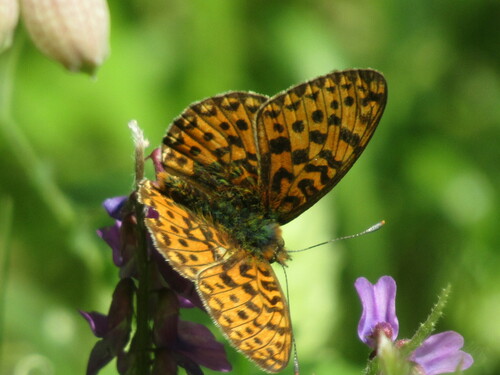
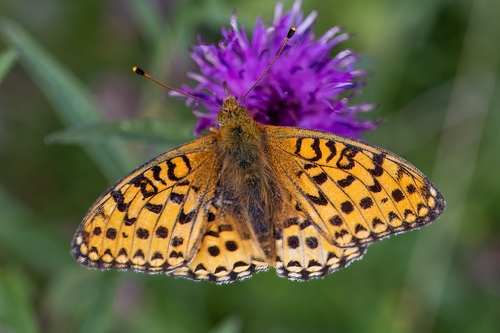
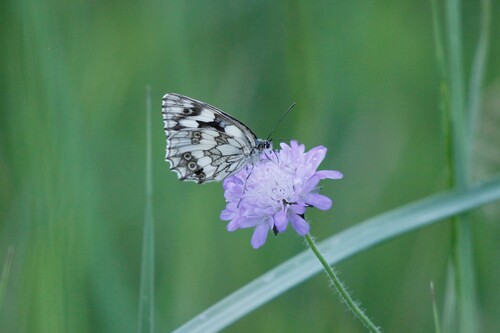
The ringlet (Aphantopus hyperantus) is a butterfly in the family Nymphalidae. It is only one of the numerous "ringlet" butterflies in the tribe Satyrini. The ringlet is a widely distributed species found throughout much of the Palearctic realm. In Europe it is common in most countries but absent from northern Scandinavia, peninsular Italy (found in northern Italy), Portugal, southern and central Spain (found in Cantabrian Mountains and the eastern Pyrenees), the Mediterranean islands and North Africa. In Greece it is found in northern regions (Macedonia, Thessaly). Beyond Europe it is found across much of temperate Asia including Russia, Siberia, Mongolia, China and Korea.

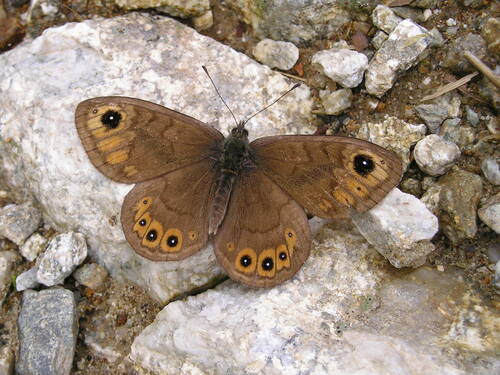
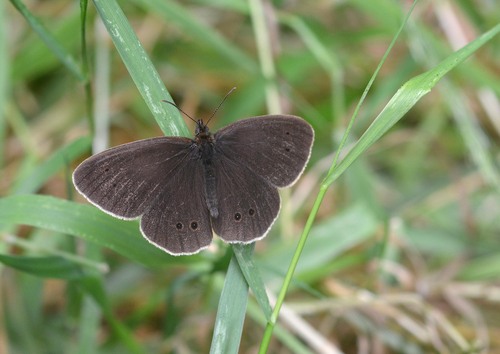
Aphantopus hyperantus is a medium-sized butterfly with a wingspan of up to 35 to 42 millimeters. The wing upper and lower sides are solid brown with small, yellowish-rimmed eyespots. The newly emerged ringlet has a velvety appearance and is almost black with a white fringe to the wings. The number and size of the eyespots is variable, they may be missing on the upper wing surface. In central Europe and southern England the rare form arete occurs. The eggs are pale yellow when first... Wikipedia →

Global Distribution

Parks Where Found

# Park Country Daily sighting probability
1 Cairngorms National Park 🇬🇧 United Kingdom
~30%
2 Gauja National Park 🇱🇻 Latvia
~30%
3 Snowdonia National Park 🇬🇧 United Kingdom
~30%
4 Tatra National Park 🇸🇰 Slovakia
~20%
5 Aigüestortes National Park 🇪🇸 Spain
~20%
6 Bavarian Forest National Park 🇩🇪 Germany
~20%
7 Picos de Europa National Park 🇪🇸 Spain
~20%
8 Biebrza National Park 🇵🇱 Poland
~20%
9 Pyrénées National Park 🇫🇷 France
~20%
10 Białowieża National Park 🇵🇱 Poland
~20%
11 Hohe Tauern National Park 🇦🇹 Austria
~20%
12 Mercantour National Park 🇫🇷 France
~10%
13 Ecrins National Park 🇫🇷 France
~10%
14 Wadden Sea National Park 🇩🇪 Germany
~10%
15 Cévennes National Park 🇫🇷 France
~10%

Cities Where Found

# City Country Daily sighting probability
1 Manchester 🇬🇧 United Kingdom
~20%
2 Birmingham 🇬🇧 United Kingdom
~20%
3 Leeds 🇬🇧 United Kingdom
~10%
4 Warsaw 🇵🇱 Poland
~10%
5 Prague 🇨🇿 Czechia
~10%
6 Copenhagen 🇩🇰 Denmark
~10%
7 London 🇬🇧 United Kingdom
~10%
8 Helsinki 🇫🇮 Finland
~10%
9 Minsk 🇧🇾 Belarus
~10%
10 Stockholm 🇸🇪 Sweden
~10%

Before you go

What are the chances of seeing a Ringlet in Hohe Tauern National Park?

Possible

About 20% of wildlife watchers report a Ringlet sighting in Hohe Tauern National Park on a given day, based on 10 verified sightings from GBIF citizen-science data from 2019 to 2026. It is the 72nd most-seen of the 165 insects we can rate there. Over three days the chance rises to about 40%, and over a week to about 70%, if each day is a fresh chance.

When is the best time to see a Ringlet in Hohe Tauern National Park?

June and July

In those months about 20% of wildlife watchers report a Ringlet in Hohe Tauern National Park on a given day, against under 5% in February–May and September–October, the lowest months. December has too few records to rate.

What time of day is best to see a Ringlet?

Between 1 and 4 pm

Across all the parks we cover, that three-hour window holds the most Ringlet sightings with a recorded time, and about 9 in 10 of them come between 6 am and 6 pm: it is a daytime animal.

Is Hohe Tauern National Park the best place to see a Ringlet?

11th of 15

Of the 15 parks where we can rate Ringlet sightings, Hohe Tauern National Park ranks 11th at about 20%. The best odds are in Cairngorms National Park (United Kingdom, about 30%), Gauja National Park (Latvia, about 30%) and Snowdonia National Park (United Kingdom, about 30%).

Where does the Ringlet sighting chance come from?

GBIF citizen-science records

It is estimated from how often the Ringlet is recorded against all the insects logged in Hohe Tauern National Park (10 verified sightings from 2019 to 2026), calibrated against known sighting rates. Figures are rounded to the nearest 10% because citizen-science data supports honest approximations, not decimals, and months with records from fewer than five people show "—". How it works.

← Back to Hohe Tauern National Park