Southern Darter

Southern Darter

Sympetrum meridionale

Daily sighting probability ~20% · Possible
at Hortobágy National Park

In 3 days ~60% in a week ~80%

7 Verified sightings at Hortobágy National Park From 2019 to 2026
88 In all 5 parks
September Best month
☀️ Diurnal When it's spotted

About the Southern Darter

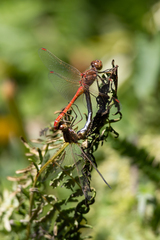
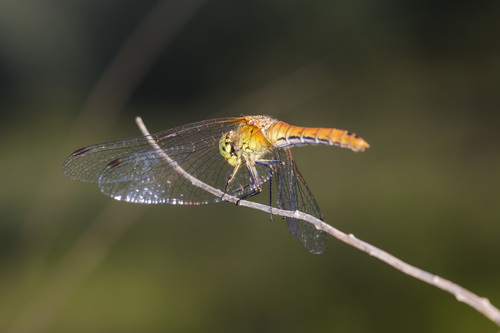
Sympetrum meridionale, the southern darter, is a species of dragonfly belonging to the Skimmer family Libellulidae. The adults grow up to 35–40 millimetres (1.4–1.6 in) long. The wingspan reaches 52–60 millimetres (2.0–2.4 in).

The abdomen of adult males is orange-reddish, without black spots on segments. The sides of the thorax are yellowish-brown. The adult females are quite similar to males, but the background color is more yellow. The wings are hyaline, with yellow or pale brown pterostigma.

Their life cycle lasts two or three years. They can be encountered from May through mid October in the immediate vicinity of shallow, well vegetated still water, where the larvae develop. This species is present in most of southern Europe.

Dijkstra, Klaas-Douwe B. (2006). Field Guide to the Dragonflies of Britain and Europe. British Wildlife Publishing. ISBN 0-9531399-4-8. Henrik Steinmann - World Catalogue of Odonata (Volume II Anisoptera) [S. 477f], de Gruyter, 1997, ISBN 3-11-014934-6

Fauna Europaea Biolib Wikipedia →
Global Distribution

Parks Where Found

# Park Country Daily sighting probability
1 Kiskunság National Park 🇭🇺 Hungary
~40%
2 Hortobágy National Park 🇭🇺 Hungary
~20%
3 Fertő-Hanság National Park 🇭🇺 Hungary
~20%
4 Cévennes National Park 🇫🇷 France
<5%
5 Sierra de Guadarrama National Park 🇪🇸 Spain
<5%

Cities Where Found

# City Country Daily sighting probability
1 Rostov-on-Don 🇷🇺 Russia
~20%
2 Budapest 🇭🇺 Hungary
~10%
3 Bucharest 🇷🇴 Romania
~10%
4 Lyon 🇫🇷 France
~10%
5 Kyiv 🇺🇦 Ukraine
~10%
6 Belgrade 🇷🇸 Serbia
~10%
7 Vienna 🇦🇹 Austria
<5%
8 Paris 🇫🇷 France
<5%
9 Madrid 🇪🇸 Spain
<5%

Before you go

What are the chances of seeing a Southern Darter in Hortobágy National Park?

Possible

About 20% of wildlife watchers report a Southern Darter sighting in Hortobágy National Park on a given day, based on 7 verified sightings from GBIF citizen-science data from 2019 to 2026. It is the 13th most-seen of the 22 insects we can rate there. Over three days the chance rises to about 60%, and over a week to about 80%, if each day is a fresh chance.

When is the best time to see a Southern Darter in Hortobágy National Park?

September

In that month about 50% of wildlife watchers report a Southern Darter in Hortobágy National Park on a given day, against under 5% in March–May, July and October, the lowest months.

What time of day is best to see a Southern Darter?

Between 10 am and 1 pm

Across all the parks we cover, that three-hour window holds the most Southern Darter sightings with a recorded time, and about 9 in 10 of them come between 6 am and 6 pm: it is a daytime animal.

Is Hortobágy National Park the best place to see a Southern Darter?

2nd of 5

Of the 5 parks where we can rate Southern Darter sightings, Hortobágy National Park ranks 2nd at about 20%. The best odds are in Kiskunság National Park (Hungary, about 40%).

Which relatives of the Southern Darter live in Hortobágy National Park?

Same order: Odonata

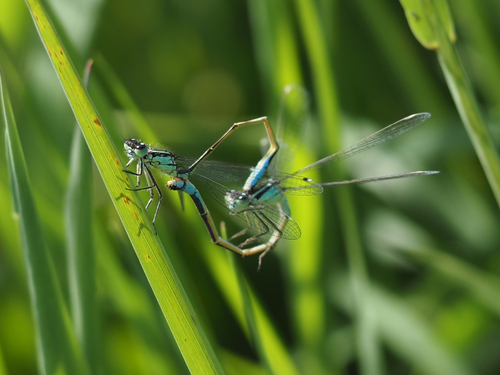
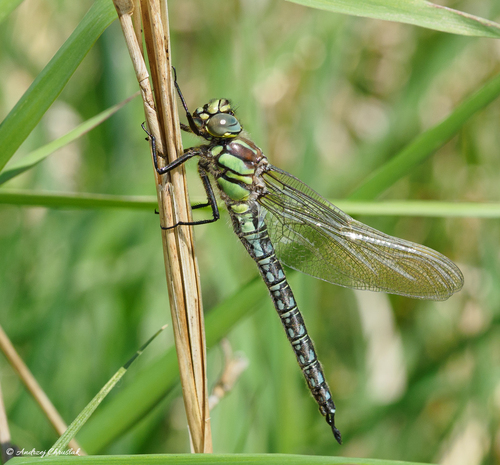
The closest relatives of the Southern Darter that you can see in Hortobágy National Park (order Odonata, Dragonflies and Damselflies) are Blue-Tailed Damselfly (about 40%) and Hairy Dragonfly (about 20%), with each one's daily chance of a sighting.

Where does the Southern Darter sighting chance come from?

GBIF citizen-science records

It is estimated from how often the Southern Darter is recorded against all the insects logged in Hortobágy National Park (7 verified sightings from 2019 to 2026), calibrated against known sighting rates. Figures are rounded to the nearest 10% because citizen-science data supports honest approximations, not decimals, and months with records from fewer than five people show "—". How it works.

← Back to Hortobágy National Park