

Rufous-crowned Pygmy-Tyrant

Rufous-crowned Pygmy-Tyrant

Euscarthmus meloryphus

Silhouette: Emily Willoughby · PhyloPic

LCLeast ConcernNTVUENCR
Daily sighting probability <5% · Rare
at Iberá National Park

In 3 days ~10% in a week ~20%

39 Verified sightings at Iberá National Park From 2019 to 2026
355 In all 7 parks
June Best month
☀️ Diurnal When it's spotted

About the Rufous-crowned Pygmy-Tyrant

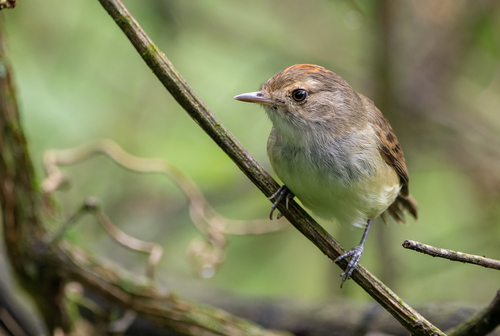
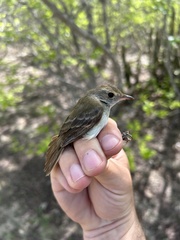
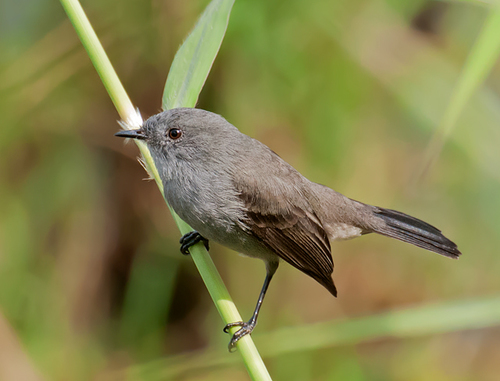
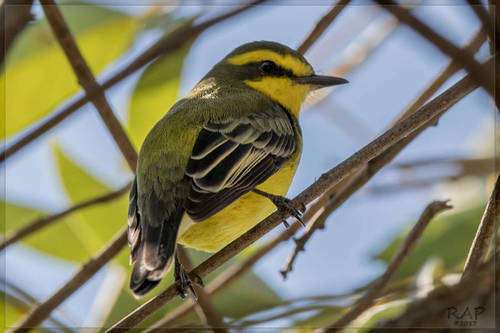
The fulvous-crowned scrub tyrant, or tawny-crowned pygmy-tyrant, (Euscarthmus meloryphus) is a species of bird in the family Tyrannidae, the tyrant flycatchers. It is found in Argentina, Bolivia, Brazil, Colombia, Paraguay, Peru, Uruguay, and Venezuela.

What is now the fulvous-faced scrub tyrant (E. fulviceps) was previously a third subspecies; the full species at that time was called the tawny-crowned pygmy tyrant. Following the split most taxonomic systems gave E. meloryphus sensu stricto its present common name to avoid confusion with the pre-split species and other, unrelated, species called "pygmy tyrants". However, as of late 2024 BirdLife International's Handbook of the Birds of the World retains the original common name.

The fulvous-crowned scrub tyrant is 9 to 12 cm (3.5 to 4.7 in) long and weighs 5 to 10 g (0.18 to 0.35 oz). The sexes have the same plumage. Adults of the nominate subspecies have a drab brownish crown with a weak crest and rufous central crown feathers that are somewhat hidden. They... Wikipedia →

Sounds

Call0:14

Brazil · 2025

© JAYRSON ARAUJO DE OLIVEIRA · XC974154 · CC BY-NC-SA 4.0

Recording0:47

Uruguay · 2025

© Guillermo Menéndez (gmmv80) · XC962278 · CC BY-NC-SA 4.0

Song0:35

Uruguay · 2010

© Pedro Rinaldi · XC951949 · CC BY-NC-SA 4.0

Global Distribution

Parks Where Found

# Park Country Daily sighting probability
1 El Palmar National Park 🇦🇷 Argentina
~20%
2 Chapada Diamantina National Park 🇧🇷 Brazil
~10%
3 El Impenetrable National Park 🇦🇷 Argentina
~10%
4 Iberá National Park 🇦🇷 Argentina
<5%
5 Iguaçu National Park 🇧🇷 Brazil
<5%
6 Iguazú National Park 🇦🇷 Argentina
<5%
7 Chapada dos Guimarães National Park 🇧🇷 Brazil
<5%

Cities Where Found

# City Country Daily sighting probability
1 Asuncion 🇵🇾 Paraguay
<5%
2 Fortaleza 🇧🇷 Brazil
<5%
3 Cordoba 🇦🇷 Argentina
<5%
4 Buenos Aires 🇦🇷 Argentina
<5%

Before you go

What are the chances of seeing a Rufous-crowned Pygmy-Tyrant in Iberá National Park?

Rare

Under 5% of wildlife watchers report a Rufous-crowned Pygmy-Tyrant sighting in Iberá National Park on a given day, based on 39 verified sightings from GBIF citizen-science data from 2019 to 2026. It is the 221st most-seen of the 284 birds we can rate there. Over three days the chance rises to about 10%, and over a week to about 20%, if each day is a fresh chance.

When is the best time to see a Rufous-crowned Pygmy-Tyrant in Iberá National Park?

January, April and June

In those months about 10% of wildlife watchers report a Rufous-crowned Pygmy-Tyrant in Iberá National Park on a given day, against under 5% in February–March, May and July–December, the lowest months.

What time of day is best to see a Rufous-crowned Pygmy-Tyrant?

Between 7 and 10 am

Across all the parks we cover, that three-hour window holds the most Rufous-crowned Pygmy-Tyrant sightings with a recorded time, and about 9 in 10 of them come between 6 am and 6 pm: it is a daytime animal.

Which relatives of the Rufous-crowned Pygmy-Tyrant live in Iberá National Park?

Same family: Tyrannidae

The closest relatives of the Rufous-crowned Pygmy-Tyrant that you can see in Iberá National Park (family Tyrannidae, Tyrant Flycatchers) are Great Kiskadee (about 80%), Cattle Tyrant (about 70%) and Strange-tailed Tyrant (about 50%), with each one's daily chance of a sighting.

Where does the Rufous-crowned Pygmy-Tyrant sighting chance come from?

GBIF citizen-science records

It is estimated from how often the Rufous-crowned Pygmy-Tyrant is recorded against all the birds logged in Iberá National Park (39 verified sightings from 2019 to 2026), calibrated against known sighting rates. Figures are rounded to the nearest 10% because citizen-science data supports honest approximations, not decimals, and months with records from fewer than five people show "—". How it works.

← Back to Iberá National Park