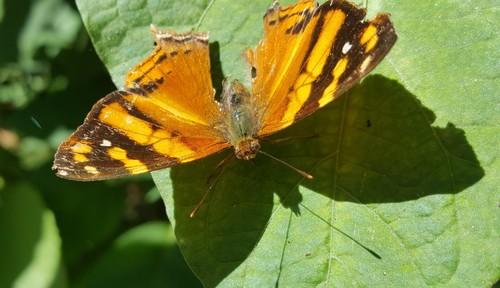
Androgeus Swallowtail

Androgeus Swallowtail

Papilio androgeus

Daily sighting probability ~20% · Possible
at Iguazú National Park

In 3 days ~40% in a week ~70%

27 Verified sightings at Iguazú National Park From 2019 to 2026
79 In all 5 parks
September Best month
☀️ Diurnal When it's spotted

About the Androgeus Swallowtail

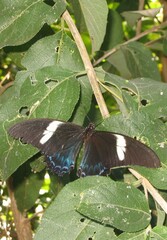
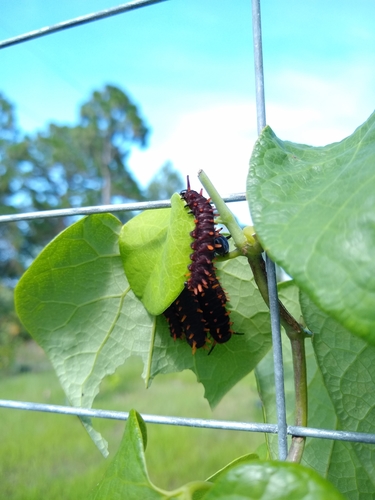
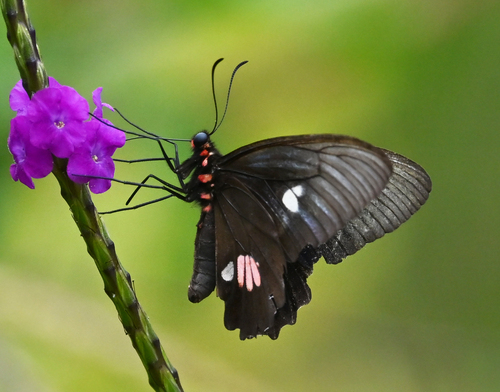
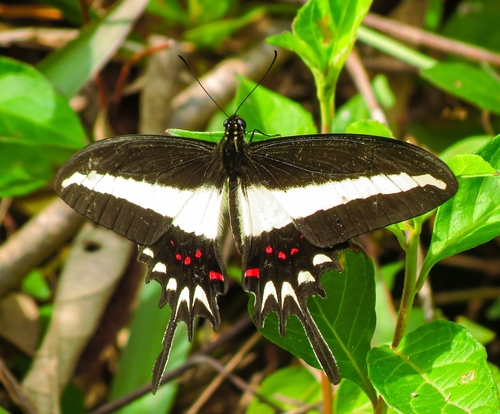
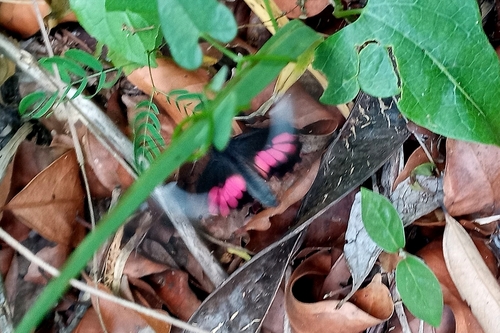
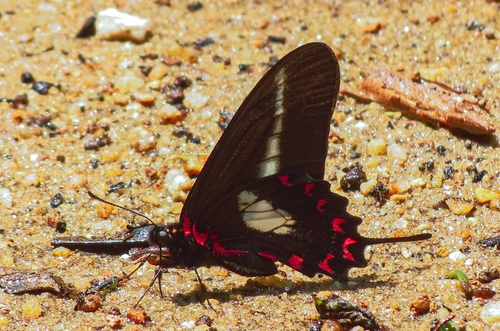
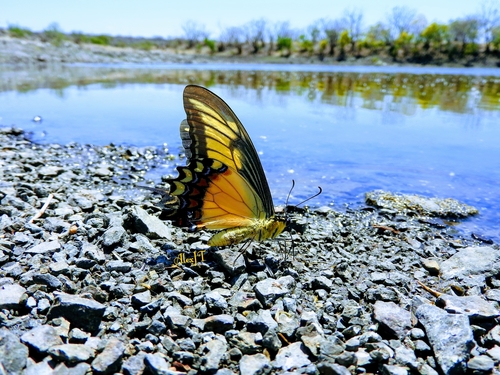
Papilio androgeus, the Androgeus swallowtail, queen page, or queen swallowtail, is a Neotropical butterfly of the family Papilionidae. It is found from Mexico to Argentina with a small population in southern Florida. There is strong sexual dimorphism between the sexes. The wingspan is 134 to 140 millimeters. [1] All wings have a black-brown base colour.

The males have very broad yellow bands on the upper side of the fore and hind wings. Indistinct yellowish and bluish spots are present on the outer edge of the hindwings, which are sometimes absent. The underside shows a similar pattern to the forewings, but is much paler and less clear, while the spots on the outer edges are somewhat more pronounced.

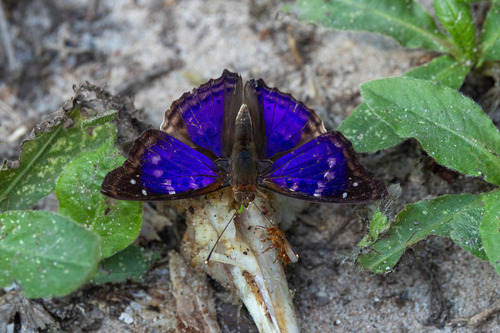
The females are more variable with regard to the markings. They often have large white spots on the dark upper surface of the forewings, but these can also be completely absent. The hind wings shimmer more or less metallic blue or turquoise and show blue-green spots on the outer edge. On the brownish underside of the wings there are three rows of crescent-shaped spots of red, blue and yellow on the outer edge of the hind wings.Both sexes have five to six narrow, unmarked... Wikipedia →
Global Distribution

Parks Where Found

# Park Country Daily sighting probability
1 Rincón de la Vieja National Park 🇨🇷 Costa Rica
~20%
2 Iguazú National Park 🇦🇷 Argentina
~20%
3 Iguaçu National Park 🇧🇷 Brazil
~10%
4 Soberanía National Park 🇵🇦 Panama
~10%
5 Manu National Park 🇵🇪 Peru
~10%

Cities Where Found

# City Country Daily sighting probability
1 Rio de Janeiro 🇧🇷 Brazil
<5%

Before you go

What are the chances of seeing an Androgeus Swallowtail in Iguazú National Park?

Possible

About 20% of wildlife watchers report an Androgeus Swallowtail sighting in Iguazú National Park on a given day, based on 27 verified sightings from GBIF citizen-science data from 2019 to 2026. It is the 70th most-seen of the 306 insects we can rate there. Over three days the chance rises to about 40%, and over a week to about 70%, if each day is a fresh chance.

When is the best time to see an Androgeus Swallowtail in Iguazú National Park?

September

In that month about 30% of wildlife watchers report an Androgeus Swallowtail in Iguazú National Park on a given day, against under 5% in April–May and July–August, the lowest months.

What time of day is best to see an Androgeus Swallowtail?

Between 10 am and 1 pm

Across all the parks we cover, that three-hour window holds the most Androgeus Swallowtail sightings with a recorded time, and about 9 in 10 of them come between 6 am and 6 pm: it is a daytime animal.

Is Iguazú National Park the best place to see an Androgeus Swallowtail?

Among the best

Of the 5 parks where we can rate Androgeus Swallowtail sightings, Iguazú National Park ranks 2nd at about 20%, level with the leaders once rounded. The best odds are in Rincón de la Vieja National Park (Costa Rica, about 20%).

Which relatives of the Androgeus Swallowtail live in Iguazú National Park?

Same genus: Papilio

The closest relatives of the Androgeus Swallowtail that you can see in Iguazú National Park (genus Papilio, Common Swallowtails) are Thoas Swallowtail (about 40%), Astyalus Swallowtail (about 40%) and Ruby-Spotted Swallowtail (about 20%), with each one's daily chance of a sighting.

Where does the Androgeus Swallowtail sighting chance come from?

GBIF citizen-science records

It is estimated from how often the Androgeus Swallowtail is recorded against all the insects logged in Iguazú National Park (27 verified sightings from 2019 to 2026), calibrated against known sighting rates. Figures are rounded to the nearest 10% because citizen-science data supports honest approximations, not decimals, and months with records from fewer than five people show "—". How it works.

← Back to Iguazú National Park