
Masked Water-Tyrant

Masked Water-Tyrant

Fluvicola nengeta

Silhouette: Emily Willoughby · PhyloPic

LCLeast ConcernNTVUENCR
Daily sighting probability ~40% · Likely
at Itatiaia National Park

In 3 days ~70% in a week >90%

693 Verified sightings at Itatiaia National Park From 2019 to 2026
3,179 In all 6 parks
June Best month
☀️ Diurnal When it's spotted

About the Masked Water-Tyrant

The masked water tyrant (Fluvicola nengeta) is a species of bird in the family Tyrannidae, the tyrant flycatchers. It is found in Argentina, Brazil, Colombia, Ecuador, Peru, and as a vagrant to Uruguay and Paraguay. The masked water tyrant was formally described in 1766 as Lanius nengeta, erroneously placing it in the shrike family Laniidae. It is now placed in the genus Fluvicola that was introduced by the English naturalist William Swainson in 1827. The genus name is derived from a combination of Latin fluvius meaning "river" and -cola meaning "dweller". Some early twentieth century authors called it Fluvicola climazura.

Subspecies F. n. atripennis was formally described as a species and some early twenty-first century authors suggest that it again should be treated that way. The masked water tyrant shares genus Fluvicola with the pied water tyrant (F. pica) and the black-backed water tyrant (F. albiventer).

The masked water tyrant is 14.5 to 15 cm (5.7 to 5.9 in) long. The sexes have the same plumage. Adults... Wikipedia →

Sounds

Call0:24

Ecuador · 2025

© Manuel Sánchez-Nivicela · XC1151825 · CC BY-NC-ND 4.0

Duet0:44

Brazil · 2026

© Robson Silva e Silva · XC1151444 · CC BY-NC-SA 4.0

Subsong0:46

Brazil · 2022

© Ricardo José Mitidieri · XC745046 · CC BY-NC-SA 4.0

Global Distribution

Parks Where Found

# Park Country Daily sighting probability
1 Tijuca National Park 🇧🇷 Brazil
~60%
2 Serra dos Órgãos National Park 🇧🇷 Brazil
~40%
3 Serra da Canastra National Park 🇧🇷 Brazil
~40%
4 Itatiaia National Park 🇧🇷 Brazil
~40%
5 Chapada Diamantina National Park 🇧🇷 Brazil
~10%
6 Machalilla National Park 🇪🇨 Ecuador
<5%

Cities Where Found

# City Country Daily sighting probability
1 Salvador 🇧🇷 Brazil
~80%
2 João Pessoa 🇧🇷 Brazil
~70%
3 Recife 🇧🇷 Brazil
~70%
4 Rio de Janeiro 🇧🇷 Brazil
~70%
5 Santos 🇧🇷 Brazil
~40%
6 Natal 🇧🇷 Brazil
~30%
7 Vitória 🇧🇷 Brazil
~30%
8 Fortaleza 🇧🇷 Brazil
~30%
9 Campinas 🇧🇷 Brazil
~20%
10 Belo Horizonte 🇧🇷 Brazil
~20%

Before you go

What are the chances of seeing a Masked Water-Tyrant in Itatiaia National Park?

Likely

About 40% of wildlife watchers report a Masked Water-Tyrant sighting in Itatiaia National Park on a given day, based on 693 verified sightings from GBIF citizen-science data from 2019 to 2026. It is the 47th most-seen of the 352 birds we can rate there. Over three days the chance rises to about 70%, and over a week to over 90%, if each day is a fresh chance.

When is the best time to see a Masked Water-Tyrant in Itatiaia National Park?

June

In that month about 60% of wildlife watchers report a Masked Water-Tyrant in Itatiaia National Park on a given day, against about 20% in March, the lowest month. That is one of Itatiaia National Park's driest months, with about 45 mm of rain against 330 mm in December.

What time of day is best to see a Masked Water-Tyrant?

Between 8 and 11 am

Across all the parks we cover, that three-hour window holds the most Masked Water-Tyrant sightings with a recorded time, and nearly all of them come between 6 am and 6 pm: it is a daytime animal.

Which relatives of the Masked Water-Tyrant live in Itatiaia National Park?

Same family: Tyrannidae

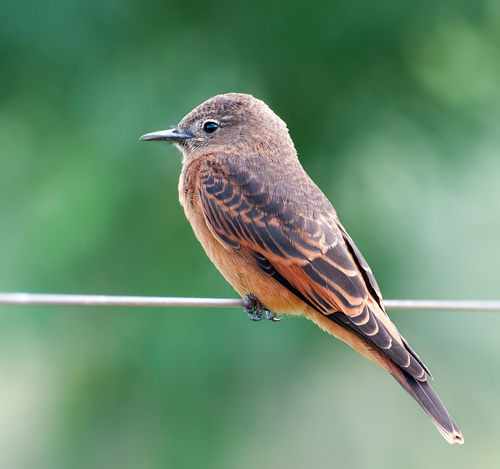
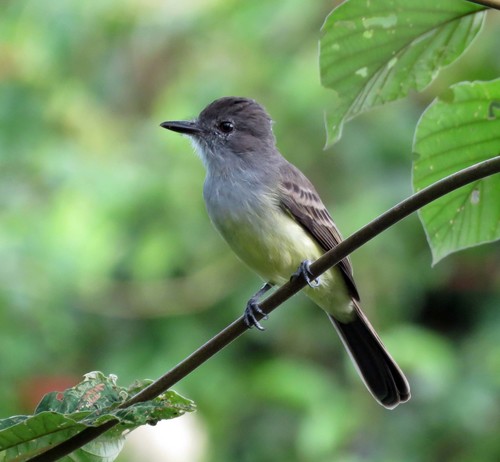
The closest relatives of the Masked Water-Tyrant that you can see in Itatiaia National Park (family Tyrannidae, Tyrant Flycatchers) are Cliff Flycatcher (about 60%), Great Kiskadee (about 50%) and Planalto Tyrannulet (about 40%), with each one's daily chance of a sighting.

Where does the Masked Water-Tyrant sighting chance come from?

GBIF citizen-science records

It is estimated from how often the Masked Water-Tyrant is recorded against all the birds logged in Itatiaia National Park (693 verified sightings from 2019 to 2026), calibrated against known sighting rates. Figures are rounded to the nearest 10% because citizen-science data supports honest approximations, not decimals, and months with records from fewer than five people show "—". How it works.

← Back to Itatiaia National Park