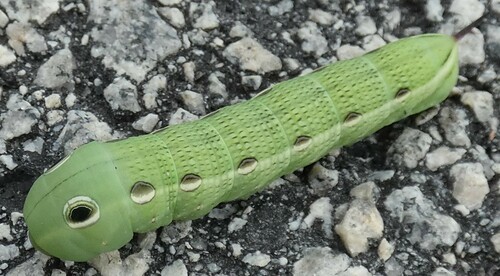
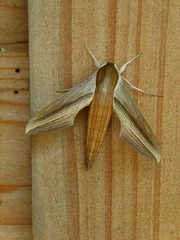
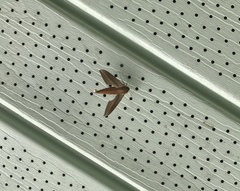
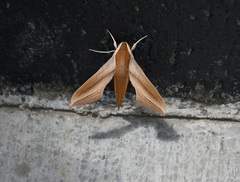

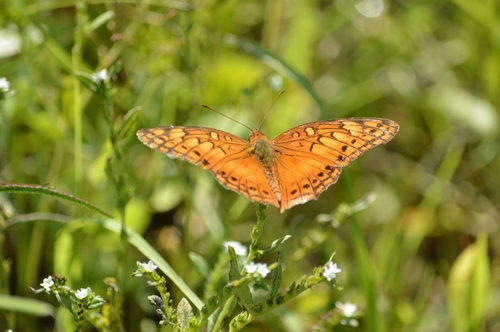
Tersa Sphinx

Tersa Sphinx

Xylophanes tersa

Daily sighting probability ~30% · Possible
at Jaragua National Park

In 3 days ~60% in a week ~90%

6 Verified sightings at Jaragua National Park From 2019 to 2026
107 In all 8 parks
May Best month
☀️🌙 Day & Night When it's spotted

About the Tersa Sphinx

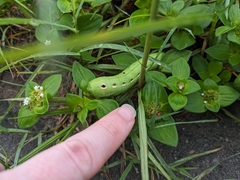
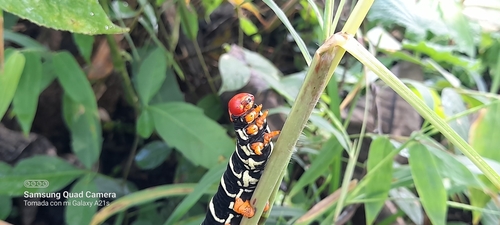
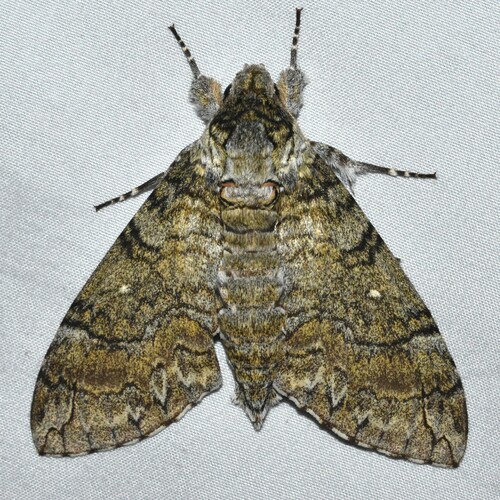
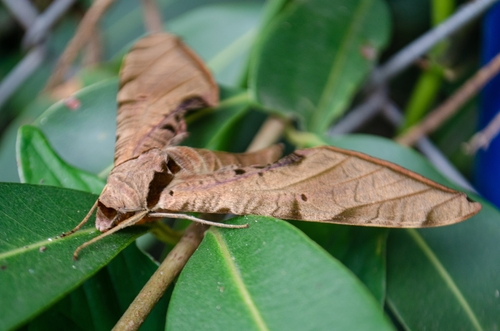
Xylophanes tersa, the tersa sphinx, is a species of moth of the family Sphingidae. The species was first described by Carl Linnaeus in 1771. It is found from the United States (Massachusetts south to southern Florida, west to Nebraska, New Mexico and southern Arizona), through Mexico, the West Indies and Central America and into parts of South America (including Bolivia, Paraguay, Argentina and Brazil). An occasional stray can be found as far north as Canada.

The larvae feed on Borreria, Catalpa, Manettia, and Pentas species, and Spermacoce glabra, Hamelia patens, Hedyotis nigricans, Heimia salicifolia, Psychotria microdon, Psychotria nervosa, and Inga vera. Wikipedia →

Global Distribution

Parks Where Found

# Park Country Daily sighting probability
1 Jaragua National Park 🇩🇴 Dominican Republic
~30%
2 Main Ridge Forest Reserve 🇹🇹 Trinidad and Tobago
~10%
3 Everglades National Park 🇺🇸 United States
~10%
4 Big Cypress National Preserve 🇺🇸 United States
~10%
5 Braulio Carrillo National Park 🇨🇷 Costa Rica
~10%
6 Merritt Island National Wildlife Refuge 🇺🇸 United States
~10%
7 La Amistad International Park (Panama) 🇵🇦 Panama
~10%
8 Cumbres de Monterrey National Park 🇲🇽 Mexico
<5%

Cities Where Found

# City Country Daily sighting probability
1 São Luís 🇧🇷 Brazil
~20%
2 João Pessoa 🇧🇷 Brazil
~20%
3 Manaus 🇧🇷 Brazil
~10%
4 Fortaleza 🇧🇷 Brazil
~10%
5 Miami 🇺🇸 United States
~10%
6 Houston 🇺🇸 United States
~10%
7 Dallas 🇺🇸 United States
~10%
8 Orlando 🇺🇸 United States
~10%
9 Austin 🇺🇸 United States
<5%
10 Rio de Janeiro 🇧🇷 Brazil
<5%

Before you go

What are the chances of seeing a Tersa Sphinx in Jaragua National Park?

Possible

About 30% of wildlife watchers report a Tersa Sphinx sighting in Jaragua National Park on a given day, based on 6 verified sightings from GBIF citizen-science data from 2019 to 2026. It is the 14th most-seen of the 19 insects we can rate there. Over three days the chance rises to about 60%, and over a week to about 90%, if each day is a fresh chance.

When is the best time to see a Tersa Sphinx in Jaragua National Park?

May

In that month about 60% of wildlife watchers report a Tersa Sphinx in Jaragua National Park on a given day, against under 5% in January–March and August, the lowest months.

What time of day is best to see a Tersa Sphinx?

Between 10 am and 1 pm

Across all the parks we cover, that three-hour window holds the most Tersa Sphinx sightings with a recorded time, and about 6 in 10 of them come between 6 am and 6 pm: it is seen both by day and at night.

Is Jaragua National Park the best place to see a Tersa Sphinx?

Yes

Of the 8 parks where we can rate Tersa Sphinx sightings, Jaragua National Park has the highest daily chance: about 30%. Next come Main Ridge Forest Reserve (Trinidad and Tobago, about 10%) and Everglades National Park (United States, about 10%).

Which relatives of the Tersa Sphinx live in Jaragua National Park?

Same family: Sphingidae

The closest relatives of the Tersa Sphinx that you can see in Jaragua National Park (family Sphingidae, Sphinx Moths) are Tetrio Sphinx (about 40%), Manduca brontes (about 30%) and Nannoparce poeyi (about 30%), with each one's daily chance of a sighting.

Where does the Tersa Sphinx sighting chance come from?

GBIF citizen-science records

It is estimated from how often the Tersa Sphinx is recorded against all the insects logged in Jaragua National Park (6 verified sightings from 2019 to 2026), calibrated against known sighting rates. Figures are rounded to the nearest 10% because citizen-science data supports honest approximations, not decimals, and months with records from fewer than five people show "—". How it works.

← Back to Jaragua National Park