Small Milkweed Bug

Small Milkweed Bug

Lygaeus kalmii

Daily sighting probability ~10% · With luck
at Joshua Tree National Park

In 3 days ~20% in a week ~50%

18 Verified sightings at Joshua Tree National Park From 2019 to 2026
203 In all 14 parks
December Best month
☀️ Diurnal When it's spotted

About the Small Milkweed Bug

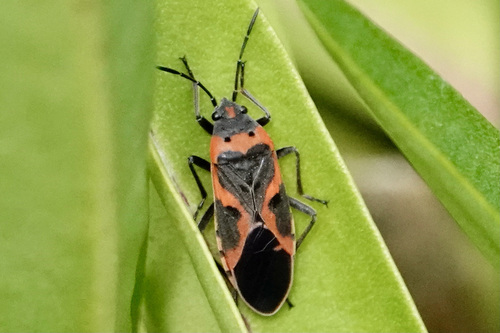
Lygaeus kalmii, known as the small milkweed bug or common milkweed bug, is a species of seed bug in the family Lygaeidae. It is found in Central and North America. Lygaeus kalmii was first formally named in 1874 by Swedish entomologist Carl Stål in his Enumeratio Hemipterorum.

Range includes Arizona (where it is very common in almost every sandy-grassy patch) and California, though California milkweed bugs are somewhat rare. The western subspecies has white spots and are seen with milkweed in bushy dry areas, but only for feeding, and in wet areas to survive.

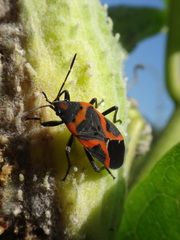
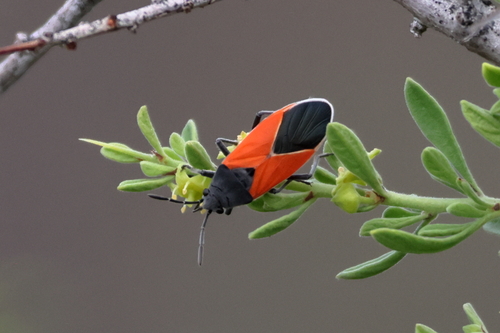
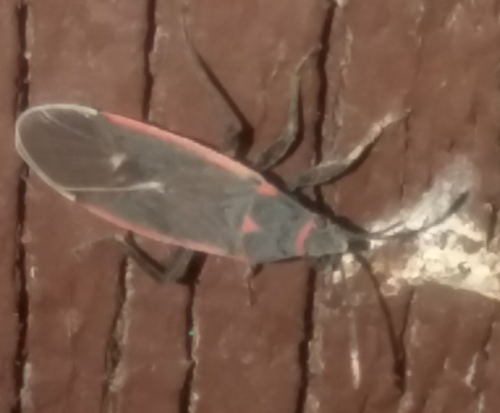
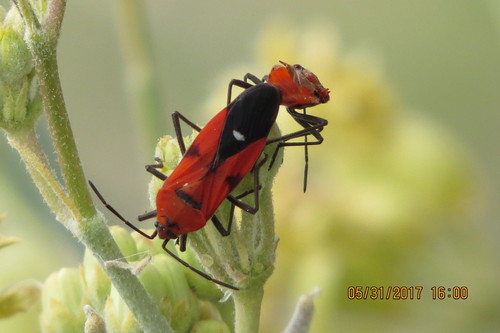
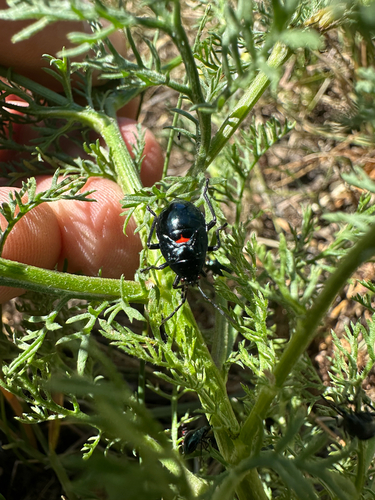
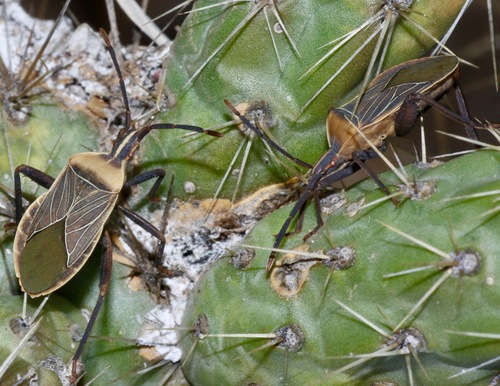
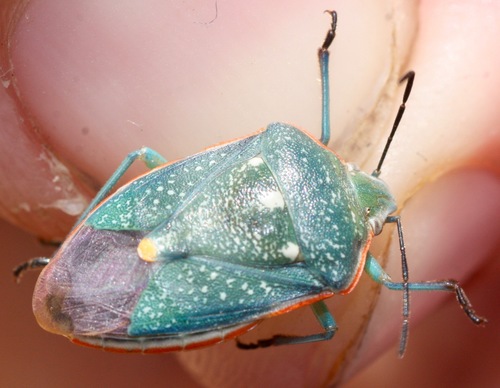
Young nymphs of Lygaeus kalmii are initially fully red, developing black diagonal markings on the pronotum. Adults are orange to red and gray/black, reaching 10 to 12 mm (0.39 to 0.47 in) in length. The head is black with a red spot in the center. The forewings are patterned with a black heart inside of an orange-red X which does not meet in the middle.

The membranous portion of the forewings in the eastern subspecies Lygaeus... Wikipedia →

Global Distribution

Parks Where Found

# Park Country Daily sighting probability
1 Badlands National Park 🇺🇸 United States
~20%
2 Sequoia and Kings Canyon National Parks 🇺🇸 United States
~10%
3 Zion National Park 🇺🇸 United States
~10%
4 Death Valley National Park 🇺🇸 United States
~10%
5 Joshua Tree National Park 🇺🇸 United States
~10%
6 Acadia National Park 🇺🇸 United States
~10%
7 Grand Canyon National Park 🇺🇸 United States
~10%
8 Yosemite National Park 🇺🇸 United States
~10%
9 Yellowstone National Park 🇺🇸 United States
~10%
10 Shenandoah National Park 🇺🇸 United States
~10%
11 Grand Teton National Park 🇺🇸 United States
~10%
12 Saguaro National Park 🇺🇸 United States
~10%
13 Rocky Mountain National Park 🇺🇸 United States
~10%
14 Cumbres de Monterrey National Park 🇲🇽 Mexico
<5%

Cities Where Found

# City Country Daily sighting probability
1 Ciudad Juárez 🇲🇽 México
~30%
2 Mesa 🇺🇸 United States
~30%
3 Las Vegas 🇺🇸 United States
~20%
4 Phoenix 🇺🇸 United States
~10%
5 Boston 🇺🇸 United States
~10%
6 Denver 🇺🇸 United States
~10%
7 Sacramento 🇺🇸 United States
~10%
8 Detroit 🇺🇸 United States
~10%
9 Salt Lake City 🇺🇸 United States
~10%
10 Montreal 🇨🇦 Canada
~10%

Before you go

What are the chances of seeing a Small Milkweed Bug in Joshua Tree National Park?

With luck

About 10% of wildlife watchers report a Small Milkweed Bug sighting in Joshua Tree National Park on a given day, based on 18 verified sightings from GBIF citizen-science data from 2019 to 2026. It is the 75th most-seen of the 190 insects we can rate there. Over three days the chance rises to about 20%, and over a week to about 50%, if each day is a fresh chance.

When is the best time to see a Small Milkweed Bug in Joshua Tree National Park?

December

In that month about 20% of wildlife watchers report a Small Milkweed Bug in Joshua Tree National Park on a given day, against under 5% in January, March and July, the lowest months.

What time of day is best to see a Small Milkweed Bug?

Between 1 and 4 pm

Across all the parks we cover, that three-hour window holds the most Small Milkweed Bug sightings with a recorded time, and about 9 in 10 of them come between 6 am and 6 pm: it is a daytime animal.

Which relatives of the Small Milkweed Bug live in Joshua Tree National Park?

Same family: Lygaeidae

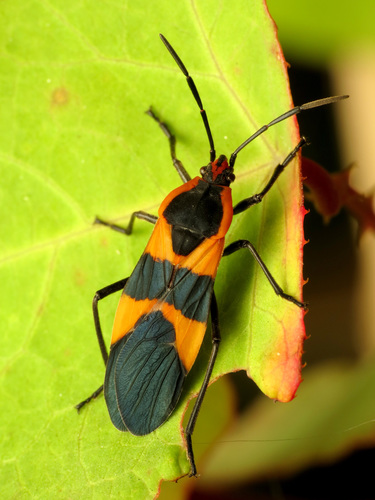
The closest relatives of the Small Milkweed Bug that you can see in Joshua Tree National Park (family Lygaeidae, Seed Bugs) are Redcoat Seed Bug (about 10%), Large Milkweed Bug (about 10%) and Charcoal Seed Bug (about 10%), with each one's daily chance of a sighting.

Where does the Small Milkweed Bug sighting chance come from?

GBIF citizen-science records

It is estimated from how often the Small Milkweed Bug is recorded against all the insects logged in Joshua Tree National Park (18 verified sightings from 2019 to 2026), calibrated against known sighting rates. Figures are rounded to the nearest 10% because citizen-science data supports honest approximations, not decimals, and months with records from fewer than five people show "—". How it works.

← Back to Joshua Tree National Park