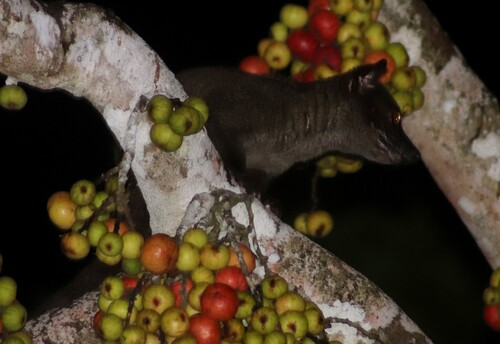
Lesser Treeshrew

Lesser Treeshrew

Tupaia minor

Silhouette: Margot Michaud · PhyloPic

LCLeast ConcernNTVUENCR
Daily sighting probability ~20% · Possible
at Kinabalu Park

In 3 days ~40% in a week ~70%

13 Verified sightings at Kinabalu Park From 2019 to 2026
32 In all 2 parks
September Best month
🌅 Crepuscular When it's spotted

About the Lesser Treeshrew

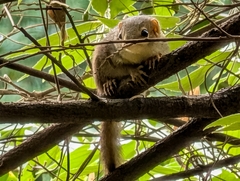
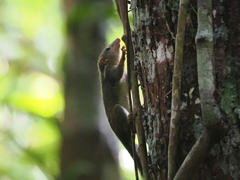
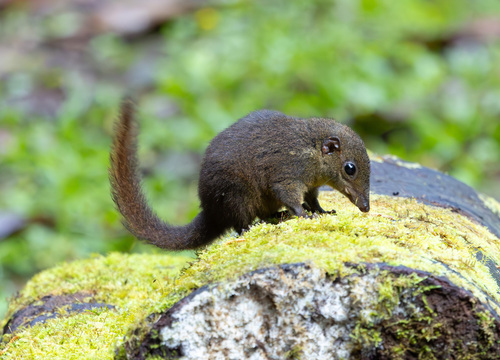
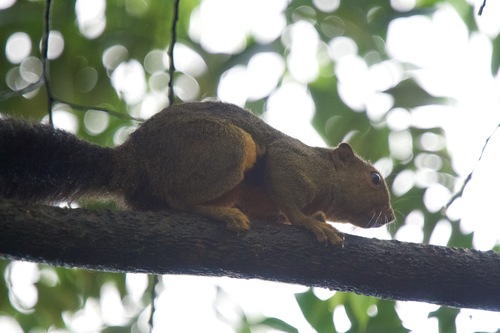
The pygmy treeshrew (Tupaia minor) is a treeshrew species within the family Tupaiidae. It is native to Thailand, Malaysia and Indonesia. The generic name is derived from the Malay word tupai meaning squirrel or small animals that resemble squirrels.

Tupaia minor is distributed in peninsular Thailand, peninsular Malaysia, Sumatra, the Lingga Archipelago (Indonesia), Borneo, offshore islands of Laut (Indonesia), and Banggi and Balambangan (Malaysia). From the Catalogue of Mammal Skins in Sarawak Museum, Kuching, Sarawak, more than 30 individuals of T. minor have been collected from 1891 to 1991. The specimens were mostly caught in Mt Penrisen, Mt Dulit, Mt Poi, Gunung Gading, Bau, Ulu Baram, Saribas, Kuching, and Forest Research.

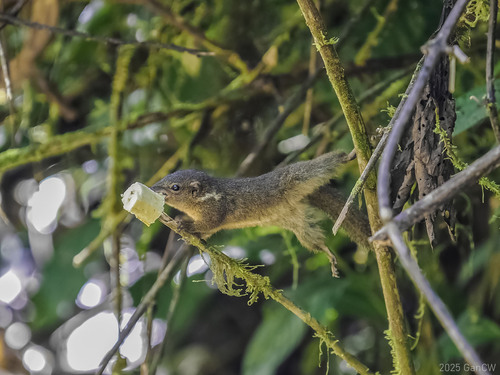
The species has no fossil record. The pygmy treeshrew's upper body hair is banded light and dark, giving a speckled olive-brown appearance. The upper parts are buffy and often have a reddish tinge towards the rear. The tail is long and thin, and its upper side is darker than the body. The limbs are equal in length and have long claws. The maximum total length is about 450 mm, half of which is the tail. Wikipedia →
Global Distribution

Parks Where Found

# Park Country Daily sighting probability
1 Sepilok 🇲🇾 Malaysia
~20%
2 Kinabalu Park 🇲🇾 Malaysia
~20%

Before you go

What are the chances of seeing a Lesser Treeshrew in Kinabalu Park?

Possible

About 20% of wildlife watchers report a Lesser Treeshrew sighting in Kinabalu Park on a given day, based on 13 verified sightings from GBIF citizen-science data from 2019 to 2026. It is the 10th most-seen of the 18 mammals we can rate there. Over three days the chance rises to about 40%, and over a week to about 70%, if each day is a fresh chance.

When is the best time to see a Lesser Treeshrew in Kinabalu Park?

September

In that month about 40% of wildlife watchers report a Lesser Treeshrew in Kinabalu Park on a given day, against under 5% in October to March, the lowest months.

What time of day is best to see a Lesser Treeshrew?

Between 2 and 5 am

Across all the parks we cover, that three-hour window holds the most Lesser Treeshrew sightings with a recorded time, and about 7 in 10 of them come between 6 pm and 6 am: it is most active around dawn and dusk.

Is Kinabalu Park the best place to see a Lesser Treeshrew?

Among the best

Of the 2 parks where we can rate Lesser Treeshrew sightings, Kinabalu Park ranks 2nd at about 20%, level with the leaders once rounded. The best odds are in Sepilok (Malaysia, about 20%).

Where does the Lesser Treeshrew sighting chance come from?

GBIF citizen-science records

It is estimated from how often the Lesser Treeshrew is recorded against all the mammals logged in Kinabalu Park (13 verified sightings from 2019 to 2026), calibrated against known sighting rates. Figures are rounded to the nearest 10% because citizen-science data supports honest approximations, not decimals, and months with records from fewer than five people show "—". How it works.

← Back to Kinabalu Park